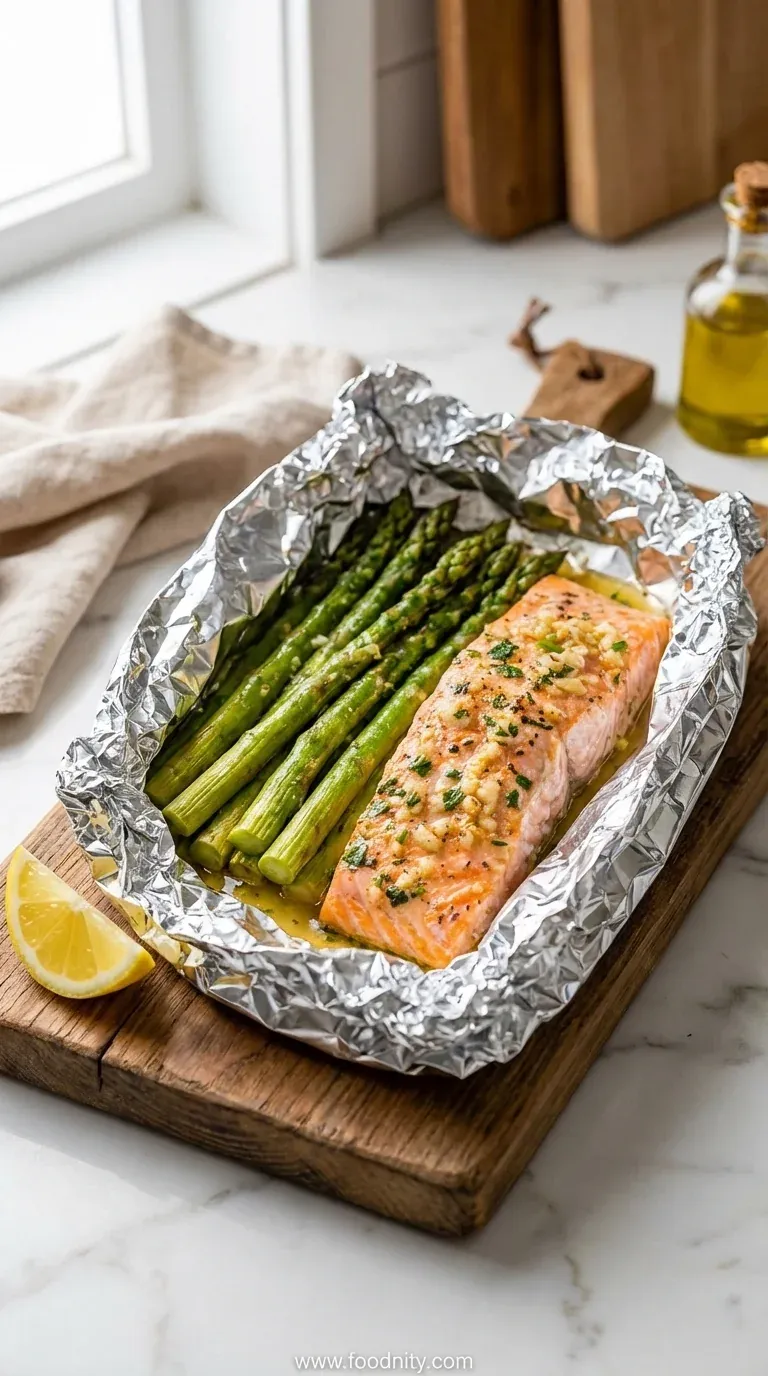
Honestly, when I first tried this foil‑pack method I was looking for a dinner that would be ready with minimal fuss. I remember the moment the oven opened, a warm steam rose, and the scent of lemon and fresh herbs brushed my nose. It felt like the kitchen was giving me a gentle hug. Fish recipes are often more involved, but this one is delightfully straightforward.
The essence of the dish
What makes this recipe special is the way the foil creates its own mini‑oven, coaxing the salmon to stay buttery while the asparagus stays bright, all without a splash of sauce.
A fun fact or historical angle
Ancient sailors used wax‑sealed parchment to protect their catch on long voyages; today we use foil for the same purpose, but with a modern, kitchen‑friendly twist.
Flavor or sensory focus
Expect the first bite to deliver a soft, flaky mouthfeel from the salmon, a crisp snap from the asparagus, and a lingering citrus‑herb fragrance that makes you sigh.
You Must Know
- Don't overcook; salmon is done at 145°F
- Keep the foil sealed tightly
- Use fresh asparagus for best texture
When you follow these simple points, the dish feels like a quiet celebration of the sea and garden. I often pause after plating to let the steam settle, letting the aroma settle into the room before the first forkful. It’s a gentle ritual that slows the day down a bit.
The story behind it
The practice of cooking fish in parchment or foil dates back to ancient Mediterranean cultures, where travelers used simple parcels to preserve moisture during long journeys. Over centuries, the technique adapted to modern kitchens, allowing home cooks to capture the essence of the sea without a heavy hand. This method honors that heritage while fitting into today’s busy schedules.
Why You'll Love It
- Minimal cleanup, just one foil packet per serving
- Healthy blend of protein and vegetables
- Gentle cooking keeps salmon moist and flaky
- Fresh lemon‑herb scent fills the home
Tips for success
- Don’t overfill the foil packets; give the fish room to breathe.
- Pat the salmon dry first; excess moisture can steam rather than bake.
- Use fresh lemon for the best bright flavor.
Professional secrets
- Room temperature fish cooks more evenly.
- Seal the foil tightly to trap steam and flavor.
- Finish with a quick squeeze of lemon to lift the dish.
Common mistakes to avoid
- Overcooking the salmon, which makes it dry.
- Using too much liquid; the foil should trap steam, not drown the fish.
- Not sealing the foil tightly, allowing steam to escape.
Substitutions
- Salmon fillets: Trout or Arctic char. Adjust cooking time slightly; these fish are similarly delicate.
- Olive oil: Avocado oil. Works well at higher heat and adds a mild buttery flavor.
Variations
- Spicy Version: Add ½ tsp chili flakes and a drizzle of sriracha to the foil before sealing.
- Mediterranean Style: Include sliced cherry tomatoes, Kalamata olives, and a crumble of feta after baking.
Storage
Store leftovers in airtight containers in the fridge for up to 2 days; reheat in a skillet over medium heat.
Make ahead
You can season the salmon and assemble the foil packets up to 12 hours ahead; keep them refrigerated and bake when ready.
Leftovers
Reheat gently in a skillet over low heat, adding a splash of water or broth to recreate steam.
Serving ideas
- Serve each foil packet on a warm plate with a side of quinoa.
- Pair with a light green salad dressed in lemon vinaigrette.
- Garnish with extra herb sprigs for color and aroma.
Allergy information
Contains fish and may contain traces of nuts if cross‑contaminated in the kitchen.
Baked Salmon in Foil Packs with Asparagus
A fast, wholesome salmon dinner wrapped in foil with bright asparagus and a whisper of lemon.
- Prep time
- 15 min
- Cook time
- 20 min
- Total time
- 35 min
- Difficulty
- Easy
- Cuisine
- American
Ingredients
Main Ingredients
Optional Garnish
Instructions
- 1
Preheat the oven to 400°F (200°C). While it warms, line a baking sheet with parchment.
- 2
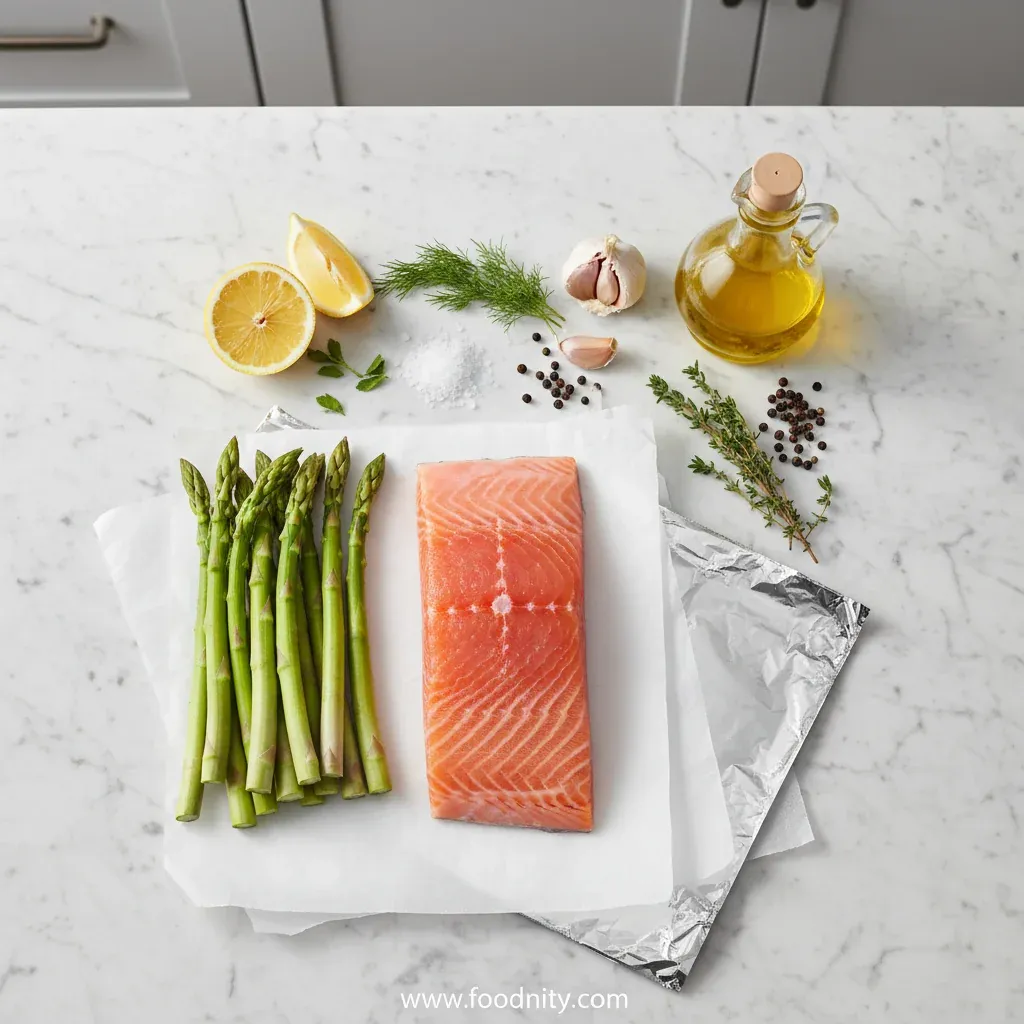
Place a sheet of foil on the parchment; arrange a salmon fillet in the center, drizzle with ½ tbsp olive oil, season with salt, pepper, and half the herbs.
- 3
Lay asparagus spears alongside the fish, drizzle with remaining olive oil, and top with lemon slices and the rest of the herbs.
- 4
Fold the foil over the salmon and asparagus, sealing the edges tightly to create a packet. Repeat for remaining portions.
- 5
Bake the packets for 12‑15 minutes, until the salmon flakes easily with a fork and the asparagus is tender‑crisp.
- 6
Remove from oven, open packets carefully (steam will be hot), and serve with a fresh squeeze of lemon.
Nutrition per serving
- 350 kcal
- Calories
- 34 g
- Protein
- 6 g
- Carbs
- 18 g
- Fat
Tips & notes
- If you like a bit of spice, sprinkle a pinch of red pepper flakes before sealing. - For extra crispness, broil the packets for the last 2 minutes, watching closely. - A drizzle of balsamic reduction after baking adds a subtle sweetness.
Frequently asked questions
Can I use frozen salmon?
Yes, thaw it completely in the refrigerator first, then pat dry before packing.
Do I need to pre‑heat the foil?
No, place the sealed packets directly on a hot oven tray; the foil will warm with the oven.
What if I don’t have fresh herbs?
Dried dill or parsley can work; use half the amount to avoid overpowering the delicate fish.
Can I add other vegetables?
Thinly sliced carrots, zucchini, or cherry tomatoes join nicely; keep pieces uniform for even cooking.
How long can leftovers be stored?
Refrigerate in an airtight container for up to 2 days; reheat gently in a skillet.
Is this recipe gluten‑free?
Absolutely, as long as you choose a gluten‑free soy sauce alternative if you use it.

Lucas Bennett
Chef Lucas Bennett specializes in rich and hearty beef dishes inspired by traditional steakhouse cooking. He is passionate about slow-cooked stews, juicy steaks, and bold flavors that highlight the natural taste of…