There is something about the way the air changes when it gets cooler that just makes me want to stay inside with a big pot of something simmering on the stove. Honestly, I've always found that a bowl of butternut squash soup is the quickest way to make a house feel like a home. It's not just about the hunger, really, but about that feeling of safety and warmth. This recipe is one of those steady constants in my life—simple, honest, and deeply satisfying without trying too hard.
The essence of the dish
What makes this butternut squash soup special is the balance. It's a dance between the natural sweetness of the gourd, the saltiness of the broth, and the bright acidity of the lemon. It feels nourishing in a way that only homemade food can.
A fun fact or historical angle
Did you know that butternut squash is technically a fruit? But we treat it as a vegetable because of its savory profile, making it a versatile star in farmhouse recipes.
Flavor or sensory focus
The first thing you'll notice is the scent—warm, earthy, and slightly sweet. Then comes the texture, which is like velvet on the tongue, followed by a gentle warmth that spreads through your chest.
You Must Know
- Roasting is non-negotiable for the best flavor profile
- Always taste for salt before blending
- Keep the heat low when simmering to avoid scorching
Looking back, I used to just boil everything in one pot. It was fine, I guess, but it lacked that certain something. Once I started roasting, everything changed. It's a slower way of doing things, but that's the whole point, isn't it?
If you're in the mood for something similar but different, a sweet potato soup offers a lovely alternative.
The story behind it
Butternut squash, a cultivar of Cucurbita moschata, became a staple of North American autumns due to its exceptional storage capabilities and natural sweetness. Originating from the diverse squash varieties of Central and South America, this specific vegetable was prized by early settlers for its nutrient density. Over time, the practice of roasting the squash to caramelize its natural sugars before simmering it into a puree became the gold standard for achieving a rich, velvety texture in traditional vegetable soups.
Why You'll Love It
- The texture is incredibly silky and luxurious without needing heavy creams
- It uses naturally sweet vegetables that satisfy a craving for comfort
- It's a wonderful way to use seasonal produce at its peak ripeness
- The preparation is slow and meditative, filling the whole house with a sweet scent
Tips for success
- Dry the squash after peeling to ensure it roasts rather than steams
- Don't boil the soup vigorously after blending, or it might separate
- Taste the squash before adding it to the pot to ensure it's fully cooked
Professional secrets
- Roasting the aromatics with the squash for a deeper flavor profile
- Using a touch of acidity to cut through the natural starchiness
- Passing the blended soup through a fine-mesh sieve for a restaurant-grade finish
Common mistakes to avoid
- Adding lemon juice too early, which can dull the flavor
- Over-processing in the blender, which can make the soup too airy
- Using too much maple syrup, masking the vegetable taste
Substitutions
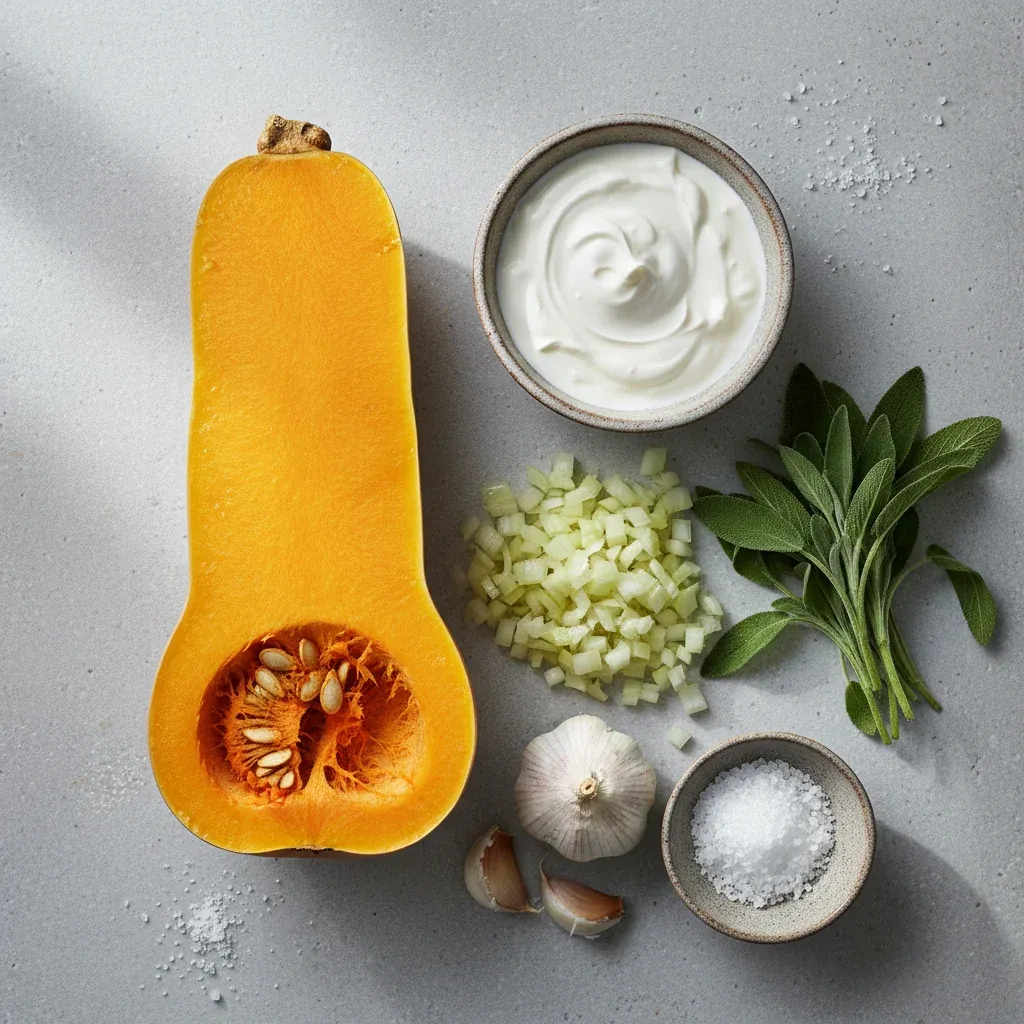
- Butternut Squash: Pumpkin or Kabocha squash. Pumpkin is softer and may require slightly less roasting time.
- Maple Syrup: Honey or Agave. Honey is slightly stronger, so use a little less.
Variations
- Curried Squash Soup: Add 1 tablespoon of yellow curry powder with the garlic for a warming, spicy twist.
- Apple-Squash Blend: Roast one peeled apple alongside the squash for a fruitier, tart flavor profile.
Storage
Store in an airtight container in the refrigerator for up to 4 days. Reheat on the stovetop over low heat.
Make ahead
You can roast the squash and prepare the base up to two days in advance. Just blend and add the lemon juice on the day you serve it.
Leftovers
Reheat gently in a pot over low heat, adding a splash of water or broth if it has thickened too much in the fridge.
Serving ideas
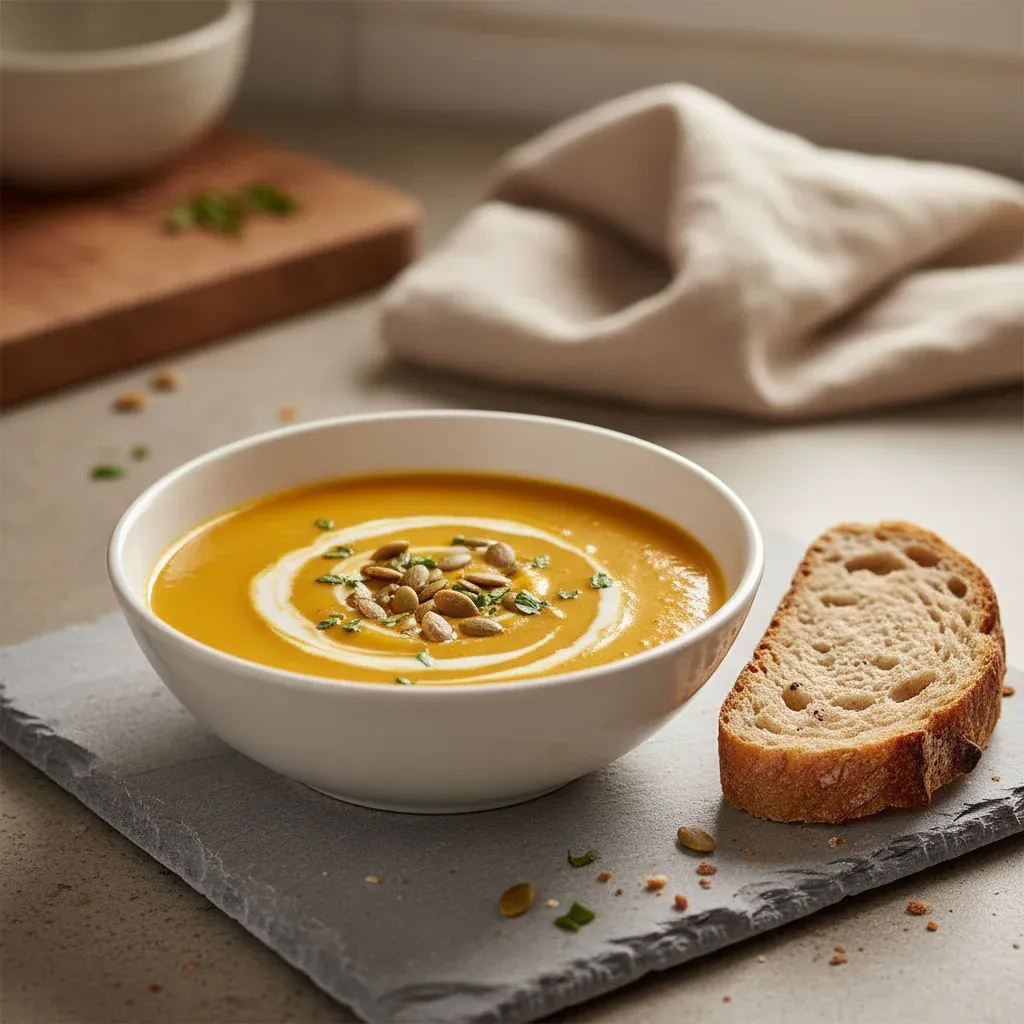
- Serve in a warmed ceramic bowl
- Top with a few fried sage leaves for elegance
- Pair with a vegetable soup for a tasting flight
- Garnish with a crack of fresh black pepper
Allergy information
Naturally nut-free and soy-free. If using butter, contains dairy.
Creamy Butternut Squash Soup Recipe
A rich and creamy vegetable soup that brings the warmth of the season into your kitchen with simple, healthy ingredients.
- Prep time
- 20 min
- Cook time
- 45 min
- Total time
- 1 h 5 min
- Difficulty
- Easy
- Cuisine
- American
Ingredients
For Roasting
For the Soup
Instructions
- 1
Preheat your oven to 400°F. Toss the cubed squash with olive oil, salt, and pepper on a large baking sheet. Spread them out so they aren't crowding each other. Roast for about 25-30 minutes until the edges are soft and browned.
- 2
While the squash is roasting, heat a bit of oil in a large pot over medium heat. Add the onion and cook it slowly until it's translucent and soft—don't rush this, let it get sweet.
- 3
Stir in the minced garlic and fresh sage. Let them sizzle for just a minute until the smell fills your kitchen. Wow, that's the best part.
- 4
Pour in the vegetable broth and the maple syrup. Bring it to a gentle simmer, then turn the heat down and let it bubble softly for about 10 minutes.
- 5
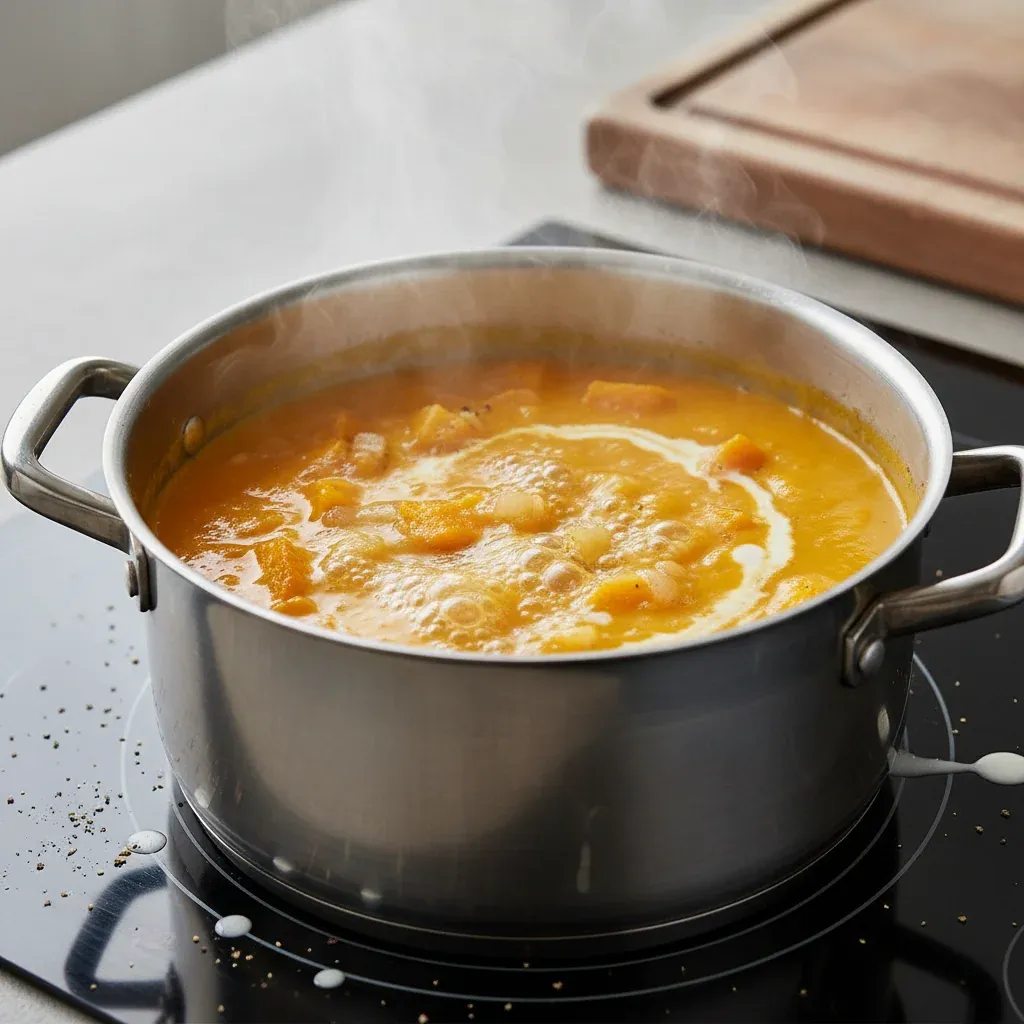
Carefully add the roasted squash into the pot. Use an immersion blender to blend until smooth, or transfer to a blender in batches. Be careful with the steam, it's hot!
- 6
Stir in the lemon juice. Taste it—this is where you decide if it needs a bit more salt or pepper. Let it sit for a moment to settle.
Nutrition per serving
- 210 kcal
- Calories
- 5 g
- Protein
- 28 g
- Carbs
- 8 g
- Fat
Tips & notes
- If you have a very large squash, you may need an extra cup of broth to get the consistency right. - For a richer version, stir in a tablespoon of heavy cream or coconut milk at the very end. - Make sure to peel the squash thoroughly; the skin can sometimes leave little green bits in the soup.
Frequently asked questions
Can I make this without a blender?
It's difficult to get the 'creamy' effect without blending, but you can mash the roasted squash very thoroughly with a fork for a chunkier, rustic style.
How do I store the leftovers?
Keep it in an airtight container in the fridge for up to 4 days. It actually tastes better on day two.
Can I freeze this soup?
Yes, it freezes beautifully. Just leave a little room at the top of the container for expansion.
What if I don't have maple syrup?
A teaspoon of honey or brown sugar works just as well, though maple is the most traditional.
Is this soup vegan?
Yes, as long as you use vegetable broth and olive oil instead of butter.
Can I add other vegetables?
Absolutely. Carrots or parsnips blend in perfectly. You might even like a carrot soup for a change.

Daniel Greenfield
Chef Daniel Greenfield focuses on nutritious meals made with fresh and wholesome ingredients. His recipes are designed for people who want to eat healthy without sacrificing flavor. Daniel specializes in balanced meals…