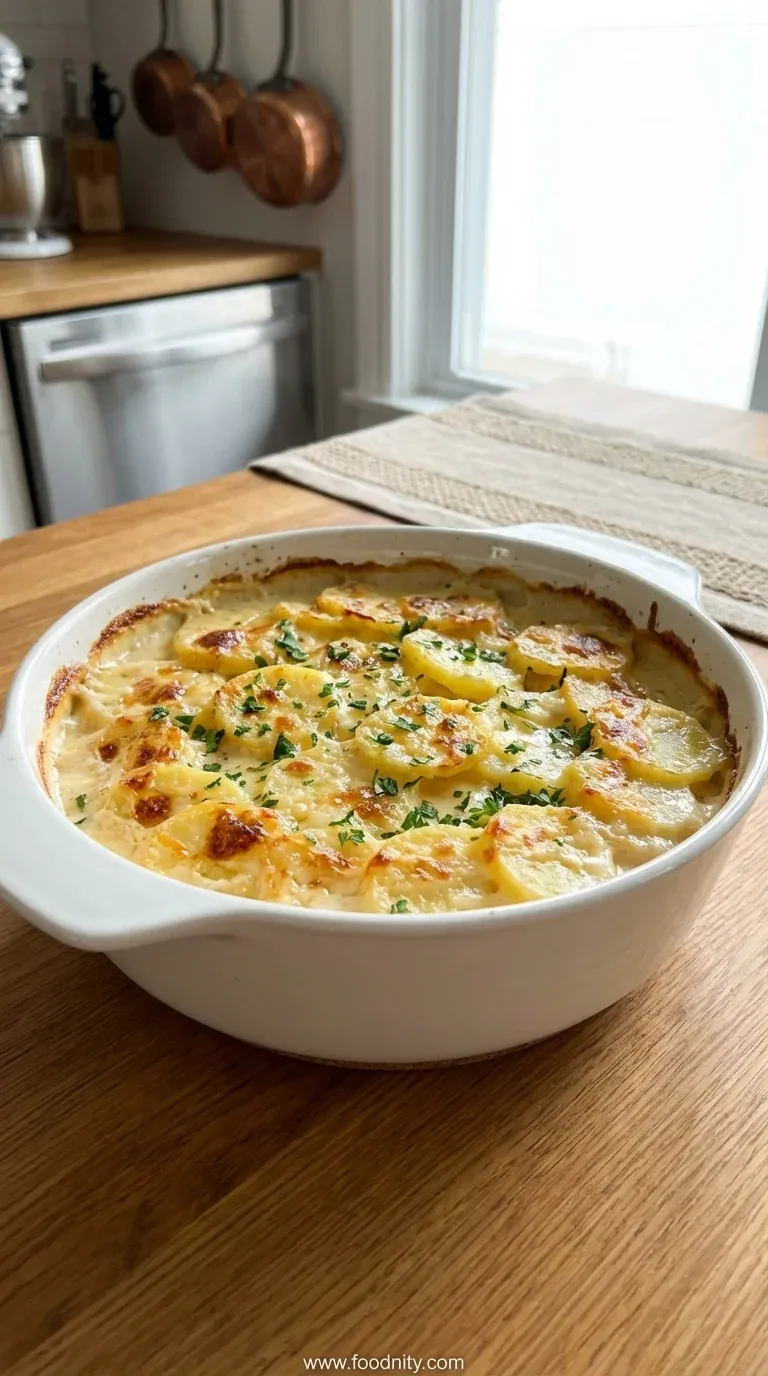
Honestly, this dauphinoise potatoes recipe feels like a warm hug on a cool evening. I start by thinly slicing the potatoes, then I let the kitchen fill with a quiet, buttery scent. If you love garlic potatoes, you’ll enjoy the mellow richness here. So, yeah, let’s take it slow and savor each step.
The essence of the dish
It’s the harmony of silk‑smooth cream, tender potato layers, and a buttery cheese crown that makes this recipe unforgettable.
A fun fact or historical angle
If you’ve tried scalloped potatoes, this French cousin adds a richer dairy base and a higher‑heat finish for that prized crust.
Flavor or sensory focus
Expect a subtle garlicky aroma, a gentle nutmeg whisper, and that irresistible caramelized cheese edge that cracks delightfully under the fork.
You Must Know
- Slice potatoes uniformly – it guarantees even cooking.
- Don’t skimp on the cream – it’s the heart of the dish.
- Finish uncovered for the perfect golden top.
Honestly, these points keep the dish from turning soggy or uneven. When the crust is just right, the whole plate exudes a warm, comforting glow. It’s the kind of side that makes you pause, smile, and think about family gatherings around the table.
The story behind it
The dauphinoise potato hails from the Alpine region of France, where shepherds layered thin slices of tuber with cream to make a hearty, sustaining dish for cold mountain nights. The method spread throughout French cuisine and became a staple of comfort cooking, celebrated for its creamy texture and subtly caramelized top. This classic side continues to grace tables from rustic bistros to family dinners, embodying simple ingredients transformed by patient heat.
Why You'll Love It
- Silky layers of potato and cream
- Easy to prepare with just a few pantry staples
- Gorgeous golden crust that looks as good as it tastes
- Comforting flavor that pairs with any main
Tips for success
- Don’t overcrowd the pan when slicing; keep slices uniform.
- Let the potatoes rest before cutting; it sets the layers.
- Taste the cream mixture and adjust seasoning early.
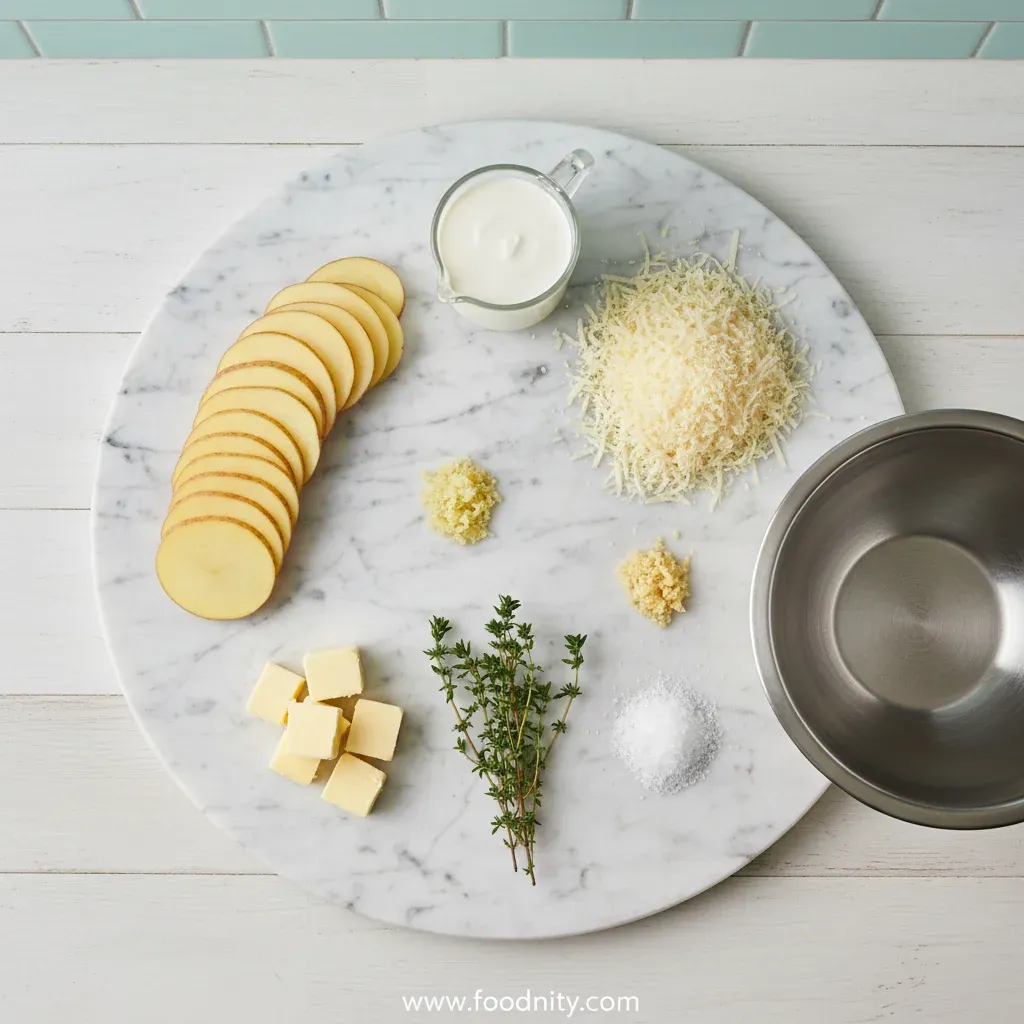
Professional secrets
- Room temperature potatoes bake more evenly.
- Low‑and‑slow simmer of the cream locks in flavor.
- A final sprinkle of cheese just before the last bake creates a perfect crust.
Common mistakes to avoid
- Overcrowding the pan with too many potato slices, leading to uneven cooking.
- Adding the cheese too early, causing it to burn before the potatoes are tender.
- Skipping the resting step, which can make the layers fall apart when sliced.
Substitutions
- Heavy Cream: Half‑and‑half or coconut cream. Coconut cream adds a faint tropical note; reduce any added sweetener.
- Gruyère Cheese: Sharp cheddar or Swiss cheese. Cheddar melts well but will change the flavor profile slightly.
Variations
- Spicy Version: Add a pinch of cayenne and a dash of smoked paprika for subtle heat.
- Mediterranean Style: Mix in feta cheese, olives, and sun‑dried tomatoes for a tangy twist.
Storage
Store in an airtight container in the refrigerator for up to three days; reheat covered in the oven at 325°F until warmed through.
Make ahead
You can slice the potatoes and keep them in a bowl of cold water, then cover the cream mixture and refrigerate for up to 12 hours before baking.
Leftovers
Reheat gently in a skillet over low heat, adding a splash of cream if needed to revive the sauce.
Serving ideas
- Serve over steamed asparagus for a bright contrast.
- Pair with roasted chicken or a simple grilled salmon.
- Garnish with fresh thyme leaves for aromatic finish.
- Add a side of mixed greens tossed in a light vinaigrette.
Allergy information
Contains dairy (cream, cheese) and garlic.
Dauphinoise Potatoes Recipe
A smooth, buttery layered potato dish that brings warmth to any meal.
- Prep time
- 20 min
- Cook time
- 45 min
- Total time
- 1 h 5 min
- Difficulty
- Easy
- Cuisine
- French
Ingredients
Main Ingredients
Optional Topping
Instructions
- 1
Preheat the oven to 350°F (175°C). Grease a 9‑inch baking dish with butter, letting the little pieces melt and coat the bottom.
- 2
In a saucepan, combine heavy cream, minced garlic, lemon juice, nutmeg, salt, and pepper. Warm over low heat until just simmering, then remove from heat.
- 3
Arrange a layer of potato slices in the dish, overlap slightly, then drizzle with a third of the cream mixture and sprinkle with cheese. Repeat layers, finishing with the remaining cheese on top.
- 4
Cover with foil and bake for 30 minutes. Remove foil, then bake another 15‑20 minutes until the top is golden brown and the potatoes are fork‑tender.
- 5
Let the dish rest for 10 minutes before serving; this helps the layers set and makes slicing easier.
Nutrition per serving
- 420 kcal
- Calories
- 12 g
- Protein
- 28 g
- Carbs
- 28 g
- Fat
Tips & notes
- For a richer flavor, add a splash of white wine to the cream before simmering. - If you like a crunchier top, switch the last 5 minutes to broil, watching carefully. - A heartier version uses steak potatoes layered with thinly sliced steak.
Frequently asked questions
Can I use skim milk instead of heavy cream?
You can, but the texture will be less luxurious. A mix of skim milk and a bit of butter can help retain richness.
What type of potato works best?
Yukon Gold or Russet are ideal because they hold shape and absorb flavor without turning mushy.
Do I need to pre‑cook the potatoes?
No, the thin slices cook through during baking. Just be sure they’re uniformly cut.
How long can I store leftovers?
Refrigerate in an airtight container for up to 3 days; reheat gently in the oven to revive the crust.
Can I add herbs?
Fresh thyme or rosemary sprinkled between layers adds a fragrant lift without overpowering the cream.
Is this recipe gluten‑free?
Yes, as long as you use a gluten‑free cheese and ensure other ingredients are certified gluten‑free.

Amelia Hart
Chef Amelia Hart is a dessert enthusiast who loves creating elegant cakes, cookies, and baked treats. Her baking style combines classic pastry techniques with creative flavor combinations. Amelia believes that desserts…