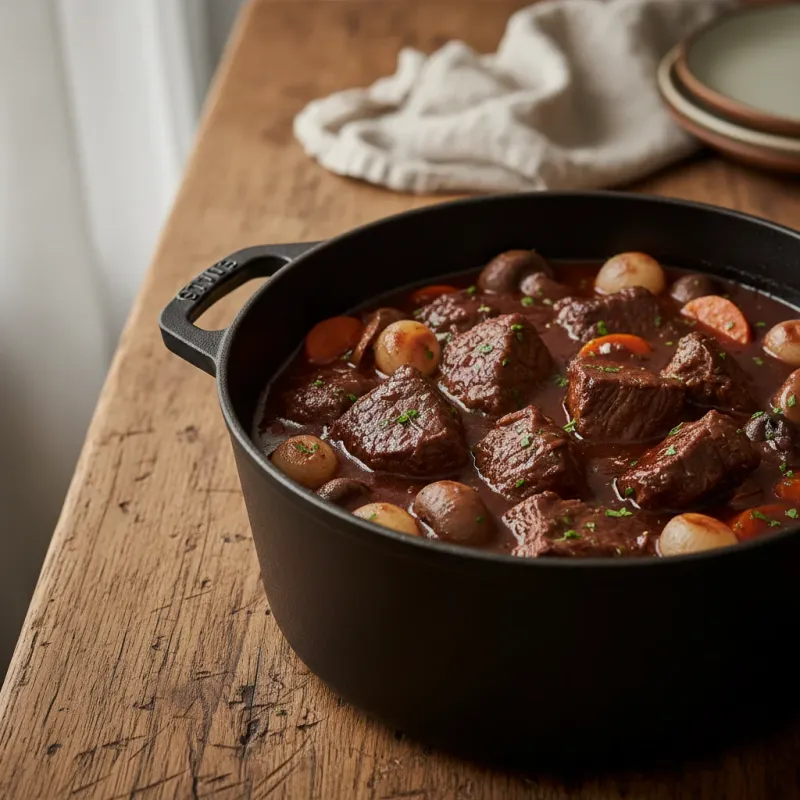
There is something about the scent of a slow-cooking stew that just makes a house feel like a home. Honestly, whenever the air gets a bit chilly, I find myself craving a real, hearty french beef bourguignon. It's not a meal you rush; it's a meal that asks you to slow down, pour a glass of water, and wait while the oven does the heavy lifting. I remember when I first tried making this, I was so worried about the timing, but look, the beauty of this dish is in its patience. It's just simple ingredients, a bit of warmth, and a lot of love.
The essence of the dish
What makes french beef bourguignon so special is the marriage of rustic simplicity and refined flavor. It transforms a tough cut of meat into something luxurious, proving that time is often the most important ingredient in any kitchen.
A fun fact or historical angle
While now considered a classic of French cuisine, this dish was originally a way for rural families to make use of every part of the animal and every available vegetable in the garden, creating a sustainable and nourishing meal.
Flavor or sensory focus
The eater will first notice the deep, earthy aroma of thyme and bay leaf, followed by the rich, savory-sweet taste of slow-cooked carrots and the melt-in-your-mouth tenderness of the beef.
You Must Know
- Always use a cut like chuck or shoulder for the best results.
- Avoid boiling the meat; a gentle simmer or low oven heat is key.
- Fresh carrots add a brightness that canned versions simply cannot mimic.
Honestly, I've made the mistake of turning the heat up too high because I was in a rush, and ugh, it just toughens the meat. It's a lesson I learned the hard way about twenty years ago. Just trust the low heat.
Anyway, once you get the rhythm of it, this becomes one of the easiest beef recipes you'll ever master. It's just about letting the oven do the work while you relax with a book or a cup of tea.
The story behind it
Beef Bourguignon originates from the Burgundy region of France, where it began as a humble peasant dish. Traditionally, it utilized the tough cuts of beef available to farmers, which required long, slow simmering to break down the connective tissues into a gelatinous, rich sauce. While it eventually found its way into high-end Parisian bistros, its heart remains in the rural countryside, representing the ingenuity of using simple, local ingredients to create a meal that could sustain a family through long winter days.
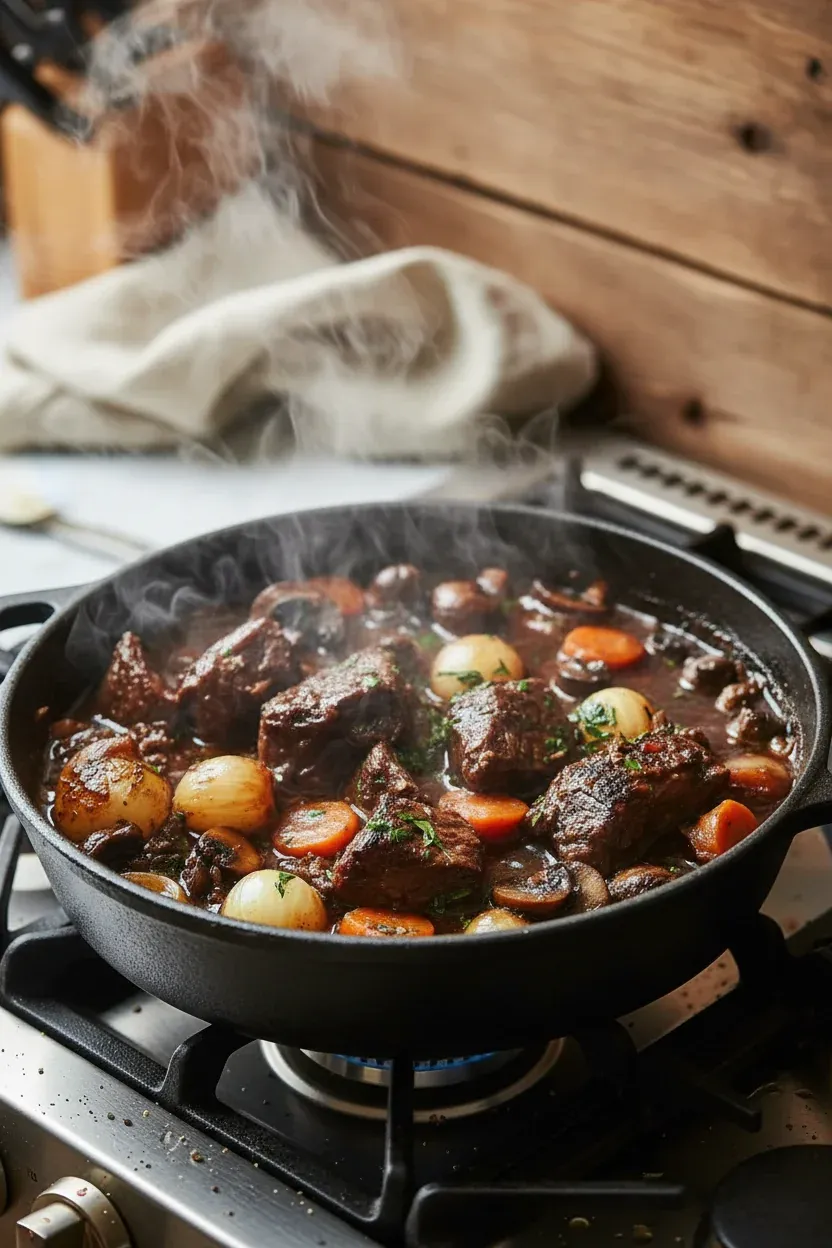
Why You'll Love It
- The beef becomes incredibly tender, almost falling apart with a fork
- A deep, complex flavor profile that develops over hours of slow braising
- It fills the entire kitchen with a savory, grounding aroma
- Perfect for making in large batches to enjoy as cozy dinners throughout the week
Tips for success
- Dry the meat thoroughly to avoid steaming the beef instead of searing it.
- Don't stir the meat too often while browning; let it sit to develop a crust.
- Check the tenderness with a fork; if it doesn't slide in easily, give it another 30 minutes.
- Use a tight-fitting lid to keep the moisture inside the pot.
Professional secrets
- Deglazing the pan thoroughly captures the 'fond' which provides a professional-level depth of flavor.
- Adding cold butter at the very end (monter au beurre) creates a rich, velvety emulsion in the sauce.
- Using a small amount of tomato paste adds an umami boost and a rich color without tasting like tomato soup.
Common mistakes to avoid
- Crowding the pan when browning the meat, which leads to grey, steamed beef instead of brown, seared beef.
- Using a high oven temperature, which can toughen the meat instead of breaking it down.
- Forgetting to remove the bay leaves and thyme stems before serving.
Substitutions
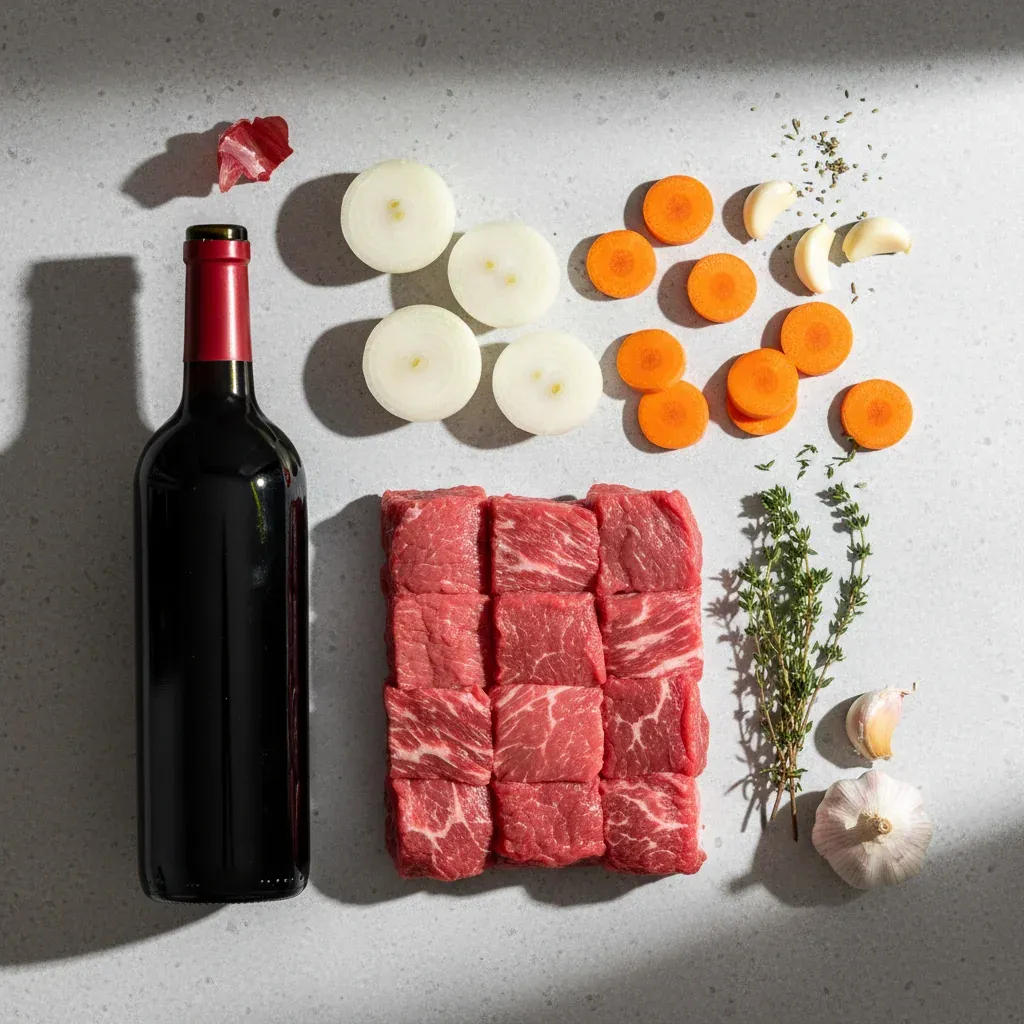
- Beef Chuck: Beef Stew Meat or Bottom Round. Chuck is preferred for tenderness, but other cuts work if cooked even longer.
- Pearl Onions: Diced yellow onion. You lose the aesthetic of the pearl onions, but the flavor remains similar.
Variations
- Mushroom Addition: Sauté sliced cremini mushrooms in butter and add them to the stew in the last 30 minutes of cooking.
- Heartier Stew: Add diced parsnips or celery for extra vegetable depth, making it more like vegetable beef soup.
Storage
Store in an airtight container in the refrigerator for up to 4 days. Reheat gently in a saucepan over low heat.
Make ahead
This dish is a dream for make-ahead meals. It can be fully cooked and chilled, then reheated on the stove. In fact, the flavors often deepen and improve after a night in the fridge.
Leftovers
Reheat gently in a pot over medium-low heat, adding a splash of water or extra stock if the sauce has thickened too much during cooling.
Serving ideas
- Spoon over creamy mashed potatoes for a full meal.
- Serve with a side of buttered wide egg noodles, similar to slow cooker beef and noodles.
- Pair with a simple arugula salad to cut through the richness.
- Garnish with a sprinkle of fresh parsley for a pop of color.
Allergy information
Contains wheat (flour) and dairy (butter).
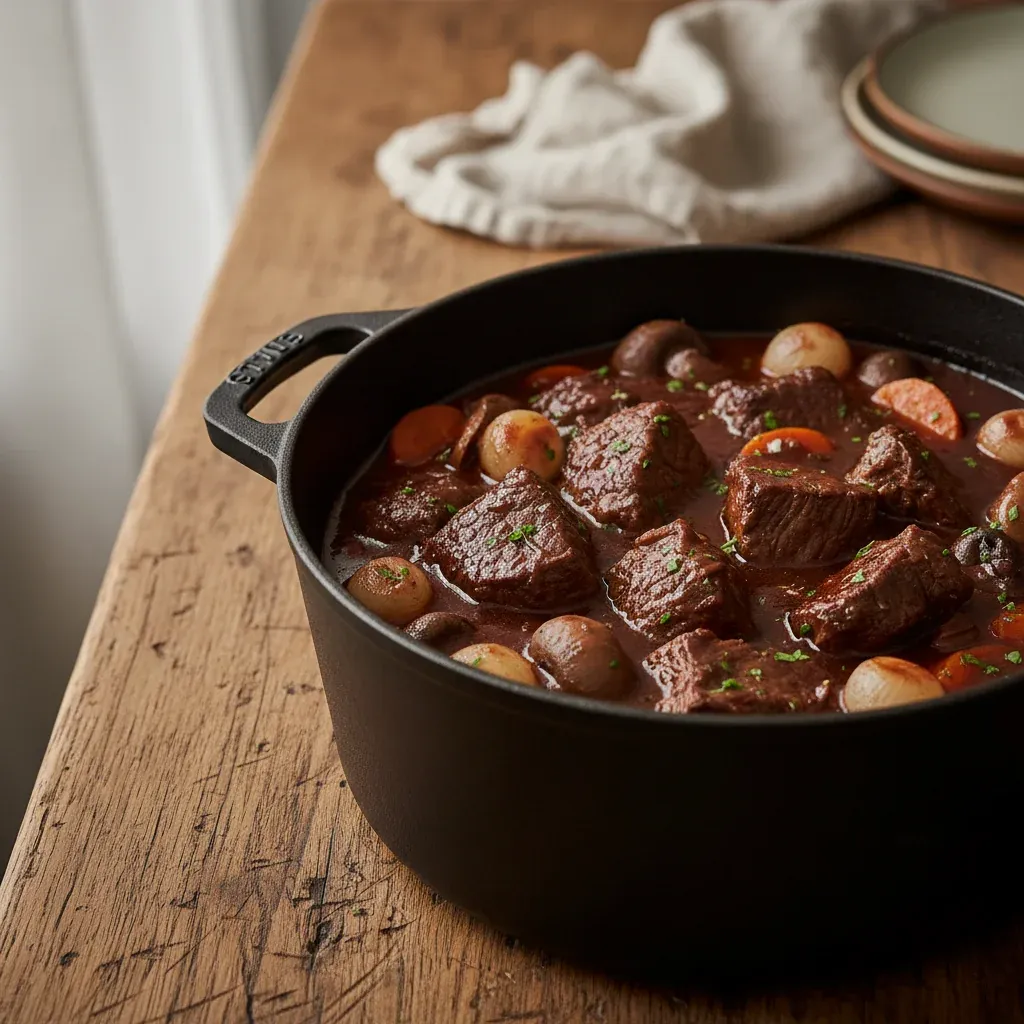
French Beef Bourguignon Recipe for a Cozy Dinner
Tender oven-braised beef in a deep, savory gravy, capturing the essence of rustic French comfort food.
- Prep time
- 30 min
- Cook time
- 3 h
- Total time
- 3 h 30 min
- Difficulty
- Medium
- Cuisine
- French
Ingredients
Main Ingredients
Braising Liquid & Herbs
Instructions
- 1
Pat the beef cubes dry with paper towels. In a bowl, mix flour, salt, and pepper. Toss the beef in the flour mixture until evenly coated. This ensures the sauce thickens naturally later.
- 2
Heat oil in a large Dutch oven over medium-high heat. Brown the beef in batches, making sure not to crowd the pan. Cook until each piece has a deep brown crust, then remove and set aside on a plate.
- 3
In the same pot, add the carrots and pearl onions. Sauté for about 5-7 minutes until the onions are slightly golden. Stir in the minced garlic and tomato paste, cooking for just another minute until fragrant.
- 4
Slowly pour in the beef stock and Worcestershire sauce, scraping the bottom of the pot with a wooden spoon to release all those brown bits—that's where the flavor lives.
- 5
Return the browned beef and any juices back into the pot. Tuck in the thyme sprigs and bay leaves. Bring the liquid to a gentle simmer.
- 6
Cover the pot with a tight lid and place it in a preheated oven at 325°F (160°C). Let it braise undisturbed for about 2.5 to 3 hours, or until the beef is fork-tender.
- 7
Remove the pot from the oven. Take out the bay leaves and thyme stems. If the sauce needs thickening, simmer on the stove for a few minutes. Stir in a knob of butter at the end for a glossy finish.
Nutrition per serving
- 420 kcal
- Calories
- 38 g
- Protein
- 18 g
- Carbs
- 22 g
- Fat
Tips & notes
- If you don't have pearl onions, sliced shallots or regular diced onions work just fine. - For a deeper color, ensure the beef is seared until it's truly brown, not just grey. - If you are using a slow cooker, the searing step is still essential for the flavor.
Frequently asked questions
Can I make this in a slow cooker?
Yes, you can. After searing the meat and sautéing the vegetables on the stove, transfer everything to your slow cooker and cook on low for 8 hours. It's similar to making a crockpot beef pot roast.
What is the best beef to use?
Beef chuck roast is the gold standard here because of its fat content and connective tissue, which break down into a rich sauce.
How do I thicken the sauce if it's too thin?
You can either let it simmer uncovered for longer or whisk in a small cornstarch slurry (cornstarch mixed with water) at the very end.
Can I add potatoes to the stew?
Absolutely. Adding potatoes makes it more like a easy homemade beef stew, making it a more complete one-pot meal.
How do I store leftovers?
Store in an airtight container in the fridge for up to 4 days. The flavor actually improves the next day.
What can I serve this with?
Mashed potatoes, buttered noodles, or a crusty piece of French bread are all wonderful choices to soak up that beautiful gravy.

Rachel Morgan
Chef Rachel Morgan is known for her practical cooking style that helps busy families prepare delicious meals in a short time. Her recipes focus on simple ingredients, quick preparation, and minimal cleanup. Rachel…