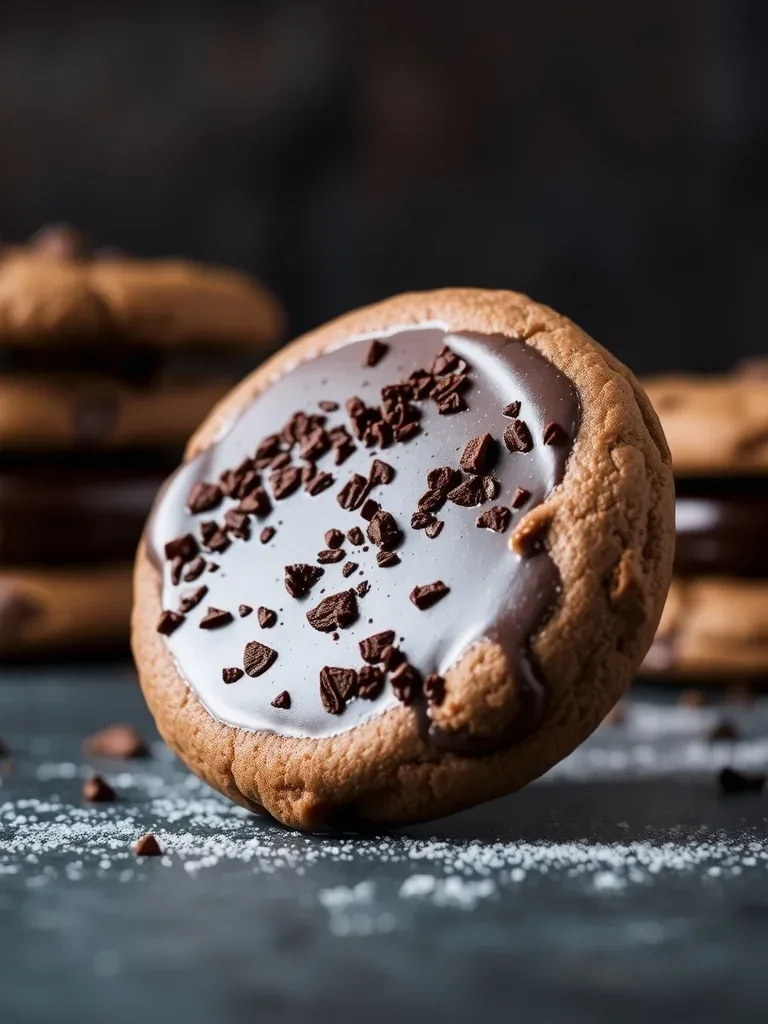
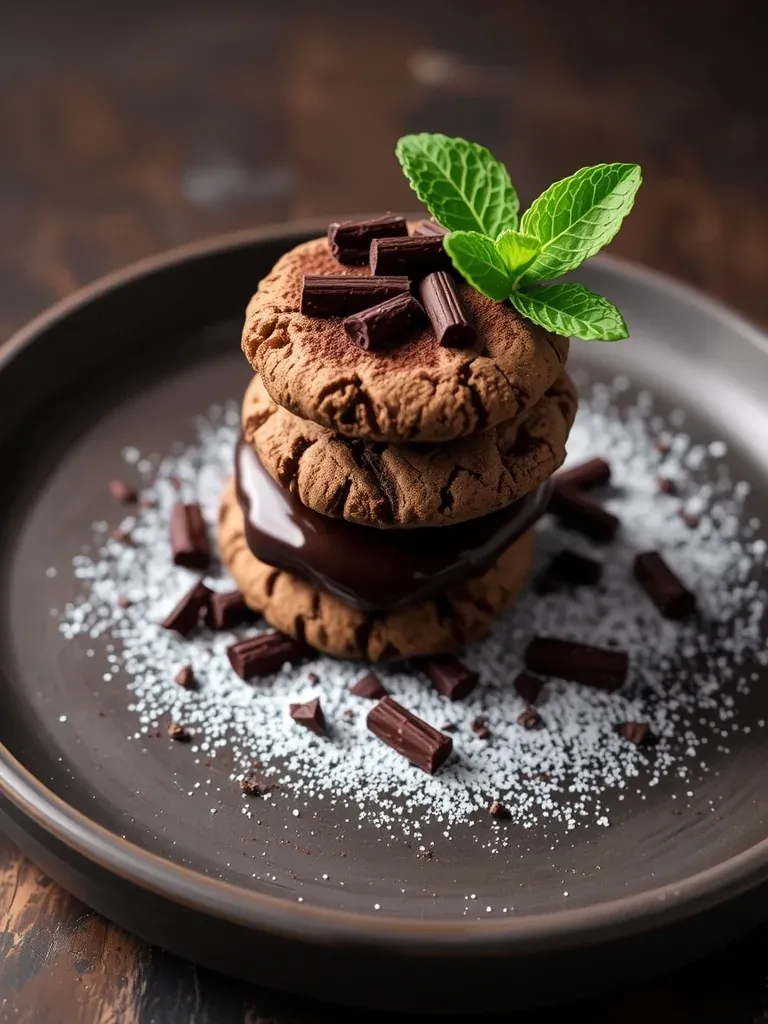
Honestly, there’s something magical about a cookie that’s crisp on the edges and hides a silky, melt‑in‑your‑mouth ganache center. When you bite into one, the gentle crack gives way to a warm chocolate sigh. If you’re looking for a little extra richness, you might try a side of peanut butter mousse as a dip. It’s a simple, comforting moment that feels like a warm hug from the kitchen.
The essence of the dish
A buttery sugar cookie cradles a luscious chocolate ganache that crackles with a whisper of sea salt, delivering contrast in every bite.
A fun fact or historical angle
Ganache was originally a glaze for wedding cakes in France; today it’s a beloved filling for cookies worldwide.
Flavor or sensory focus
Expect the sweet aroma of butter and vanilla, the gleam of dark chocolate, and the gentle snap of a crisp edge meeting a silky interior.
You Must Know
- Use dark chocolate (70%+)
- Do not over‑bake the cookies
- Cool completely before filling
When the cookies are cool, the ganache will set just enough to hold together without melting. This is the moment that makes the treat feel indulgent yet approachable. A quick pause here lets the flavors settle and the texture become just right.
The story behind it
The origin of ganache dates back to 19th‑century France, where pastry chefs blended chocolate and cream to create a luxurious glaze for cakes. Over time, the smooth mixture found its way into cookies, offering a decadent surprise inside a humble bite. This marriage of crisp dough and velvety interior echoes the classic French tradition while fitting perfectly into modern home baking.
Why You'll Love It
- A satisfying contrast of textures
- Deep chocolate flavor without fuss
- Easy to scale for gatherings
- Stores well, staying fresh for days
Tips for success
- Don't over‑mix the dough; it can lead to tough cookies.
- Let the ganache rest a few minutes before piping for cleaner lines.
- Cool the cookies completely before sandwiching; warmth melts the ganache too much.
Professional secrets
- Room‑temperature butter ensures even creaming with sugar.
- Warm cream poured over chocolate creates a perfectly glossy ganache.
- Chilling the dough prevents spreading, giving a uniform shape.
Common mistakes to avoid
- Over‑mixing the dough, which creates a tough texture.
- Baking too long, causing the edges to become overly crisp.
- Filling the cookies while the ganache is still too hot, leading to soggy interiors.
Substitutions
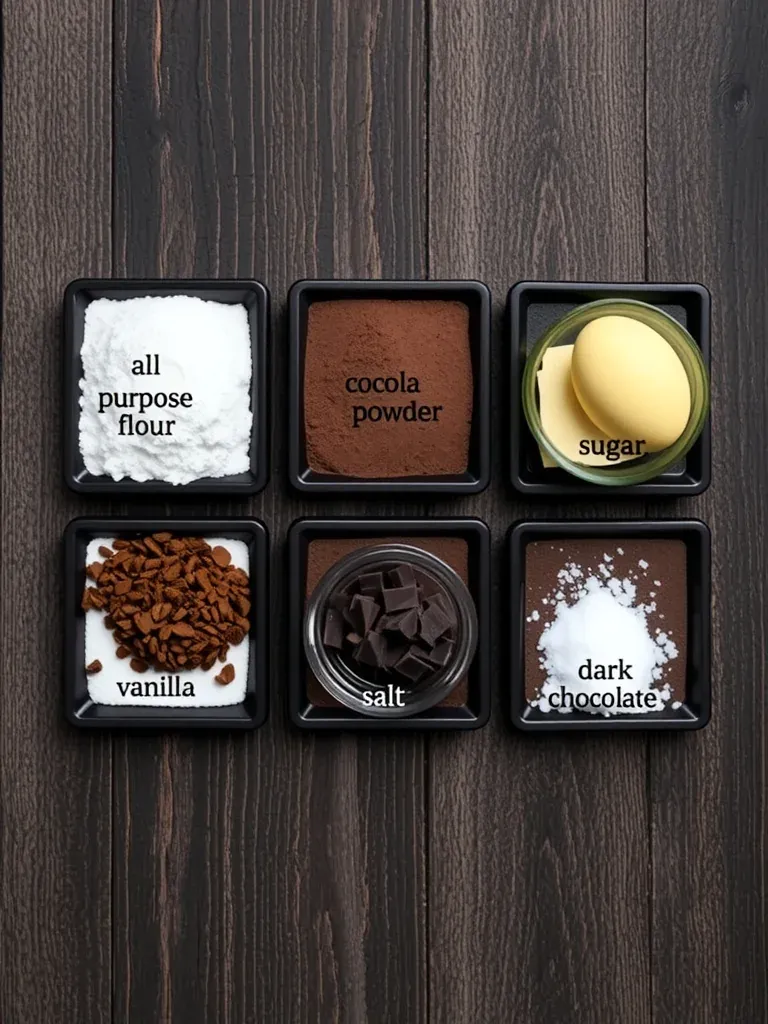
- Dark chocolate: Milk chocolate or white chocolate. Milk chocolate yields a sweeter ganache; white chocolate needs a splash of vanilla for depth.
- All‑purpose flour: Gluten‑free flour blend. Swap 1‑to‑1 for a gluten‑free version; ensure the blend contains xanthan gum.
Variations
- Spicy Version: Add a pinch of cayenne pepper to the dough and a drizzle of chili‑infused chocolate ganache.
- Mediterranean Style: Mix finely chopped toasted almonds into the dough and finish with a sprinkle of orange zest.
Storage
Store in an airtight container for up to five days; add a slice of bread to keep the cookies soft.
Make ahead
You can prepare the dough and ganache a day ahead; keep them refrigerated separately and assemble just before serving.
Leftovers
Store any extra sandwiches in an airtight container; gently warm in a low oven for a few minutes to restore softness before serving.
Serving ideas
- Arrange cookies on a pastel platter for tea time.
- Serve with a scoop of vanilla ice cream for an indulgent dessert.
- Pair with a dark roast coffee to balance the sweetness.
- Garnish each sandwich with a tiny flaky sea‑salt crystal.
Allergy information
Contains dairy, gluten, and soy (from chocolate).
Ganache Cookies
A crisp‑on‑the‑outside, ganache‑filled cookie that’s rich, silky, and simply unforgettable.
- Prep time
- 20 min
- Cook time
- 12 min
- Total time
- 32 min
- Difficulty
- Easy
- Cuisine
- American
Ingredients
Cookie Dough
Chocolate Ganache
Instructions
- 1
Preheat the oven to 350°F (175°C) and line two baking sheets with parchment paper.
- 2
In a bowl whisk together flour, baking soda, and salt; set aside.
- 3
Using a mixer, cream butter with brown and granulated sugars until light and fluffy, about 2‑3 minutes. Add the egg and vanilla, beating until combined.
- 4
Gradually stir in the dry ingredients, mixing just until a smooth dough forms. Chill the dough for 30 minutes.
- 5
While the dough chills, prepare the ganache: place chopped chocolate in a heat‑proof bowl.
- 6
Heat cream in a saucepan until just simmering, then pour over the chocolate. Let sit 1 minute, then whisk until glossy. Add butter and a pinch of sea salt; set aside to thicken slightly.
- 7
Scoop dough onto the prepared sheets (about 1‑inch balls). Bake 10‑12 minutes, until the edges are lightly golden. Cool completely on a wire rack.
- 8
Pipe or spoon a teaspoon of ganache onto the flat side of one cookie, then sandwich with another cookie, pressing gently.
- 9
Optionally, sprinkle a tiny pinch of sea salt on top of each sandwich for extra flavor contrast.
Nutrition per serving
- 210 kcal
- Calories
- 3 g
- Protein
- 24 g
- Carbs
- 12 g
- Fat
Tips & notes
- For an even thicker ganache, let it cool longer before filling. - If the dough feels too soft, add a little more flour, one tablespoon at a time. - These cookies keep their texture best when stored at room temperature with a slice of bread.
Frequently asked questions
Can I use milk chocolate instead of dark?
Yes, but the ganache will be sweeter and less intense. Choose a quality milk chocolate for best results.
How long can the cookies be stored?
Keep them in an airtight container for up to five days. The ganache stays soft, and the cookies remain crisp.
Do I need a pastry bag for the ganache?
A small spoon works fine, but a pastry bag gives a cleaner finish and makes assembly quicker.
Can I freeze the dough or finished cookies?
Freeze the dough for up to three months; thaw before baking. Finished cookies can be frozen for two months, then thaw at room temperature.
What if I don’t have sea salt?
A pinch of regular table salt works, but flaky sea salt adds a delicate crunch that complements the chocolate.
Can I make a gluten‑free version?
Swap all‑purpose flour for a 1:1 gluten‑free flour blend and follow the same steps.

Amelia Hart
Chef Amelia Hart is a dessert enthusiast who loves creating elegant cakes, cookies, and baked treats. Her baking style combines classic pastry techniques with creative flavor combinations. Amelia believes that desserts…