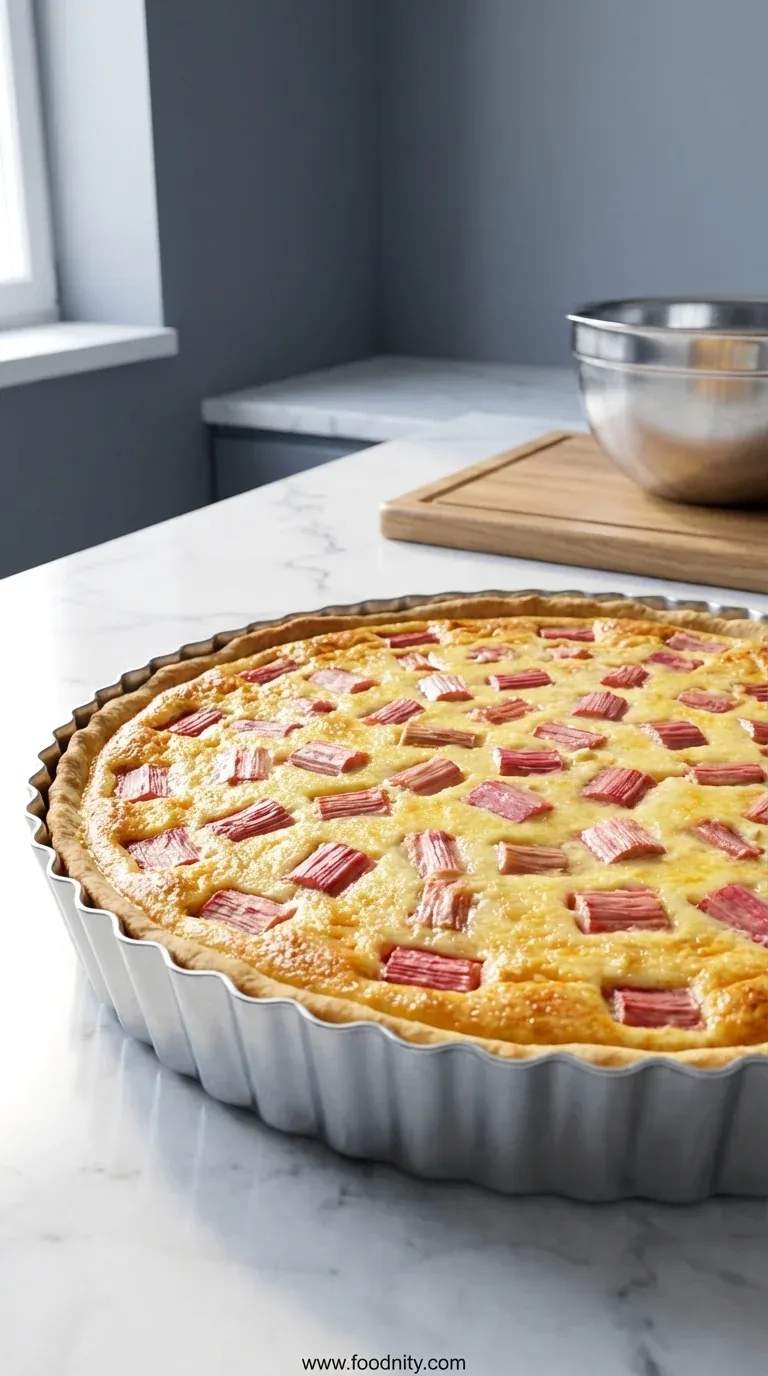
I remember the first time I tasted a fresh rhubarb stalk at the farmer’s market – the gentle snap, the faint tartness, and the way it seemed to promise something brighter. So, I set out to create a pie that would capture that memory while staying kind to a keto lifestyle. The result? A custard pie that feels like a quiet, warm kitchen moment, with the rhubarb’s natural zing tucked into a low‑carb custard. Yeah, it’s that simple and satisfying.
The essence of the dish
It’s the harmony between the tart rhubarb and the velvety custard, all embraced by a buttery almond‑flour crust. The low‑carb profile lets you indulge without guilt.
A fun fact or historical angle
Rhubarb was once called “pie plant” in England because it was a primary filling for pies during sugar shortages.
Flavor or sensory focus
You’ll first notice the fragrant vanilla, then the whisper of lemon, followed by the bright snap of rhubarb and the creamy finish.
You Must Know
- Keep the crust chilled for best texture
- Macerate rhubarb to draw out excess moisture
- Avoid over‑baking the custard to retain silkiness
These points keep the pie from becoming soggy or grainy. I’ve learned that a little patience in the prep stage pays off in the final bite. So, take your time, enjoy the subtle aromas, and let the pie come together gently.
The story behind it
Rhubarb has long been a staple of spring desserts across Europe, originally prized for its ability to stretch scarce sugar supplies. Over centuries, cooks discovered that its natural acidity balanced sweet treats, turning humble garden stalks into celebrated pies. This keto adaptation honors that legacy while reducing carbs, proving that tradition can evolve without losing its heart.
Why You'll Love It
- Low‑carb, stays within keto macros
- Bright rhubarb flavor without overwhelming sweetness
- Creamy custard that melts in your mouth
- Simple crust using almond flour for buttery texture
Tips for success
- Don't over‑mix the crust dough, it can become tough.
- Let the custard rest before slicing for cleaner pieces.
- Taste the rhubarb mixture; adjust erythritol if you prefer more sweetness.

Professional secrets
- Use room‑temperature butter for a flaky crust.
- Bake the custard on the middle rack for even heat.
- Cool the pie upside‑down to prevent soggy bottoms.
Common mistakes to avoid
- Over‑mixing the crust dough, leading to a tough base.
- Baking custard too long; it becomes grainy.
- Skipping the maceration step; rhubarb can be too watery.
Substitutions
- Almond flour: Coconut flour. Use half the amount and add extra eggs to maintain texture.
- Heavy cream: Full‑fat coconut milk. Gives a slight coconut aroma; adjust sweetness accordingly.
Variations
- Spicy Version: Add a pinch of cayenne and a dash of ginger for a subtle kick.
- Mediterranean Style: Fold in crumbled feta and toasted pine nuts after baking.
Storage
Refrigerate leftovers in an airtight container for up to three days; reheat gently in the oven.
Make ahead
You can slice and macerate the rhubarb tonight, then refrigerate the crust dough for up to 24 hours before baking.
Leftovers
Reheat gently in a low oven (300°F) covered with foil to keep the custard from drying.
Serving ideas
- Serve warm with a dollop of sugar‑free whipped cream.
- Pair with a light cucumber salad dressed in lemon vinaigrette.
- Garnish with fresh mint leaves for a pop of color.
- Accompany with a glass of chilled sparkling water.
Allergy information
Contains nuts (almond flour), dairy, and eggs.
Keto Rhubarb Custard Pie – Low-Carb Delight
Low‑carb rhubarb custard pie with a buttery crust and silky filling – perfect for keto lovers.
- Prep time
- 20 min
- Cook time
- 35 min
- Total time
- 55 min
- Difficulty
- Easy
- Cuisine
- American
Ingredients
Crust
Filling
Instructions
- 1
Preheat the oven to 350°F (175°C). Combine almond flour, erythritol, and salt in a bowl; cut in the cold butter until the mixture resembles coarse crumbs.
- 2
Add the egg, mix quickly to form a dough, press into a 9‑inch pie pan, and chill for 30 minutes. Meanwhile, toss rhubarb with erythritol and lemon juice; let it sit.
- 3
Blind‑bake the crust: line with parchment, add pie weights, bake 12‑15 minutes until lightly golden. Remove weights and parchment.
- 4
Whisk eggs, cream, almond milk, vanilla, and nutmeg together. Pour over the macerated rhubarb, then transfer the filling into the pre‑baked crust.
- 5
Bake for 25‑30 minutes until the custard is set but still gently jiggles in the center. Cool 10 minutes, dust with powdered erythritol, and serve warm.
Nutrition per serving
- 280 kcal
- Calories
- 6 g
- Protein
- 7 g
- Carbs
- 22 g
- Fat
Tips & notes
- If the crust looks too pale, give it an extra minute under the broiler. - A pinch of sea salt in the custard heightens the sweet‑tart balance. - For extra aroma, add a thin slice of orange zest to the rhubarb maceration.
Frequently asked questions
Can I use a different low‑carb flour?
Yes, coconut flour works but you’ll need to adjust the liquid ratios; it absorbs more moisture.
Is fresh rhubarb essential?
Fresh rhubarb gives the best texture and flavor; frozen can be used in a pinch but may release extra water.
How long does the custard stay stable?
In the refrigerator, the pie stays fresh for up to three days; re‑warm gently before serving if desired.
Can I make this pie vegan?
Swap almond milk for heavy cream and use a vegan butter substitute for the crust.
What sweetener works best?
Erythritol provides sweetness without grit; monk fruit blends are also fine.
Do I need to blind‑bake the crust?
Yes, a short blind‑bake prevents a soggy bottom and ensures a crisp edge.

Amelia Hart
Chef Amelia Hart is a dessert enthusiast who loves creating elegant cakes, cookies, and baked treats. Her baking style combines classic pastry techniques with creative flavor combinations. Amelia believes that desserts…