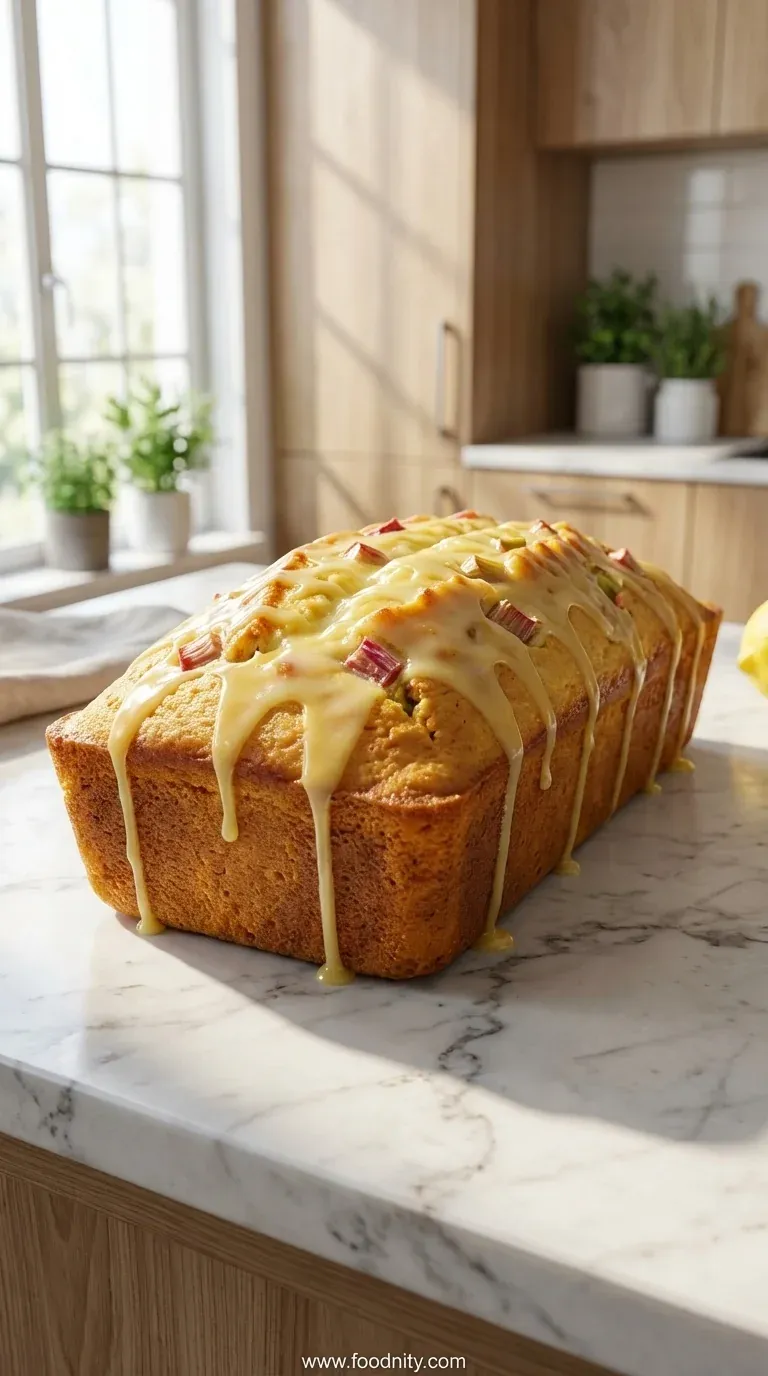
Honestly, this loaf feels like a quiet morning in the kitchen, the scent of lemon zest mingling with the soft tang of rhubarb. It’s not rushed; the batter rests, the glaze settles, and you end up with a humble slice that whispers comfort.
The essence of the dish
The loaf’s heart is the delicate marriage of tart rhubarb and lemon zest, while the buttery crumb keeps it soft. A thin, sweet glaze adds a final kiss of shine, making each bite both juicy and comforting.
A fun fact or historical angle
Rhubarb was once called "pie plant" in the 1800s because it was commonly used in pies before sugar became widely affordable.
Flavor or sensory focus
You’ll notice the first bite’s bright citrus spark, followed by the gentle tartness of rhubarb that softens into a buttery finish, all wrapped in a glossy, sweet glaze.
You Must Know
- Do not overbake; the loaf should stay tender
- Glaze should be applied while the loaf is warm
- Rhubarb releases moisture; keep the batter from becoming too watery
When you pull the loaf from the oven, let it rest on a wire rack. The cooling time lets the glaze set just right, and the crumb finishes its gentle steam. It’s a simple rhythm that rewards patience with a slice that feels like sunshine on a plate.
The story behind it
The tradition of pairing rhubarb with citrus dates back to early American kitchens, where gardeners prized rhubarb for its early spring harvest and lemons for their bright acidity. Combining the two in a sweet loaf created a dessert that could lift spirits during the longer, colder months. Over time, bakers refined the recipe, adding a simple glaze that both protects the crumb and adds a glossy finish, turning a modest loaf into a centerpiece for tea time gatherings.
Why You'll Love It
- Gentle balance of tart and sweet flavors
- Moist crumb that stays tender for days
- Simple glaze that adds a glossy finish
- Perfect for breakfast, tea, or dessert
Tips for success
- Don't overfill the pan; the batter will rise.
- Let the loaf cool slightly before glazing to avoid a runny top.
- Taste the glaze and adjust sweetness with a pinch of salt if needed.
Professional secrets
- Room‑temperature butter incorporates air for a lighter crumb.
- Sifting flour removes lumps and ensures even texture.
- Adding a dash of cream of tartar stabilizes the egg whites.
Common mistakes to avoid
- Overmixing batter, leading to a dense loaf
- Applying glaze while the loaf is too hot, causing it to run off
- Using too much liquid rhubarb, making the crumb soggy
Substitutions
- All‑purpose flour: Whole‑wheat flour. Results in a denser crumb; add an extra tablespoon of milk.
- Butter: Margarine or coconut oil. Coconut oil adds a faint tropical note; solidify before mixing.
Variations
- Spicy Version: Add a pinch of ground ginger and a drizzle of honey for subtle heat.
- Mediterranean Style: Stir in chopped fresh mint and a handful of toasted pine nuts before baking.
Storage
Wrap tightly in parchment and then foil; keep at room temperature for up to three days, or refrigerate for up to a week.
Make ahead
You can prepare the batter a day ahead, keep it covered in the fridge, and bake when ready; glaze can be mixed up to 2 hours before serving.
Leftovers
Reheat gently in a toaster oven or microwave for 20 seconds; the glaze will soften and become luscious again.
Serving ideas
- Serve warm with a dollop of vanilla yogurt
- Pair with a light lemon sorbet for a dessert duo
- Slice thin and toast lightly for a crunchy breakfast treat
- Dust with extra powdered sugar and a sprig of mint for presentation
Allergy information
Contains gluten, dairy, and eggs.
Lemon Rhubarb Loaf with Glaze
Bright lemon‑rhubarb loaf with a sweet glaze, ideal for breakfast or an afternoon snack.
- Prep time
- 20 min
- Cook time
- 45 min
- Total time
- 1 h 5 min
- Difficulty
- Easy
- Cuisine
- American
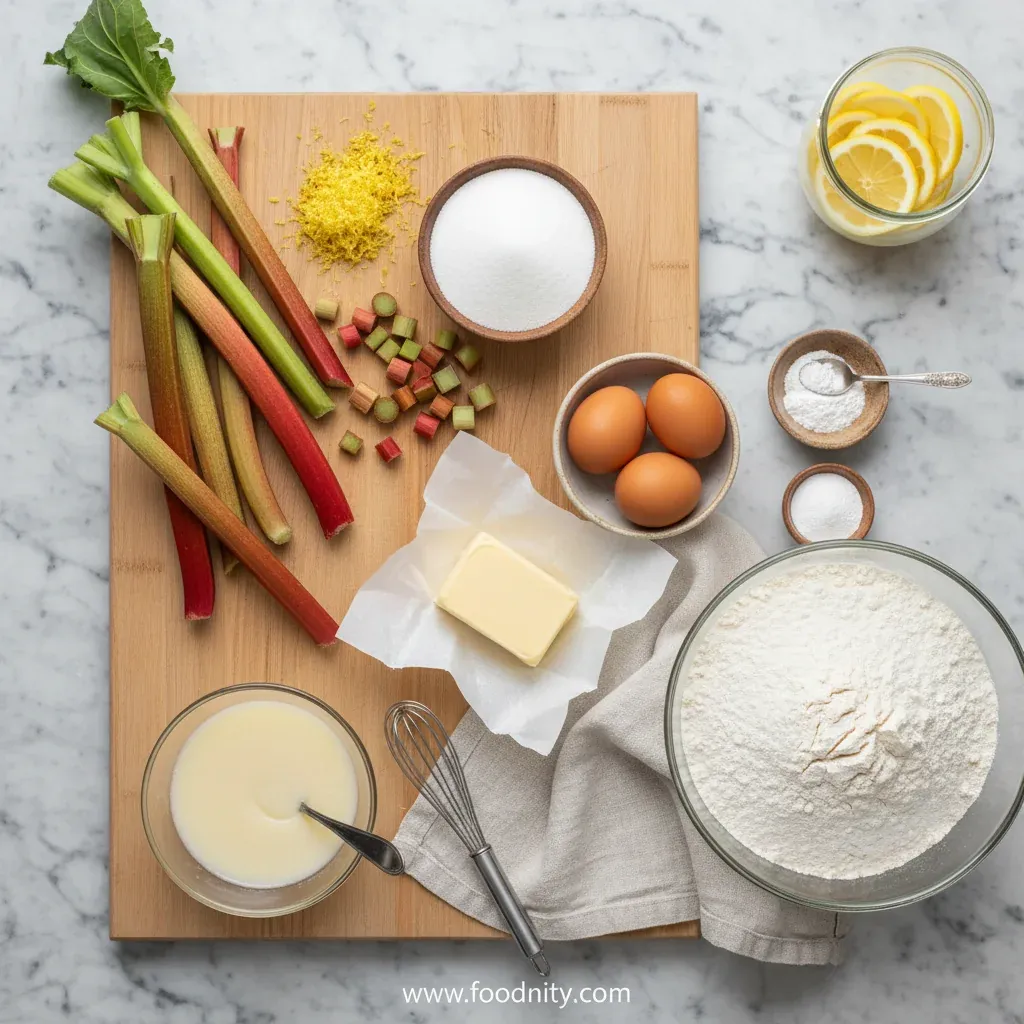
Ingredients
Main Ingredients
For the Glaze
Instructions
- 1
Preheat the oven to 350°F (175°C) and grease a 9×5‑inch loaf pan; line with parchment for easy removal.
- 2
In a medium bowl, whisk together flour, baking powder, and salt; set aside.
- 3
Beat butter and sugar until pale and fluffy, then add eggs one at a time, mixing gently; stir in lemon zest and vanilla.
- 4
Fold in the dry ingredients alternately with milk, then gently incorporate the diced rhubarb.
- 5
Pour batter into the prepared pan, smoothing the top; bake for 45‑50 minutes, or until a toothpick comes out with a few moist crumbs.
- 6
While the loaf cools on a rack, whisk together powdered sugar, lemon juice, and honey to form a smooth glaze.
- 7
Drizzle the glaze over the warm loaf; allow it to set before slicing.
Nutrition per serving
- 280 kcal
- Calories
- 4 g
- Protein
- 42 g
- Carbs
- 9 g
- Fat
Tips & notes
- If the glaze thickens too quickly, add a splash more lemon juice. - Do not overmix the batter; it can make the crumb dense. - For extra aroma, brush the loaf with a thin layer of melted butter before glazing.
Frequently asked questions
Can I use frozen rhubarb?
Yes, thaw and pat dry first; it will add a bit more moisture, so you may want to reduce liquid by a tablespoon.
What if I don’t have powdered sugar for the glaze?
Blend regular granulated sugar in a blender until fine, then use it as a substitute.
How long does the loaf stay fresh?
Stored tightly wrapped at room temperature, it stays moist for up to three days; refrigerate for up to a week.
Can I add nuts or berries?
Absolutely—fold in a handful of toasted almonds or a few blueberries for extra texture.
Is this recipe gluten‑free?
Swap all‑purpose flour for a gluten‑free blend; the texture remains tender.
What pairs well with this loaf?
A light lemon tea or a glass of sparkling water with a slice of fresh cucumber complements the bright flavors.

Amelia Hart
Chef Amelia Hart is a dessert enthusiast who loves creating elegant cakes, cookies, and baked treats. Her baking style combines classic pastry techniques with creative flavor combinations. Amelia believes that desserts…