Honestly, when spring arrives I love to pull out the chilled bowls and think of pastel ribbons. This Easter trifle combines fresh berries, airy cake, and a whisper of vanilla custard. If you loved the Black Forest trifle, you’ll notice a similar play of textures but with a lighter, lemon‑kissed twist. So, let’s gather the simple ingredients and let the layers speak for themselves.
The essence of the dish
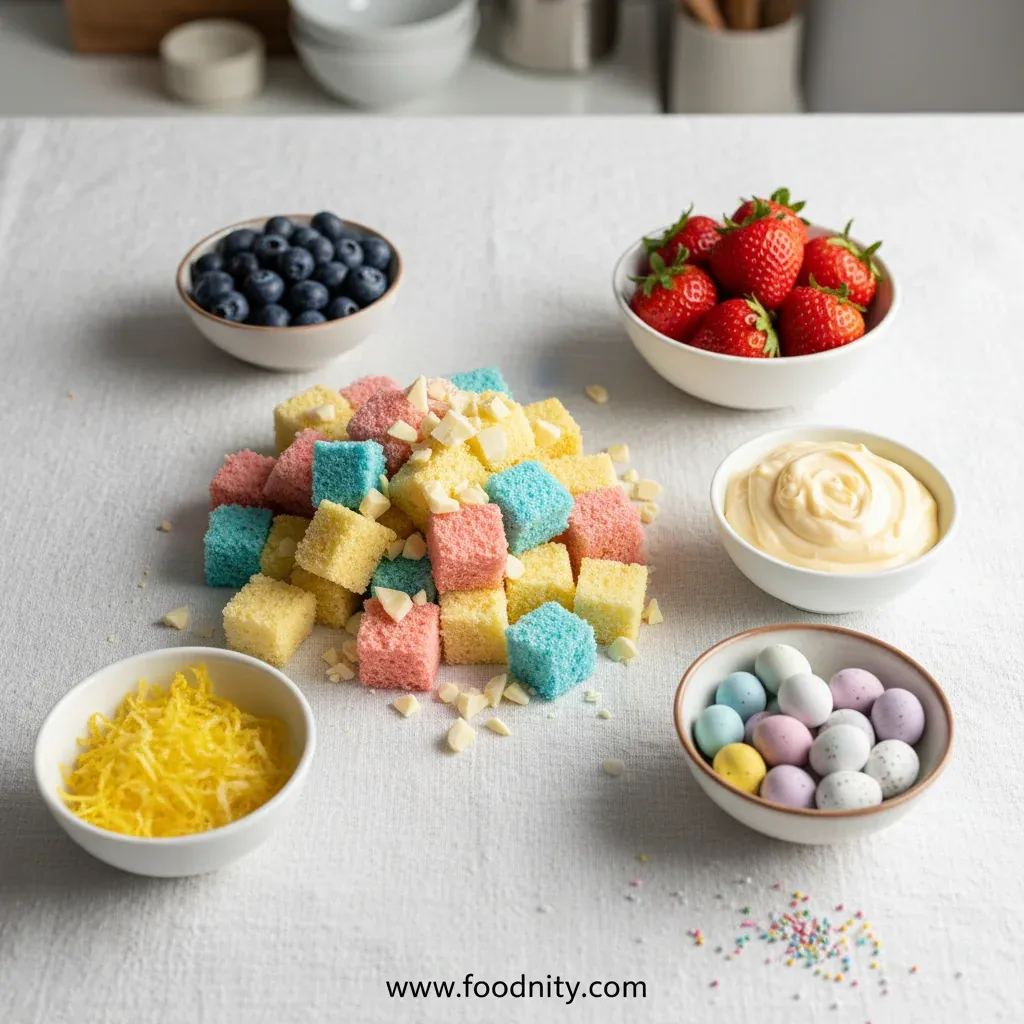
It’s all about layers—soft cake that drinks the custard, berries that add juiciness, and a custard that binds everything with a whisper of vanilla.
A fun fact or historical angle
Originally trifle was a heavily spiced pudding; the modern version we enjoy today reflects Victorian sweetening trends.
Flavor or sensory focus
The first bite delivers a cool, creamy mouthfeel, followed by a gentle citrus zing and the sweet‑tart pop of fresh berries.
You Must Know
- Use chilled bowls to keep the dessert crisp.
- Don’t over‑mix custard or it may curdle.
- Layer from bottom to top for even soaking.
Ugh, I once over‑mixed and the custard split—lesson learned! Take your time, and remember that gentle hands keep the texture smooth. Also, a quick tip: the final dusting of powdered sugar adds a subtle sweetness that balances the lemon.
The story behind it
Trifle, a classic British dessert, dates back to the 16th century when cooks layered sweetened figs, breadcrumbs, and jelly in a bowl. Over centuries it evolved into the layered custard, sponge, and fruit confection beloved today. The Easter variation often incorporates bright citrus and spring berries, echoing the season’s renewal. Its popularity spread across the Atlantic, becoming a staple at holiday tables where families celebrate with colorful, communal bowls.
Why You'll Love It
- Refreshing fruit flavors that scream spring
- Fluffy cake that soaks up custard without getting soggy
- Easy to assemble ahead of time
- Beautiful presentation that wows guests
Tips for success
- Don’t over‑mix the custard; gentle whisking prevents curdling.
- Use day‑old cake for better absorption.
- Layer berries halfway to keep them from sinking.
Professional secrets
- Warm custard helps cake soak evenly.
- Chill the bowl before assembling for a firmer set.
- Add a pinch of salt to the custard to enhance sweetness.
Common mistakes to avoid
- Over‑cooking the custard causing it to curdle.
- Using overly juicy berries that make the trifle watery.
- Skipping the cooling step, which leads to uneven soaking.
Substitutions
- Vanilla sponge cake: Lemon pound cake. Adds extra citrus flavor; may need slightly less lemon zest.
- Whole milk: Almond milk. Creates a lighter custard, adjust sugar if needed.
Variations
- Spicy Version: Add a pinch of ginger and a drizzle of honey for a warm kick.
- Mediterranean Style: Swap berries for pitted olives, feta crumbs, and a splash of orange blossom water.
Storage
Cover tightly and store in the refrigerator for up to 24 hours; avoid freezing.
Make ahead
Prepare the custard and wash the berries up to a day ahead; store each separately and assemble the trifle just before serving.
Leftovers
Keep leftovers covered in the fridge; gently stir before serving to redistribute the custard.
Serving ideas
- Serve in clear glassware to showcase the layers.
- Pair with a light citrus tea or a glass of sparkling water.
- Garnish each serving with a mint leaf and a dusting of powdered sugar.
- Offer alongside a small plate of shortbread for added texture.
Allergy information
Contains eggs, dairy, and gluten.
Light & Refreshing Easter Trifle Dessert
A bright, airy trifle featuring pastel fruit, soft sponge, and velvety custard, ideal for Easter brunches.
- Prep time
- 20 min
- Cook time
- 15 min
- Total time
- 35 min
- Difficulty
- Easy
- Cuisine
- British
Ingredients
Main Ingredients
Instructions
- 1
In a saucepan, whisk together milk, egg yolks, and sugar over medium heat until it thickens into a smooth custard; stir in vanilla and lemon zest, then let it cool slightly.
- 2
While the custard cools, arrange the cake cubes at the bottom of a large glass bowl.
- 3
Scatter a layer of mixed berries over the cake, then pour half of the warm custard, letting it soak gently.
- 4
Repeat with another layer of cake, berries, and the remaining custard, smoothing the top with a spatula.
- 5
Cover the bowl and refrigerate for at least two hours, or overnight for deeper flavor.
- 6
Before serving, dust with powdered sugar, add a few fresh mint leaves, and, if you like, a drizzle of Berry trifle glaze for extra sparkle.
Nutrition per serving
- 320 kcal
- Calories
- 6 g
- Protein
- 45 g
- Carbs
- 10 g
- Fat
Tips & notes
- Keep the custard slightly warm when layering to avoid a cold shock to the cake. - If berries are very juicy, pat them dry to prevent excess liquid. - For a decorative touch, add a thin layer of crushed shortbread on top.
Frequently asked questions
Can I use a different fruit?
Absolutely, substitute with kiwi, mango, or peach for a tropical twist.
How long can it sit in the fridge?
Best within 24 hours; after that the cake may become too soggy.
Can I make it dairy‑free?
Swap whole milk for almond or oat milk and use a dairy‑free custard thickener.
What if I don’t have a sponge cake?
A pound cake or even a vanilla angel food cake works fine.
Is it okay to freeze?
Freezing changes the texture; it’s not recommended for optimal freshness.
Do I need to melt the custard before layering?
Warm it just until thickened; it should still be pourable.

Amelia Hart
Chef Amelia Hart is a dessert enthusiast who loves creating elegant cakes, cookies, and baked treats. Her baking style combines classic pastry techniques with creative flavor combinations. Amelia believes that desserts…