Honestly, this salad is a love‑letter to the Mediterranean coast. I remember the first time I bit into a garden‑fresh tomato while the sun was setting over the Aegean. The scent of oregano and the snap of cucumber brought me back to that moment, and now I share it with you, so you can taste that gentle calm too.
The essence of the dish
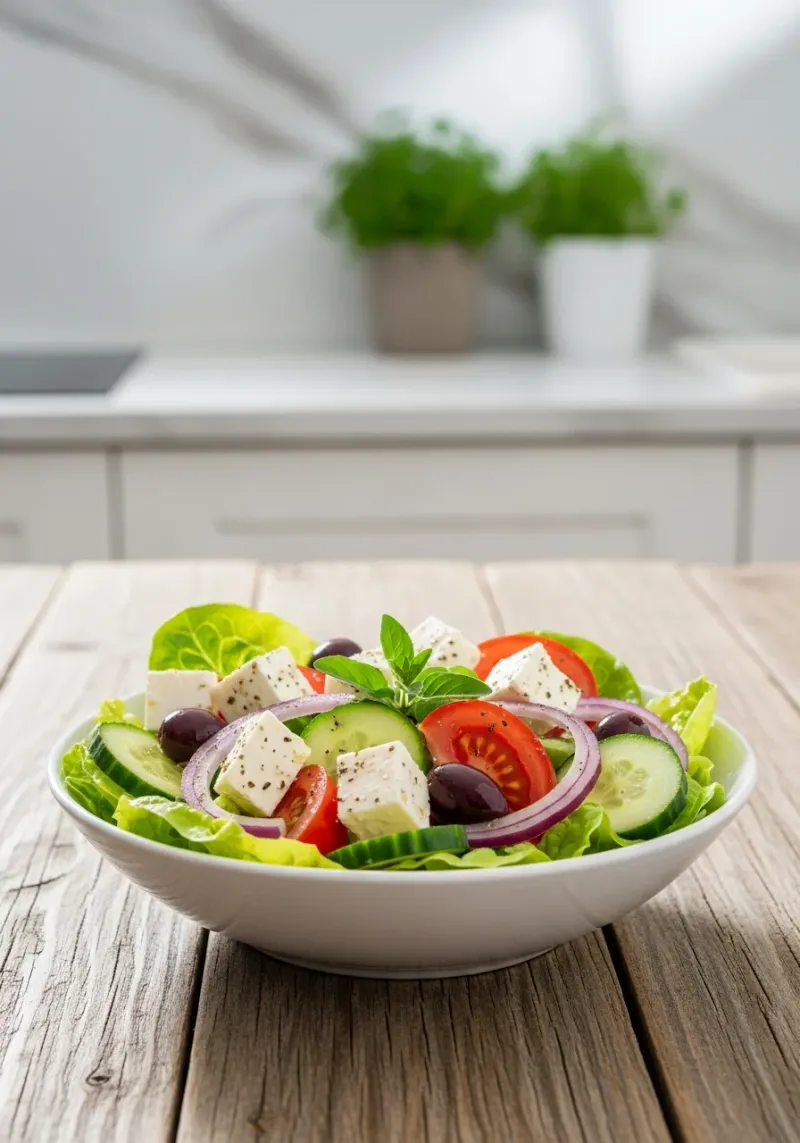
It’s the balance of crisp vegetables, salty feta, and a bright vinaigrette that makes each forkful feel like a seaside breeze.
A fun fact or historical angle
The classic Greek salad, known as "Horiatiki," was traditionally a farmer’s lunch, eaten with a rustic wooden spoon.
Flavor or sensory focus
Expect the snap of cucumber, the juicy burst of tomato, the briny pop of olives, and the lingering tang of lemon.
You Must Know
- Use extra‑virgin olive oil for best flavor
- Season with salt after dressing
- Serve immediately for optimal crunch
Look, the magic of this salad is in its simplicity. You don’t need fancy gadgets, just a good knife and a large bowl. I often find myself pausing, watching the colors settle, and feeling a quiet pride that something so straightforward can be so satisfying. So, enjoy each bite and let the Mediterranean sunshine fill your kitchen.
The story behind it
Greek salads trace their roots to ancient olive groves, where the simple combination of vegetables, herbs, and cheese celebrated the bounty of the land. Historically, farmers would toss together whatever was in season, creating a dish that embodied balance and freshness, a principle still cherished in Mediterranean cuisine today.
Why You'll Love It
- Bright flavors that lift your mood
- Crunchy texture that stays satisfying
- Simple prep, no cooking required
- Nutrient‑rich ingredients for lasting energy
Tips for success
- Don’t over‑mix; keep cucumber crisp
- Season after dressing to avoid soggy greens
- Use ripe tomatoes for natural sweetness
Professional secrets
- Let the vinaigrette rest for 5 minutes to fully blend flavors
- Tear lettuce by hand for less bruising
- Add olive oil slowly while whisking for a stable emulsion
Common mistakes to avoid
- Over‑mixing the salad, making cucumbers soggy
- Adding dressing too early, causing greens to wilt
- Using too much salt before tasting
Substitutions
- Feta cheese: Goat cheese. Provides a similar tang but a softer texture
- Olive oil: Avocado oil. Gives a neutral flavor; use if you prefer a milder oil
Variations
- Spicy Version: Add a pinch of red pepper flakes to the vinaigrette for a gentle kick.
- Mediterranean Style: Include sun‑dried tomatoes, artichoke hearts, and a handful of toasted pine nuts.
Storage
Keep the salad undressed in the fridge for up to 2 days; store dressing separately.
Make ahead
You can whisk the vinaigrette up to 24 hours ahead; store refrigerated and give a quick stir before using.
Leftovers
Re‑toss the salad with a splash of fresh lemon juice and a drizzle of olive oil to revive the bright flavor.
Serving ideas
- Serve over a bed of couscous for a heartier meal
- Pair with grilled halloumi for extra protein
- Add a side of whole‑grain pita chips for crunch
- Garnish with fresh oregano leaves for aroma
Allergy information
Contains dairy (feta) and olives; may contain traces of nuts from oil processing.
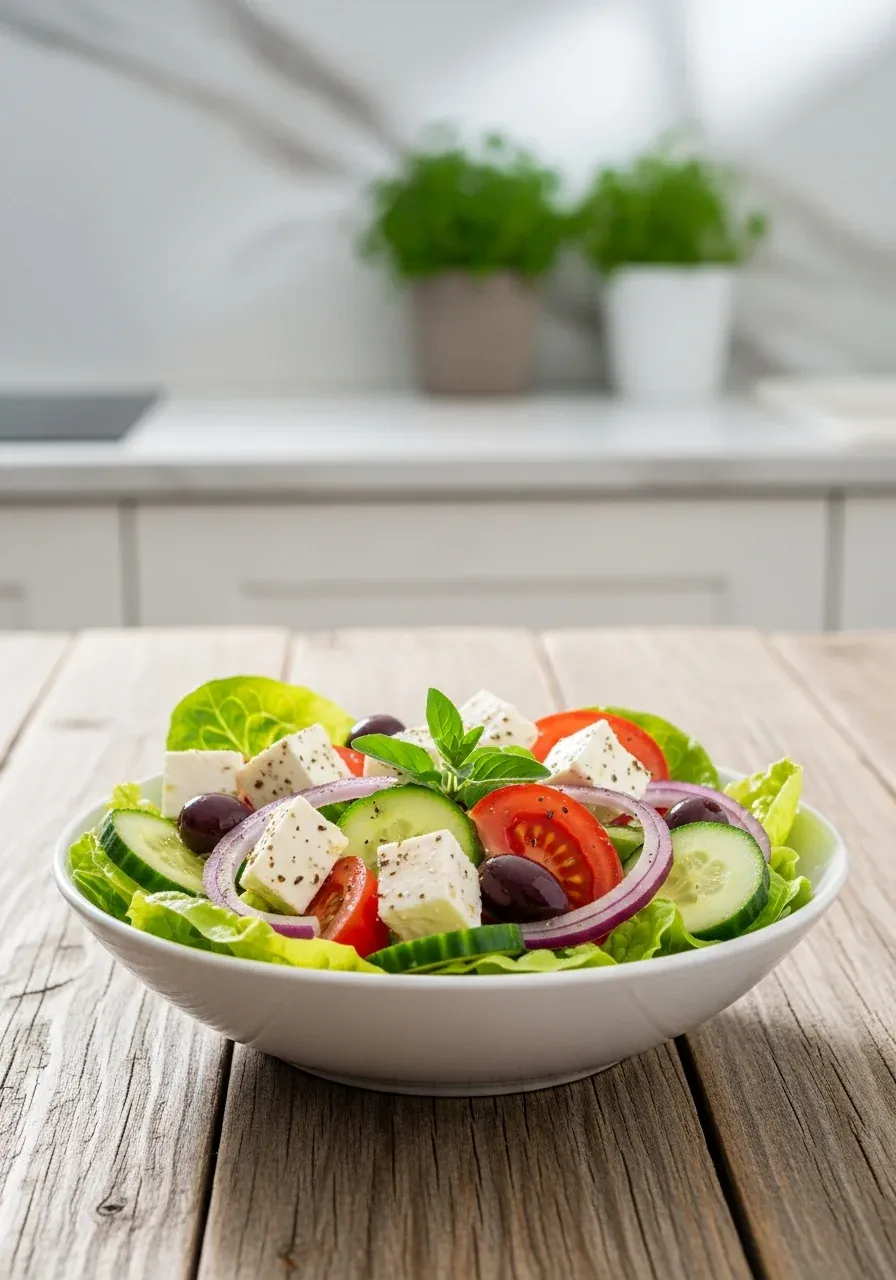
Mediterranean Greek Salad
Fresh Mediterranean Greek salad with crisp veggies, feta, olives, and a tangy vinaigrette. Perfect healthy quick meal.
- Prep time
- 15 min
- Total time
- 15 min
- Difficulty
- Easy
- Cuisine
- Greek
Ingredients
Main Ingredients
Vinaigrette
Instructions
- 1
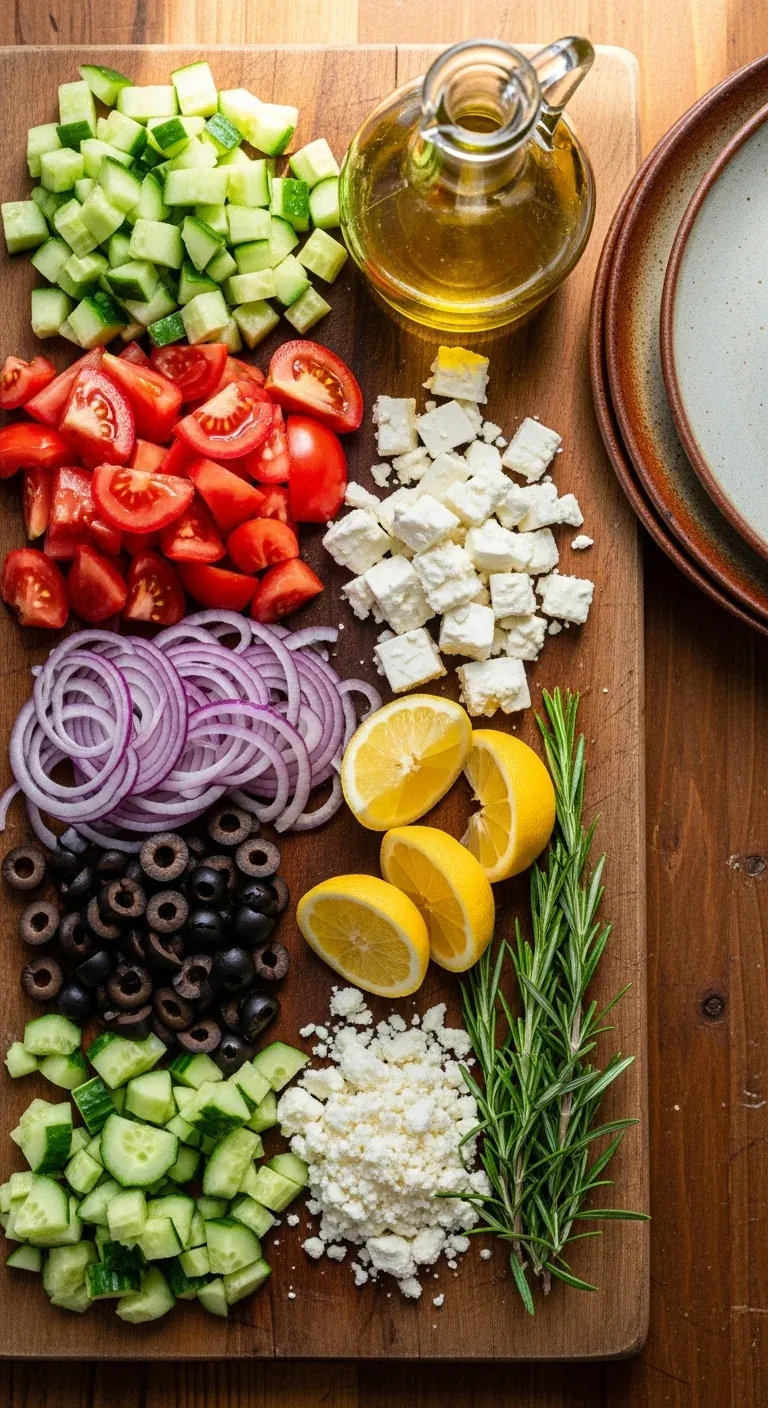
Gather all vegetables, rinse them under cool water, then pat dry with a clean kitchen towel.
- 2
Combine olive oil, lemon juice, oregano, minced garlic, salt, and pepper in a small bowl; whisk until emulsified.
- 3
In a large salad bowl, toss the greens, tomatoes, cucumber, red onion, and olives together.
- 4
Drizzle the vinaigrette over the salad, toss gently so everything is lightly coated.
- 5
Scatter crumbled feta on top, give one final gentle toss, and serve immediately.
- 6
Optional: Pair with a side of Greek pasta salad for a heartier meal.
Nutrition per serving
- 210 kcal
- Calories
- 5 g
- Protein
- 9 g
- Carbs
- 16 g
- Fat
Tips & notes
- If the salad sits too long, add a splash more olive oil to revive the dressing. - Taste and adjust salt after adding feta, as it can be naturally salty. - For extra zest, grate a touch of lemon zest into the vinaigrette.
Frequently asked questions
Can I add protein to this salad?
Absolutely—grilled chicken, chickpeas, or even a scoop of tuna work beautifully.
How long will the salad stay fresh?
Stored in an airtight container, it stays crisp for up to 2 days; keep dressing separate if possible.
What type of olive oil is best?
Choose a cold‑pressed extra‑virgin olive oil for a fruity, smooth finish.
Can I substitute the feta?
Yes, a crumbly goat cheese or a mild feta alternative can be used.
Is this suitable for a low‑carb diet?
Definitely—focus on the veggies and skip any added bread or croutons.
What herbs complement the vinaigrette?
Fresh oregano, dill, or mint add a pleasant herbaceous note.

Daniel Greenfield
Chef Daniel Greenfield focuses on nutritious meals made with fresh and wholesome ingredients. His recipes are designed for people who want to eat healthy without sacrificing flavor. Daniel specializes in balanced meals…