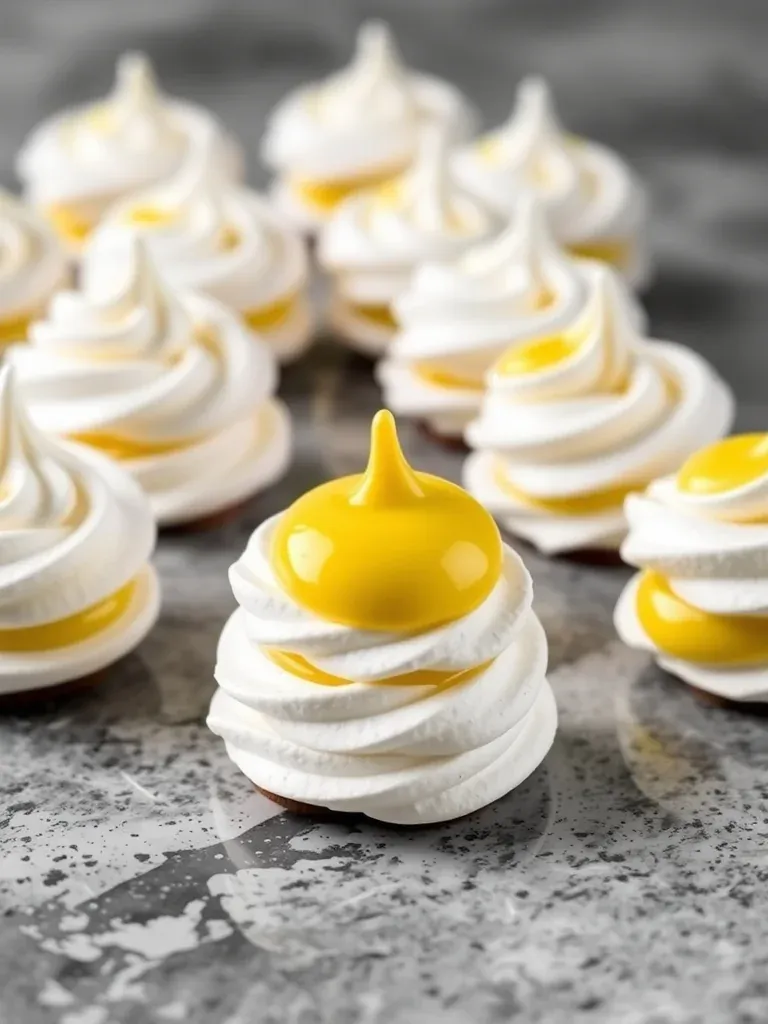
Honestly, there’s something magical about a tiny, crisp meringue that melts and then surprises you with a silky lemon curd center. I remember the first time I made these for a garden party; the scent of sugar and zest floated around the table, and guests paused to savor each bite.
The essence of the dish
Crisp, feather‑light shells meet a silky, tangy heart. The contrast of texture and the subtle aroma of lemon make each bite a tiny celebration.
A fun fact or historical angle
Meringues were originally created in the 17th century as a way to use surplus egg whites left over from making clarified butter.
Flavor or sensory focus
First you hear a gentle snap, then the smooth citrus spreads across the tongue, leaving a clean, bright finish.
You Must Know
- Keep the meringue dry for hours before serving
- Store curd in the fridge to maintain its thick texture
- Use fresh lemons for the best aromatic punch
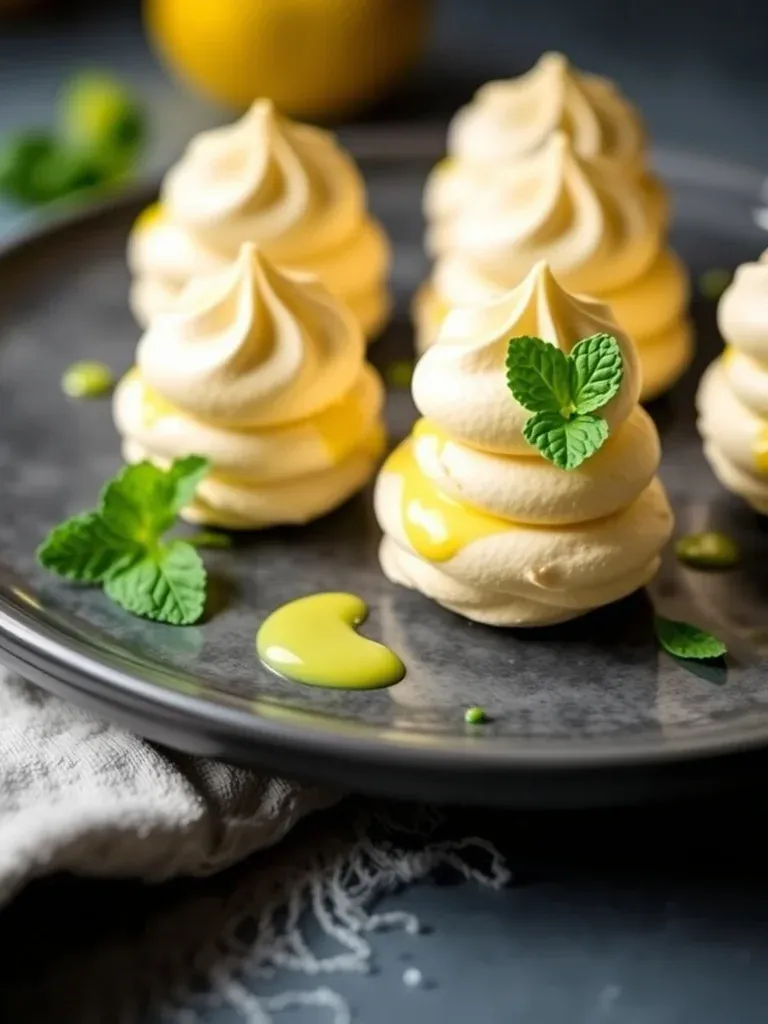
I’ve found that letting the meringues sit uncovered for a short while helps them achieve that perfect crack. The lemon curd, when cooled, becomes glossy and holds its shape on the tiny bases. Serve them on a simple platter, and you’ll see how the pale clouds contrast with the bright yellow golden drops—an easy, elegant presentation that feels special without fuss.
When the spring sunshine streams through the window, these mini treats become a quiet reminder that simple pleasures—like a bite of sweet, tart, airy confection—can brighten any day.
The story behind it
Lemon curd, a bright preserve that hails from the British Isles, found its way into French patisserie in the 19th century, celebrated for its balance of tart and sweet. Pairing it with crisp meringues—a French confection of egg whites and sugar—creates a timeless duet that has delighted dessert lovers for generations.
Why You'll Love It
- Light and airy texture that feels elegant
- Bright lemon flavor that awakens the palate
- Simple ingredients you likely have on hand
- Perfect for parties, tea, or a quiet moment
Tips for success
- Don’t overbeat the egg whites; stop when glossy peaks form.
- Let the curd cool fully before topping the meringues to keep them crisp.
- Store assembled meringues in a single layer to avoid sogginess.
Professional secrets
- Room temperature egg whites whip faster and hold air better.
- Low‑heat, slow bake creates a dry interior without browning.
- Finishing the curd off the heat preserves its bright flavor.
Common mistakes to avoid
- Over‑beating egg whites until they become grainy.
- Baking meringues at too high a temperature, causing browning.
- Adding curd before meringues are fully cooled, leading to sogginess.
Substitutions
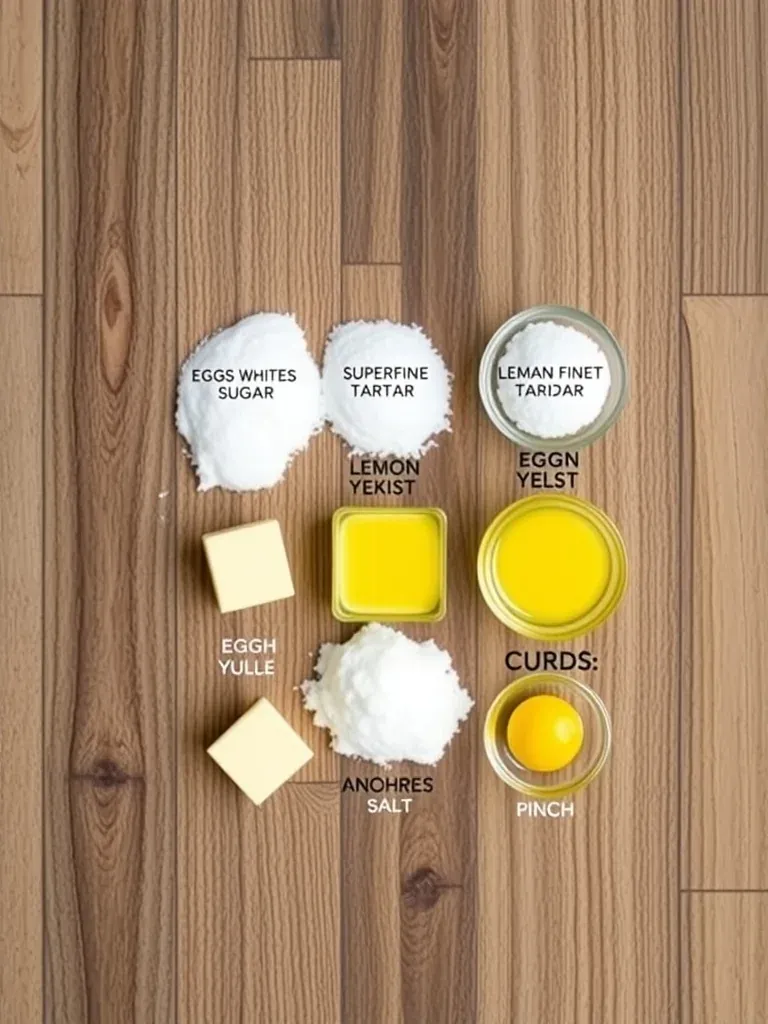
- Egg whites: Aquafaba (1/4 cup per egg white). Whip until stiff; may need a bit more sugar.
- Sugar: Coconut sugar. Adds a subtle caramel note to the meringue.
Variations
- Spicy Version: Add a pinch of pink cayenne to the lemon curd for a gentle heat.
- Mediterranean Style: Fold finely chopped fresh mint into the curd and garnish with a dust of powdered sugar.
Storage
Keep the meringues in an airtight container for up to two days; store the lemon curd separately in the refrigerator for up to a week.
Make ahead
You can bake the meringues up to two days ahead and store the lemon curd in the refrigerator; assemble just before serving.
Leftovers
Store any unused meringues in a dry container; they stay crisp for a day. The curd can be reheated gently and used as a spread.
Serving ideas
- Arrange on a decorative plate with fresh mint leaves.
- Serve alongside a pot of tea for an afternoon treat.
- Pair with a light fruit salad for a balanced dessert spread.
Allergy information
Contains egg, dairy, and citrus.
Mini Meringues With Lemon Curd
Delicate mini meringues topped with tangy lemon curd—light, crisp, and refreshing.
- Prep time
- 20 min
- Cook time
- 30 min
- Total time
- 50 min
- Difficulty
- Easy
- Cuisine
- French
Ingredients
Meringues
Lemon Curd
Instructions
- 1
Preheat the oven to 250°F (120°C) and line two baking sheets with parchment paper.
- 2
In a clean bowl, whisk egg whites with cream of tartar and a pinch of salt until foamy, then gradually add sugar, beating until stiff glossy peaks form; fold in vanilla.
- 3
Spoon or pipe small mounds onto the prepared sheets, spacing them about an inch apart.
- 4
Bake for 1 hour, then turn off the oven and let the meringues dry inside for another hour before removing.
- 5
While the meringues cool, combine lemon juice, zest, sugar, and egg yolks in a saucepan; whisk over low heat until thickened, then remove and whisk in butter until smooth.
- 6
Cool the curd in a shallow dish, then spoon a small dollop onto each cooled meringue; let set for a few minutes before serving.
Nutrition per serving
- 85 kcal
- Calories
- 2 g
- Protein
- 12 g
- Carbs
- 3 g
- Fat
Tips & notes
- Make sure all bowl surfaces are completely dry; any moisture will hinder the meringue from reaching stiff peaks. - If you prefer a sweeter curd, increase sugar by a tablespoon. - For a decorative touch, drizzle a thin line of melted white chocolate over the curd.
Frequently asked questions
Can I make the meringues ahead of time?
Yes, bake them up to two days ahead and store in an airtight container; they stay crisp.
What if I don’t have fresh lemons?
Use high‑quality bottled lemon juice and add a bit of zest for aroma.
Can I substitute the butter in the curd?
A neutral oil works, but it will change the richness; butter gives the best mouthfeel.
How do I prevent the curd from curdling?
Stir constantly over low heat and remove from the burner as soon as it thickens.
Is it possible to add a different fruit flavor?
Sure, try orange curd or a thin layer of raspberry puree for a twist.
Do the meringues need to be piped?
Piping gives a uniform shape, but you can spoon small dollops onto a baking sheet.

Amelia Hart
Chef Amelia Hart is a dessert enthusiast who loves creating elegant cakes, cookies, and baked treats. Her baking style combines classic pastry techniques with creative flavor combinations. Amelia believes that desserts…