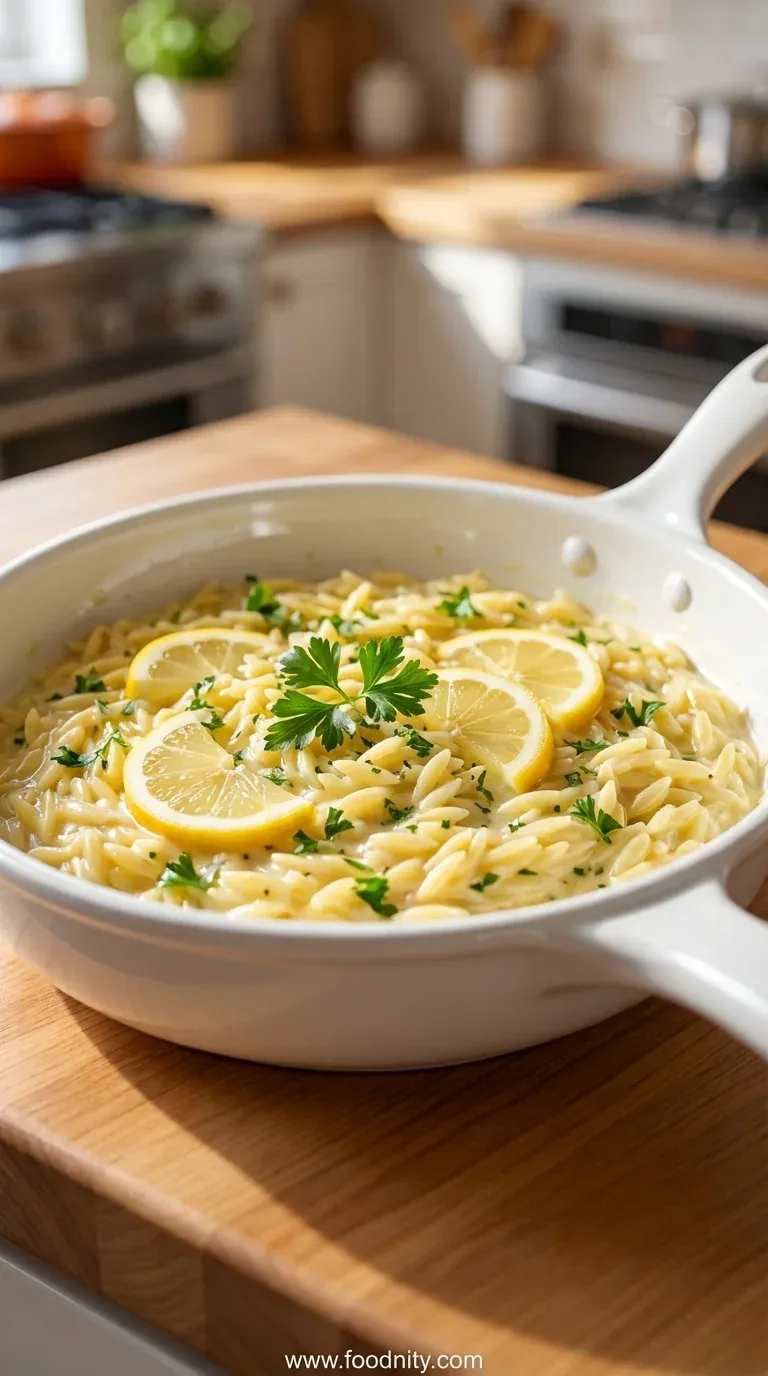
Honestly, there’s something magical about a dish that sings of sunshine while you’re juggling a dozen tasks. This one‑pan lemon orzo pasta brings that balance—simple, buttery, and unmistakably fresh.
The essence of the dish
It’s the gentle blend of buttery richness and lemon sparkle, with each grain of orzo coated in a silky sauce that clings lovingly.
A fun fact or historical angle
Orzo, meaning “barley” in Italian, was originally a rice substitute in coastal markets, making it perfect for quick, budget‑friendly meals.
Flavor or sensory focus
The first bite offers a buttery mouthfeel, followed by a bright citrus zing that awakens the palate.
You Must Know
- Do not overcook the orzo; it should be al‑dente
- Lemon zest adds oil‑soluble flavor, juice adds acidity
- Reserve some broth for adjusting sauce consistency
When you respect those little details, the dish feels balanced and refined. It’s not just a quick dinner; it’s a small moment of calm in a hectic day, a reminder that simple ingredients can create something special.
The story behind it
The lemon‑orzo pairing traces back to coastal villages where citrus was a staple garnish for grain dishes. Italian pasta traditions often celebrated bright, airy textures, and the orzo grain was a perfect canvas for the sun‑kissed flavor. Over centuries, the dish became a quick pantry staple, cherished for its ability to turn humble ingredients into a comforting, fragrant meal.
Why You'll Love It
- Minimal cleanup, just one pan
- Bright citrus aroma lifts the mood
- Creamy texture without heavy cream
- Flexible, add greens or proteins as you like
Tips for success
- Don’t over‑crowd the pan; it prevents even cooking
- Let the lemon zest bloom in butter for aroma
- Taste and adjust seasoning at the end
Professional secrets
- Warm broth speeds up grain absorption
- Finish with cold butter for extra silkiness
- Reserve a bit of pasta water for texture control
Common mistakes to avoid
- Overcooking the orzo, leading to mushy texture
- Adding lemon juice too early, which can toughen the grains
- Using too much broth, resulting in a soupy dish
Substitutions
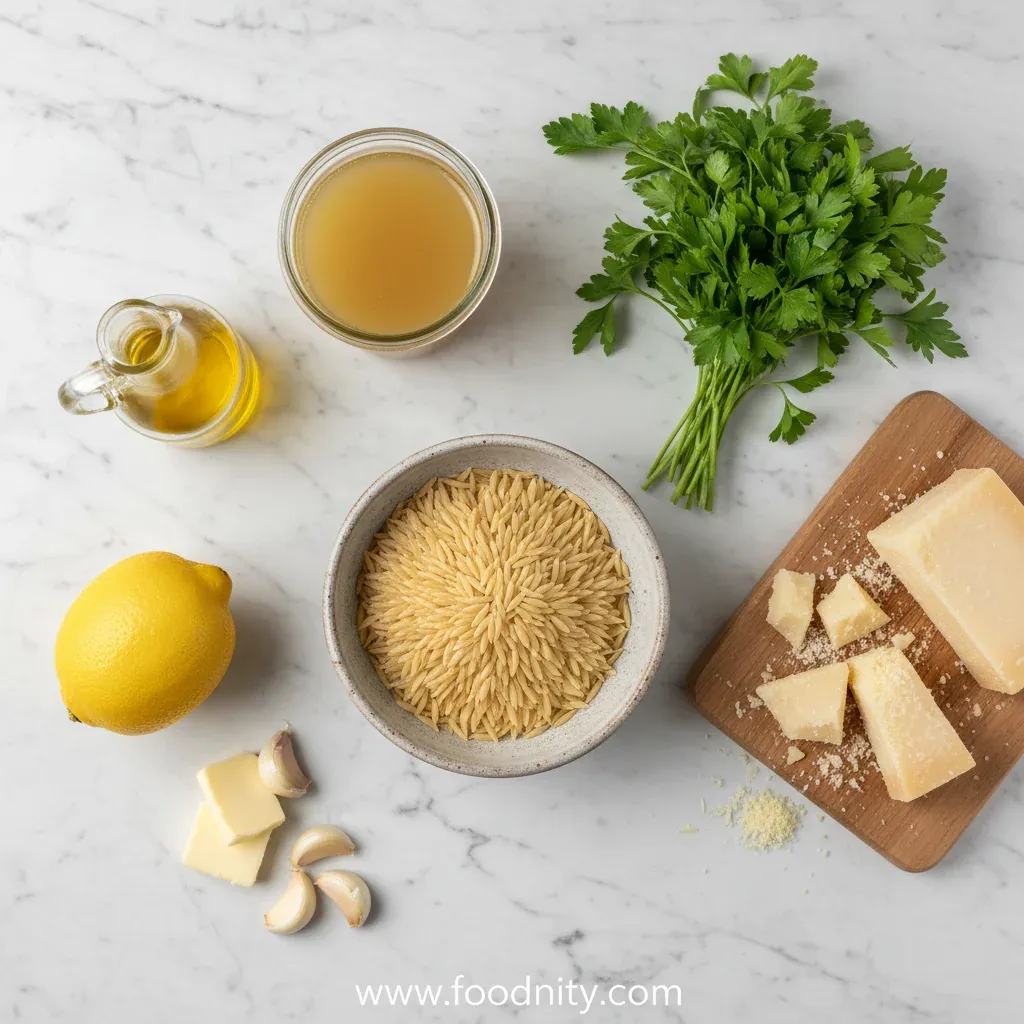
- Orzo pasta: Rice or small pasta shapes. Adjust cooking time to achieve similar tenderness.
- Parmesan cheese: Pecorino Romano. Adds sharper salty note; use slightly less.
Variations
- Spicy Version: Add a pinch of red pepper flakes when toasting the orzo for a subtle heat.
- Mediterranean Style: Stir in feta, kalamata olives, and sun‑dried tomatoes for a briny twist.
Storage
Cool to room temperature, then store in an airtight container in the refrigerator for up to three days.
Make ahead
You can pre‑measure the dry ingredients and store them in a zip bag; the broth can be warmed ahead of time.
Leftovers
Reheat gently in a skillet with a splash of broth; avoid microwave to keep texture smooth.
Serving ideas
- Serve directly from the skillet with an extra lemon wedge
- Pair with a simple green salad dressed in lemon vinaigrette
- Garnish with extra grated Parmesan and a few parsley leaves
- Accompany with crusty garlic bread for added comfort
Allergy information
Contains dairy (butter, Parmesan) and gluten (orzo).
One Pan Lemon Orzo Pasta
Quick, bright lemon orzo cooked in a single pan; buttery, citrusy, and ready in minutes.
- Prep time
- 10 min
- Cook time
- 20 min
- Total time
- 30 min
- Difficulty
- Easy
- Cuisine
- Italian
Ingredients
Main Ingredients
Optional Add‑Ins
Instructions
- 1
In a large skillet, melt butter over medium heat; let it foam and turn lightly golden.
- 2
Add the lemon zest, stirring quickly so the aroma fills the kitchen.
- 3
Stir in the orzo, coating each grain with butter and zest; toast for about 2 minutes.
- 4
Pour in the warm broth, bring to a gentle simmer, and cook, stirring occasionally, until the liquid is absorbed and the orzo is tender, about 12–15 minutes.
- 5
Fold in spinach and turkey ham, if using; let them wilt for a minute.
- 6
Remove from heat, stir in lemon juice, Parmesan, and parsley; season with pepper.
- 7
Serve immediately, perhaps with an extra sprinkle of cheese and a lemon wedge.
Nutrition per serving
- 420 kcal
- Calories
- 12 g
- Protein
- 55 g
- Carbs
- 14 g
- Fat
Tips & notes
- If the orzo seems dry, add a splash of broth or water. - Taste for salt before adding cheese; adjust accordingly. - For a richer sauce, finish with a tiny drizzle of extra‑virgin olive oil.
Frequently asked questions
Can I use gluten‑free pasta?
Yes, substitute a gluten‑free rice or corn based orzo; cooking time may vary slightly.
How do I keep the dish from becoming watery?
Use a tight‑fitting pan and let the broth absorb fully before adding extra liquid.
What protein works best with this recipe?
Grilled chicken, shrimp, or even sliced turkey ham complement the bright flavors.
Can I add vegetables?
Absolutely—spinach, peas, or asparagus work nicely; add them in the last few minutes.
Is it safe to freeze leftovers?
You can freeze, but the texture changes; reheat gently and add a splash of broth.
How long does it keep in the fridge?
Store in an airtight container for up to three days; reheat on the stove with a bit of broth.

Lucas Bennett
Chef Lucas Bennett specializes in rich and hearty beef dishes inspired by traditional steakhouse cooking. He is passionate about slow-cooked stews, juicy steaks, and bold flavors that highlight the natural taste of…