Honestly, there’s something about the scent of lemon simmering with cream that feels like a gentle hug. I remember when I first learned to toss pasta in a sauce that clings like a soft shawl—yeah, that feeling never gets old.
The essence of the dish
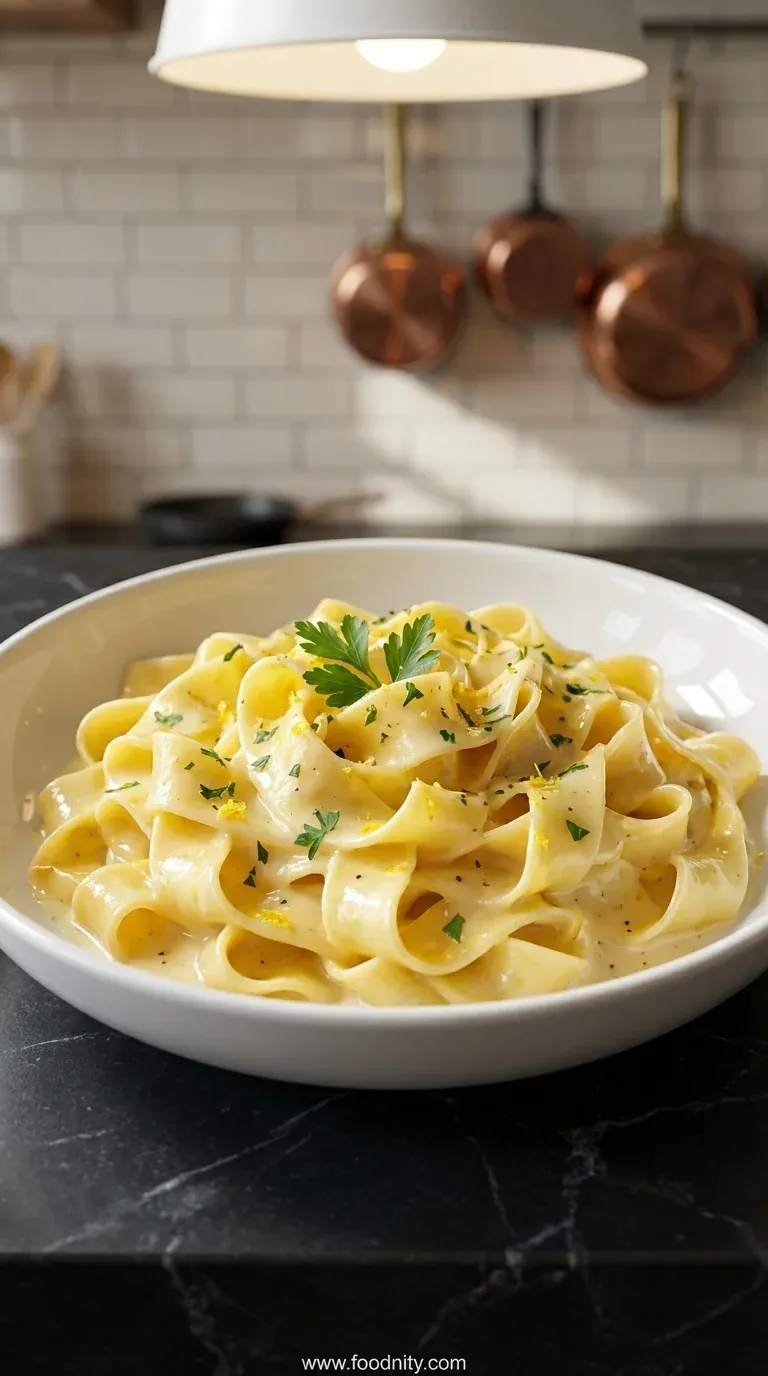
It’s a harmony of bright citrus and creamy richness, with each strand of pappardelle cradling the sauce like a warm hand.
A fun fact or historical angle
Lemons were once considered a luxury in medieval Italy, used to brighten both food and spirits at feasts.
Flavor or sensory focus
You’ll notice the first hit of lemon zest, followed by the velvety melt of butter, ending with a subtle salty kiss from Parmesan.
You Must Know
- Do not over‑cook the pasta; it should retain a slight bite.
- Use high‑quality lemon for true fragrance.
- Finish with butter for shine.
When the sauce clings gently to the noodles, you know you’ve timed it right. A little patience, a few gentle folds, and the dish feels like an invitation to sit down and savor. It’s not just about eating; it’s about feeling the warmth of the kitchen settle around you.
The story behind it
Originating from the rolling hills of Tuscany, lemon pasta became a summer staple when citrus groves flooded markets with fragrant fruit. The bright acidity was prized for cutting through rich meals, and over time the simple combination of pasta, lemon, and butter evolved into the creamy version beloved today. This dish captures that historic balance of sharp and smooth without pretension.
Why You'll Love It
- Quick to assemble, perfect for busy evenings
- Fresh lemon aroma lifts the whole house
- Creamy texture without heavy heaviness
- Wide ribbons hold sauce beautifully
Tips for success
- Don’t over‑cook the pasta; it should stay al dente for texture.
- Zest the lemon before juicing to keep the oils vibrant.
- Add butter off the heat for a glossy finish.
- Reserve pasta water; it emulsifies the sauce beautifully.
Professional secrets
- Room‑temperature cream blends more smoothly with lemon juice.
- Finish the sauce with a splash of cold water to lock in shine.
- Use a heavy‑bottomed skillet to prevent scorching the lemon.
Common mistakes to avoid
- Over‑cooking the pasta, resulting in mushy ribbons.
- Adding the lemon juice too early, which can curdle the cream.
- Using too much pasta water, making the sauce thin.
Substitutions
- Heavy cream: Half‑and‑half or coconut cream. Coconut cream adds a faint tropical note; reduce any added sugar.
- Parmesan cheese: Pecorino Romano. Pecorino is sharper; use slightly less to avoid overpowering the lemon.
Variations
- Spicy Version: Add a pinch of red pepper flakes during step 3 for a subtle heat that contrasts the lemon.
- Mediterranean Style: Stir in crumbled feta, Kalamata olives, and sun‑dried tomatoes after tossing the pasta.
Storage
Store in an airtight container in the refrigerator for up to 2 days; reheat gently with a splash of water.
Make ahead
You can zest and juice the lemons up to 24 hours ahead; store in airtight containers in the refrigerator.
Leftovers
Reheat gently in a skillet over low heat, adding a splash of pasta water to revive the sauce.
Serving ideas
- Serve over a bed of steamed broccoli for color and crunch.
- Pair with a light green salad dressed in lemon vinaigrette.
- Garnish with extra Parmesan and a lemon twist for drama.
Allergy information
Contains dairy (cream, butter, Parmesan) and gluten (pasta).
Pappardelle al Limone – Creamy Lemon Pasta
A quick, satisfying Italian dinner of wide pappardelle tossed in a luscious lemon‑cream sauce.
- Prep time
- 15 min
- Cook time
- 20 min
- Total time
- 35 min
- Difficulty
- Easy
- Cuisine
- Italian
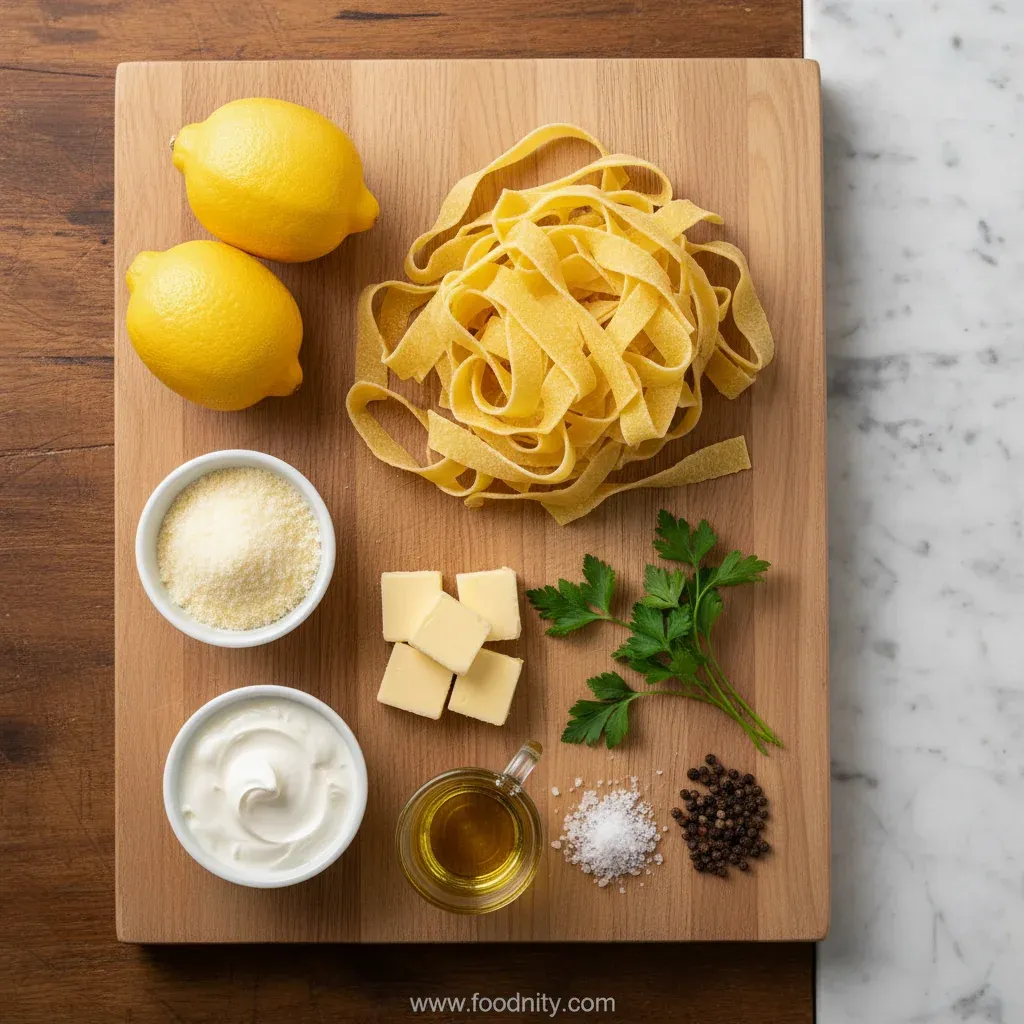
Ingredients
Main Ingredients
Optional Add‑ins
Instructions
- 1
Bring a large pot of salted water to a boil; add the pappardelle and cook until al dente, about 8‑10 minutes. Reserve one cup of pasta water before draining.
- 2
While the pasta cooks, heat olive oil in a wide skillet over medium heat. Add the butter and let it melt, then stir in the lemon zest, letting its fragrance rise.
- 3
Add the lemon juice, let it reduce by half, then pour in the heavy cream. Simmer gently, stirring, until the sauce thickens slightly, about 3‑4 minutes.
- 4
Stir in the grated Parmesan, season with salt and pepper, and add a splash of the reserved pasta water to achieve a glossy consistency.
- 5
Toss the drained pappardelle into the sauce, coating each ribbon. Finish with the chopped parsley and an extra drizzle of olive oil if desired.
Nutrition per serving
- 480 kcal
- Calories
- 16 g
- Protein
- 55 g
- Carbs
- 22 g
- Fat
Tips & notes
- If the sauce thickens too quickly, add a bit more pasta water to loosen it. - Taste for acidity; a tiny pinch of sugar can balance an overly sharp lemon. - Serve immediately for the best texture; the sauce can tighten as it cools.
Frequently asked questions
Can I use a different pasta shape?
Absolutely—fettuccine or tagliatelle work well, just ensure the noodles are wide enough to hold the sauce.
What if I don’t have heavy cream?
You can substitute half‑and‑half or a blend of milk and a touch of flour, but the sauce will be a bit lighter.
Is there a dairy‑free version?
Swap the cream for coconut cream and the Parmesan for nutritional yeast; the lemon flavor stays bright.
How do I store leftovers?
Cool the pasta, store in an airtight container, and gently reheat with a splash of pasta water.
Can I add protein?
Grilled chicken, shrimp, or even seared scallops pair nicely; add them after the sauce is ready.
What side goes best with this dish?
A simple green salad dressed with lemon vinaigrette or a crisp arugula side works beautifully.

Lucas Bennett
Chef Lucas Bennett specializes in rich and hearty beef dishes inspired by traditional steakhouse cooking. He is passionate about slow-cooked stews, juicy steaks, and bold flavors that highlight the natural taste of…