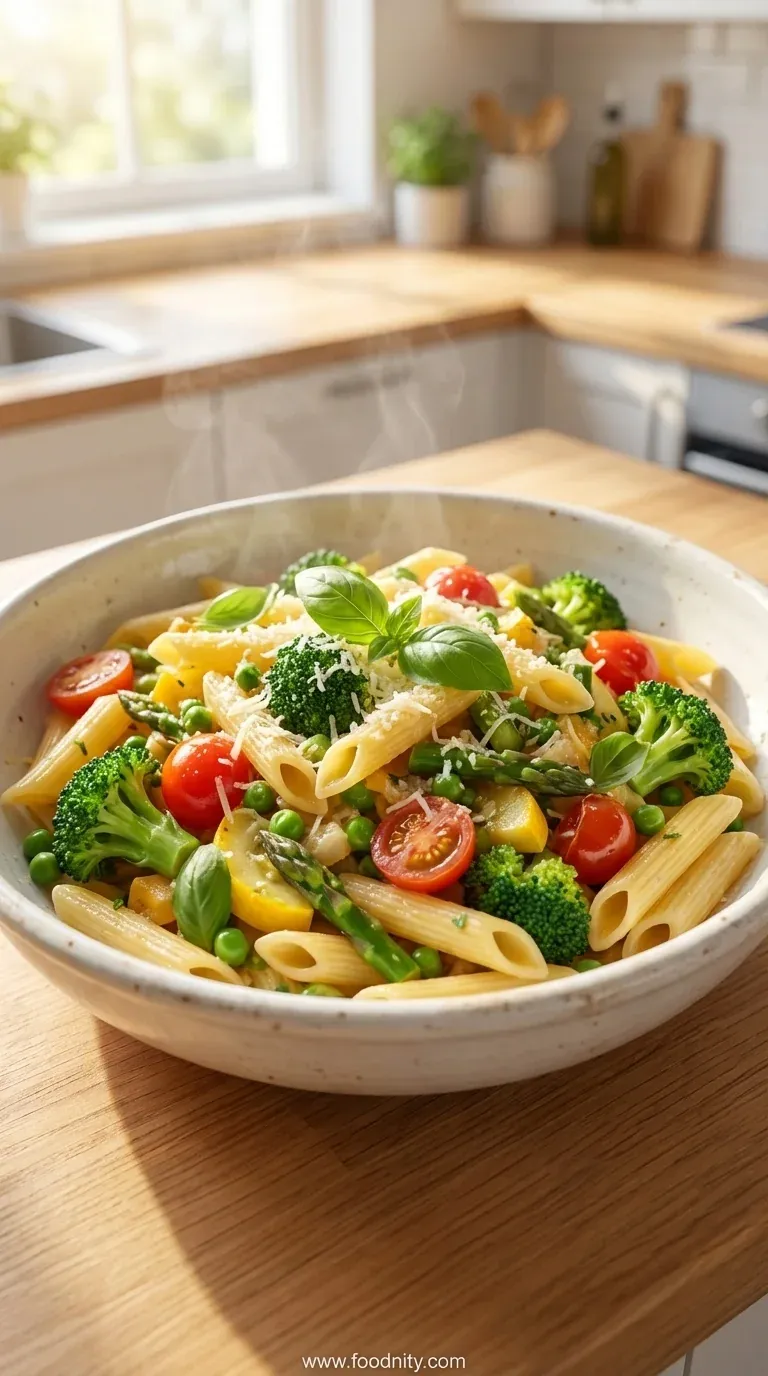
I remember the first time I tossed fresh peas and zucchini with al dente pasta – the scent of sautéed garlic and basil filled the kitchen. parmesan spinach mushroom was my go‑to, but this primavera feels lighter, brighter, and honestly, it reminds me of those early spring walks.
The essence of the dish
A harmony of crisp vegetables, tender pasta, and a bright, lemon‑garlic olive oil that carries the garden’s memory to your palate.
A fun fact or historical angle
In the 1970s, chefs in Manhattan popularized 'Primavera' as a way to showcase seasonal produce, making it a symbol of culinary optimism.
Flavor or sensory focus
You’ll notice the buttery bite of sautéed garlic, the gentle snap of peas, and the sun‑kissed zing of lemon. It’s a gentle crescendo of freshness.
You Must Know
- Don’t overcook the vegetables; keep their color.
- Use pasta water to bind the sauce.
- Finish with cold‑shaved Parmesan for melt.
When you pull the pot away from the heat, the steam carries a whisper of basil that lingers on the kitchen walls. It feels like a small, quiet celebration of spring, and honestly, it’s a comfort I return to again and again.
The story behind it
Pasta Primavera emerged in post‑war America when cooks sought to celebrate the abundance of fresh produce after years of rationing. Its name, meaning “spring pasta,” captures the season’s optimism without fanfare, offering a simple yet vibrant dish that quickly became a staple in Italian‑American households.
Why You'll Love It
- Bursting with garden‑fresh vegetables
- Light, yet satisfying sauce
- Ready in under 30 minutes
- Perfect for family meals or solo dining
Tips for success
- Don’t overcook the vegetables; they should stay bright.
- Reserve pasta water early; it’s the secret to a glossy sauce.
- Finish with cold‑shaved Parmesan for melt and flavor.
Professional secrets
- Use high‑heat olive oil for a quick sear on the veggies.
- Add lemon zest at the end to preserve its citrus aroma.
- Toss pasta off the heat to prevent over‑cooking.
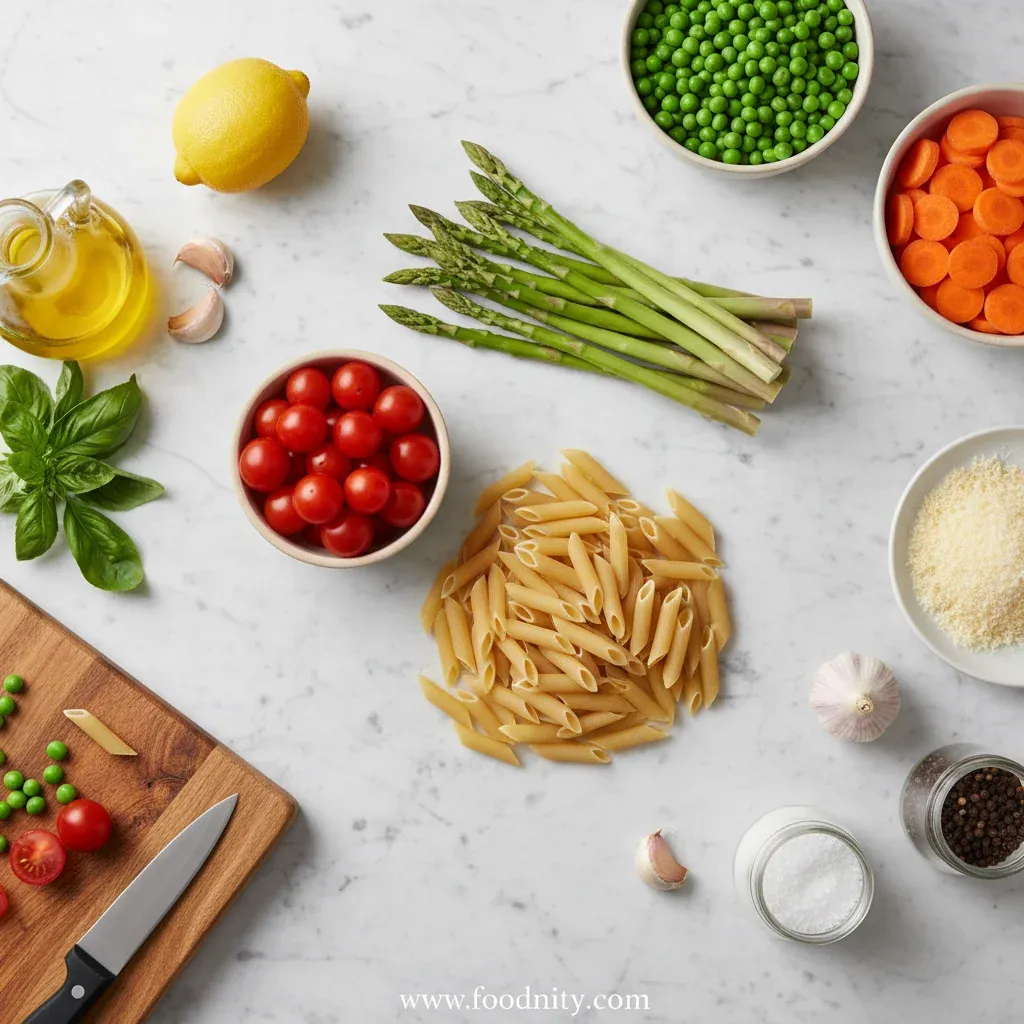
Common mistakes to avoid
- Overcooking the vegetables, which loses color and crunch.
- Adding pasta water too early, making the sauce watery.
- Skipping the lemon zest, resulting in a flat flavor.
Substitutions
- Parmesan cheese: Nutritional yeast. Provides a cheesy flavor for vegans; use slightly more for the same intensity.
- Pasta (wheat): Gluten‑free penne. Cook according to package directions; reserve water for sauce binding.
Variations
- Spicy Version: Add a pinch of red‑pepper flakes and a drizzle of hot sauce for a subtle kick.
- Mediterranean Style: Stir in Kalamata olives, feta crumbles, and sun‑dried tomatoes for a briny twist.
Storage
Store leftovers in an airtight container in the refrigerator for up to 3 days. Reheat gently on the stovetop with a splash of water.
Make ahead
You can chop all vegetables up to 24 hours ahead and store them in airtight containers; the sauce stays fresh when mixed just before serving.
Leftovers
Reheat gently in a skillet with a splash of broth, stirring until the sauce re‑emerges.
Serving ideas
- Serve on warm plates to keep the pasta cozy.
- Garnish with extra basil leaves for fragrance.
- Pair with a simple green arugula salad dressed lightly.
- Add a slice of crusty bread to mop up any lingering sauce.
Allergy information
Contains gluten (wheat pasta) and dairy (Parmesan).
Pasta Primavera Recipe – Fresh Spring Pasta
Fresh spring pasta loaded with crisp vegetables, a light sauce, and a comforting finish.
- Prep time
- 15 min
- Cook time
- 20 min
- Total time
- 35 min
- Difficulty
- Easy
- Cuisine
- Italian
Ingredients
Main Ingredients
Optional Add‑Ins
Instructions
- 1
Bring a large pot of salted water to boil; add pasta and cook until al dente, about 9‑10 minutes. Reserve 1 cup of pasta water, then drain.
- 2
While pasta cooks, heat olive oil in a large skillet over medium heat. Add minced garlic and sauté until fragrant, about 30 seconds.
- 3
Add cherry tomatoes, bell pepper, zucchini, and snap peas. Toss and cook, stirring occasionally, until vegetables are just tender but still crisp, about 4‑5 minutes.
- 4
Stir in the cooked pasta, a splash of reserved pasta water, and lemon zest. Toss everything together until a light coating forms.
- 5
Remove from heat; fold in fresh basil, grated Parmesan, and season with salt and pepper. Serve immediately.
Nutrition per serving
- 420 kcal
- Calories
- 12 g
- Protein
- 58 g
- Carbs
- 14 g
- Fat
Tips & notes
- If you prefer a richer sauce, drizzle a little extra‑virgin olive oil just before serving. - For a pop of color, add a handful of peas or sliced olives. - Taste and adjust seasoning after adding the pasta water; it balances the flavors.
Frequently asked questions
Can I use gluten‑free pasta?
Absolutely – just cook it al dente and treat it the same as regular pasta.
What vegetables work best?
Any fresh, in‑season veggies—think asparagus, zucchini, bell peppers, or snap peas.
How do I keep the pasta from sticking?
Toss it with a little olive oil after draining and add reserved pasta water when mixing.
Can I add protein?
Sure, grilled chicken, shrimp, or even a handful of toasted pine nuts make lovely additions.
Is it okay to freeze leftovers?
Yes, store in an airtight container; reheat gently with a splash of broth to revive the sauce.
What if I don’t have fresh herbs?
Dried herbs work in moderation, but add them earlier so they hydrate.

Lucas Bennett
Chef Lucas Bennett specializes in rich and hearty beef dishes inspired by traditional steakhouse cooking. He is passionate about slow-cooked stews, juicy steaks, and bold flavors that highlight the natural taste of…