Honestly, when I first rolled out the buttery crust for these tarts, I could already smell the hint of vanilla and the faint scent of spring. I mean, the combination of rhubarb’s bright bite and coconut’s gentle crunch just feels like a quiet hug on a sunny afternoon. So, let’s take our time and enjoy each step together.
The essence of the dish
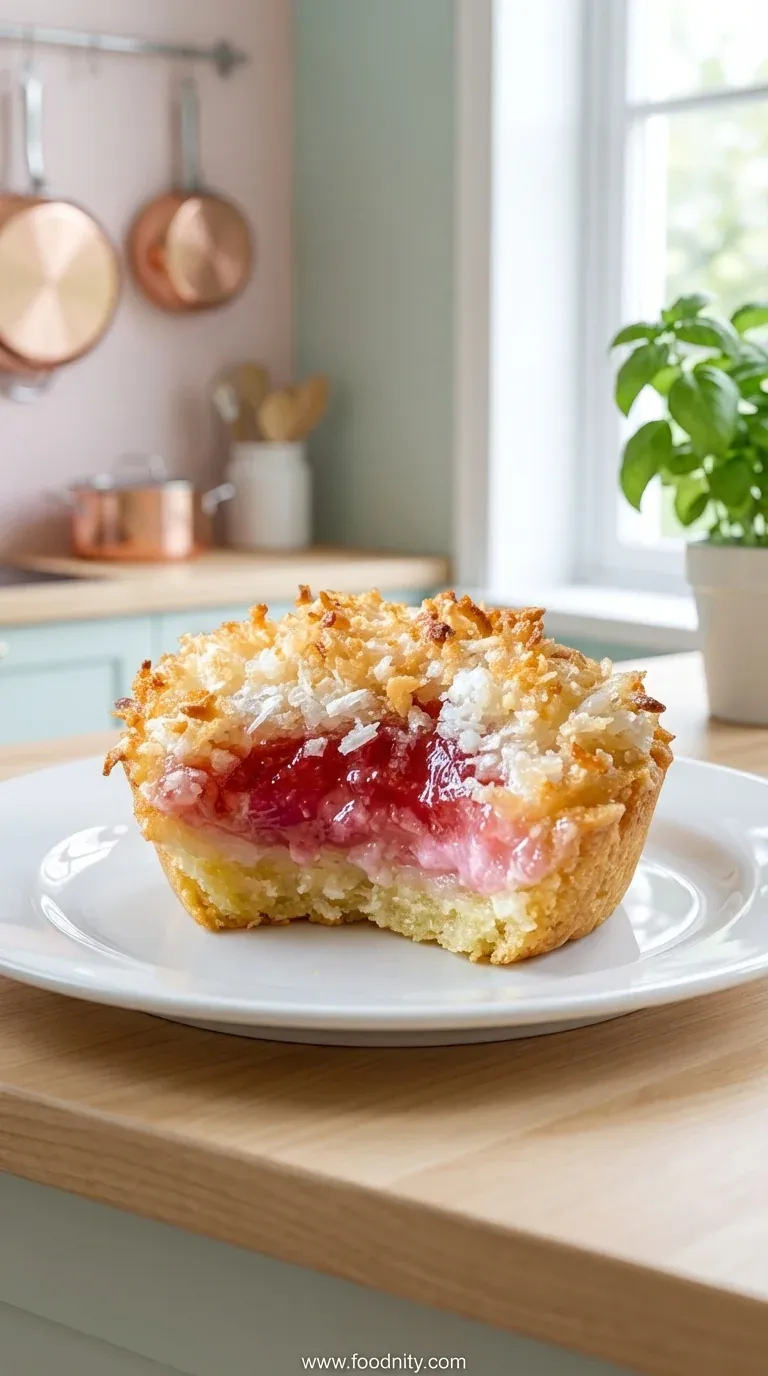
It’s the contrast between the tart, ruby‑red rhubarb and the golden, toasted coconut that makes these tarts unforgettable. The buttery crust offers a delicate base, letting the bright flavors truly shine.
A fun fact or historical angle
Rhubarb was once called “pie plant” because of its popularity in early American desserts, while macaroons originally featured almond paste before coconut became the star.
Flavor or sensory focus
You’ll first notice the soft, fragrant crumb of the crust, then the sweet‑tart burst of rhubarb, and finally the warm, nutty echo of toasted coconut that lingers on the palate.
You Must Know
- Rhubarb’s acidity balances sugary toppings
- Coconut should be toasted, not burnt
- Butter temperature influences crust texture
Honestly, these little details make a world of difference. When the crust is cool enough to handle, you’ll find it easier to press a uniform layer, and the toasted coconut will melt just enough to create a glossy seal. So, take a breath, enjoy the aromas, and let the process unfold at its own pace.
The story behind it
Rhubarb, once a wild garden staple, found its way into European desserts during the 18th century, prized for its vibrant acidity that balanced sugar’s richness. The macaroon, a confection rooted in Mediterranean traditions, evolved across cultures into a coconut‑laden treat. Together, these ingredients create a timeless tart that echoes both rustic farm scenes and elegant tea‑room gatherings.
Why You'll Love It
- A bright spring flavor profile that awakens the palate
- Simple ingredients that feel luxurious together
- Easy to make ahead and serve at gatherings
- Beautiful presentation that impresses without fuss
Tips for success
- Don’t over‑mix the crust; stop once the dough holds together.
- Blind‑bake the crust to prevent sogginess from the rhubarb juices.
- Toast coconut just until golden to avoid bitterness.
- Let the tarts rest before serving to let flavors meld.
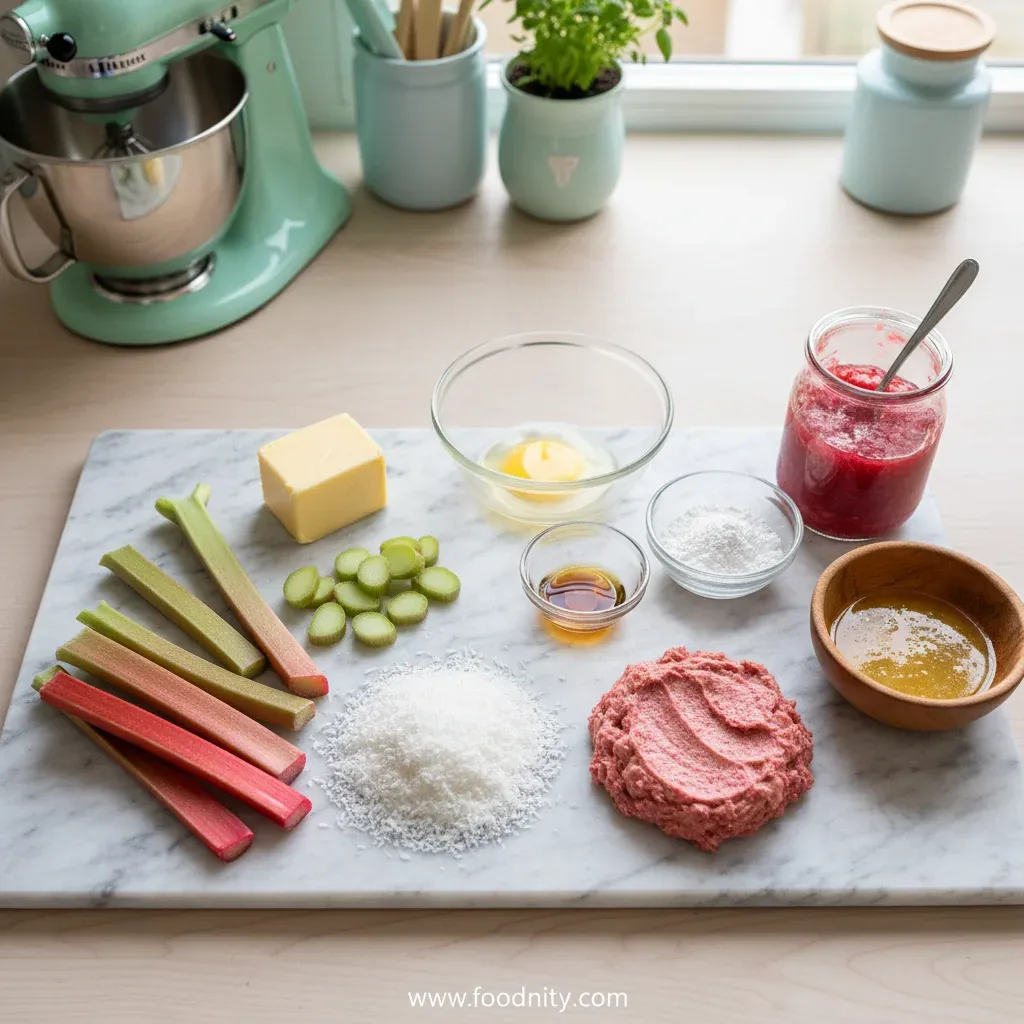
Professional secrets
- Use room‑temperature butter for a flaky crust.
- Add a splash of water to the rhubarb while cooking to prevent scorching.
- Finish with a brief broil to caramelize the coconut topping.
Common mistakes to avoid
- Over‑mixing the crust, leading to a tough texture.
- Skipping the blind‑bake, which makes the crust soggy.
- Burning the coconut; toast just until fragrant.
Substitutions
- Almond flour: Ground hazelnuts. Will add a richer flavor; adjust crust moisture slightly.
- Brown sugar: Maple syrup. Use 2‑3 tbsp less liquid; the flavor becomes more caramel‑like.
Variations
- Spicy Version: Add a pinch of cayenne and a drizzle of honey to the rhubarb filling for a subtle kick.
- Mediterranean Style: Mix in chopped pistachios and a hint of orange zest into the coconut topping.
Storage
Store in an airtight container at room temperature for up to two days; reheat gently if desired.
Make ahead
You can prep the crust and toast the coconut up to a day ahead; store each separately, then assemble and bake when ready.
Leftovers
Reheat gently in a low oven (300°F) for 5‑7 minutes to revive the crisp crust.
Serving ideas
- Serve on a rustic wooden board with a side of vanilla yogurt.
- Pair with a light fruit salad of strawberries and mint.
- Garnish each tart with a thin slice of lemon zest.
- Offer with a cup of tea or coffee for a cozy finish.
Allergy information
Contains gluten, dairy, and coconut.
Rhubarb Coconut Macaroon Tarts
A crisp buttery tart topped with tangy rhubarb and toasted coconut, ideal for spring celebrations.
- Prep time
- 20 min
- Cook time
- 30 min
- Total time
- 50 min
- Difficulty
- Easy
- Cuisine
- American
Ingredients
Crust
Filling
Macaroon Topping
Instructions
- 1
Preheat the oven to 350°F (175°C). In a bowl, combine flour, almond flour, and brown sugar; cut in the cold butter until the mixture resembles coarse crumbs.
- 2
Add the egg yolk, mix briefly, then press the dough into the bottom and up the sides of a 12‑cup tart pan, creating a thin even crust.
- 3
Blind‑bake the crust on a parchment‑lined sheet for 12 minutes, then remove and set aside.
- 4
In a saucepan, combine rhubarb, sugar, lemon juice, vanilla, and salt. Cook over medium heat, stirring until rhubarb softens and the mixture becomes glossy, about 8‑10 minutes.
- 5
Spoon the rhubarb mixture into the pre‑baked crust, spreading evenly.
- 6
In a small bowl, mix toasted coconut, melted butter, and brown sugar; sprinkle over the filled tarts.
- 7
Return the tart pan to the oven and bake for an additional 15‑18 minutes, until the coconut topping is golden and the crust is crisp.
- 8
Allow the tarts to cool for 10 minutes, then remove from the pan and serve at room temperature.
Nutrition per serving
- 280 kcal
- Calories
- 4 g
- Protein
- 32 g
- Carbs
- 14 g
- Fat
Tips & notes
- If the rhubarb releases too much liquid, simmer a little longer to concentrate the flavor. - For extra shine, brush the warm tarts with a light apricot glaze. - You can add a pinch of ground ginger to the filling for a subtle spice note.
Frequently asked questions
Can I use fresh or frozen rhubarb?
Both work well; if using frozen, thaw and drain excess liquid before cooking to avoid a soggy filling.
What if I don’t have almond flour?
You can substitute with additional all‑purpose flour, but the crust will be slightly less tender.
How long do the tarts keep?
Store in an airtight container at room temperature for up to two days; they stay moist and flavorful.
Can I add a glaze?
A light apricot jam glaze brushed on warm tarts adds shine and a subtle sweetness.
Are these gluten‑free?
Swap the all‑purpose flour with a 1‑to‑1 gluten‑free blend; the texture remains lovely.
Do I need to chill the crust before baking?
Chilling for 15 minutes helps the butter set, preventing shrinkage during baking.

Amelia Hart
Chef Amelia Hart is a dessert enthusiast who loves creating elegant cakes, cookies, and baked treats. Her baking style combines classic pastry techniques with creative flavor combinations. Amelia believes that desserts…