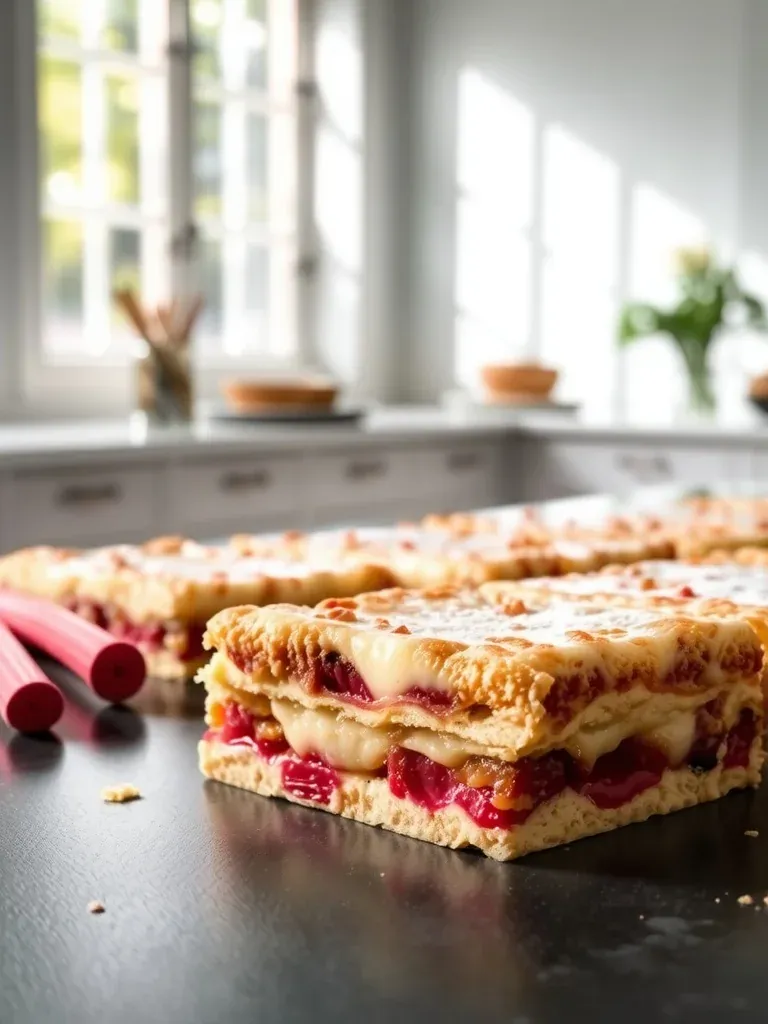
Honestly, when the first bite of a rhubarb bars meets the tongue, you feel a quiet cheer. I like to let the crust cool just enough that the butter whispers, while the custard stays smooth and warm. This recipe is simple, yet it feels like a small celebration of spring’s arrival.
The essence of the dish
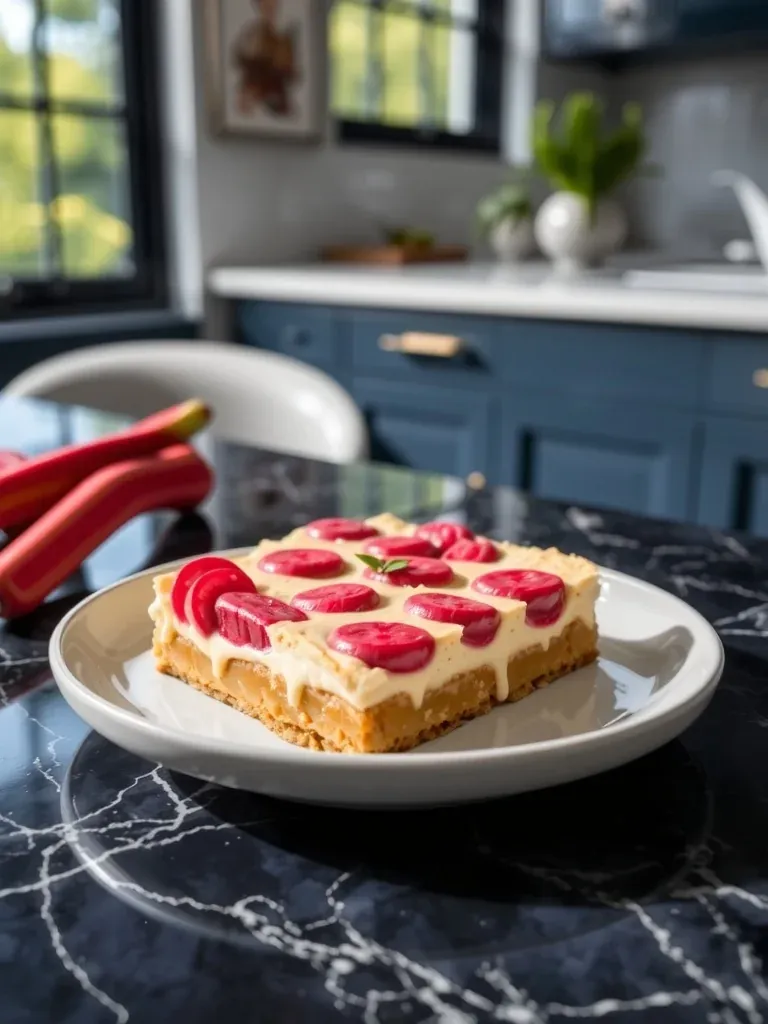
It’s the harmony of a buttery, crumbly base meeting a tangy rhubarb layer, all crowned by a silky vanilla‑kissed custard. The textures play softly, each bite a quiet conversation.
A fun fact or historical angle
In early American cookbooks, rhubarb was often called “the vegetable fruit” because of its unique place between savory and sweet.
Flavor or sensory focus
First, you’ll notice the fragrant butter crust, then the bright snap of rhubarb, and finally the lingering warmth of custard that coats the palate.
You Must Know
- Do not over‑bake the custard.
- Rhubarb should be slightly softened, not mushy.
- Cool the crust before adding custard to prevent sogginess.
So, keep those points in mind, and the bars will turn out just right. I often let the crust rest a minute after pulling it from the oven; it steadies the base and prevents cracks. Then, when the custard settles, you get that perfect, glossy finish that invites a second slice.
The story behind it
Rhubarb first entered European kitchens in the 1700s, prized for its bright acidity that balanced sugary desserts. The combination of rhubarb with custard emerged in Victorian tea rooms, where cooks sought a contrast between the tart stalks and velvety egg‑based fillings. Over centuries, the bar form became popular in American home baking, offering a portable slice of that classic pairing.
Why You'll Love It
- The crust is buttery and tender, melting in your mouth.
- Rhubarb adds a gentle zing that brightens each bite.
- Custard stays silky without being heavy.
- Easy enough for a weekday but elegant for guests.
Tips for success
- Don't over‑mix the crust; keep butter in small pieces.
- Let the custard rest a minute after baking for a smooth finish.
- Taste the rhubarb mixture before adding to adjust sweetness.
Professional secrets
- Use room‑temperature butter for a uniform crust.
- Bake the custard on the middle rack for even heat.
- Cool the bars upside‑down briefly to set the custard.
Common mistakes to avoid
- Over‑baking the custard, resulting in a grainy texture.
- Adding too much sugar to the rhubarb, which masks its tartness.
- Not chilling the butter, leading to a greasy crust.
Substitutions
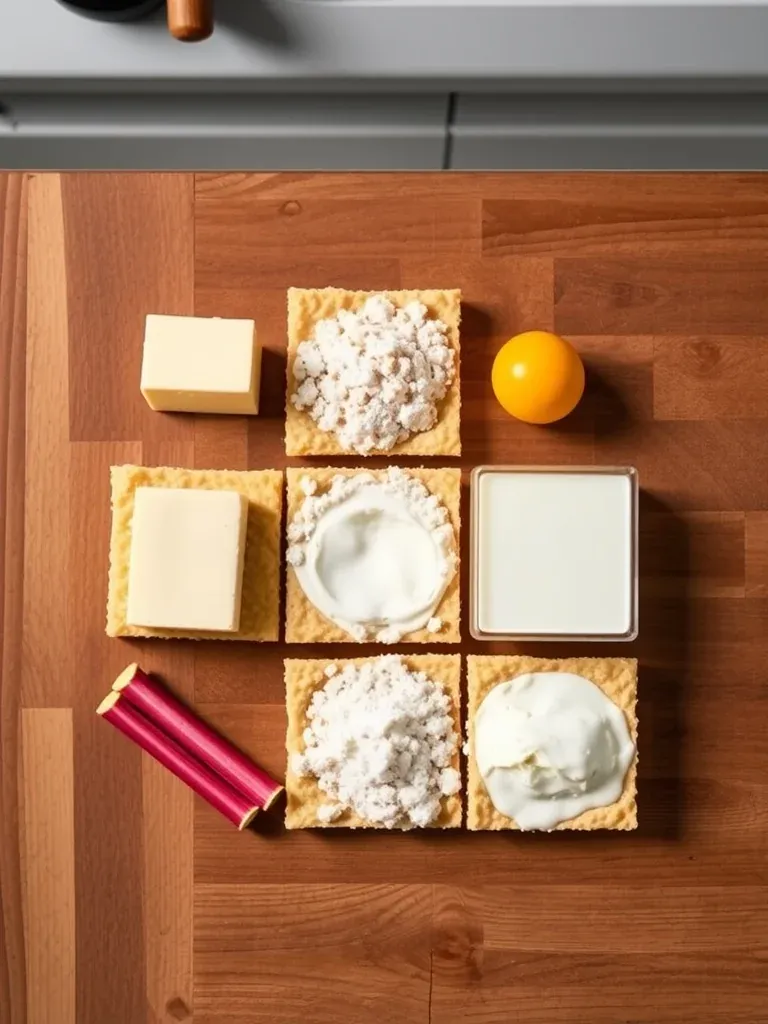
- Heavy cream: Full‑fat coconut milk. Gives a subtle coconut note; keep the custard cool to avoid curdling.
- Butter: Margarine. Will work for the crust but may slightly change flavor.
Variations
- Spicy Version: Add a pinch of ground ginger and a drizzle of honey for warmth.
- Mediterranean Style: Swap the custard base for a ricotta‑lemon mixture and garnish with toasted pistachios.
Storage
Store in an airtight container in the refrigerator for up to three days. Reheat gently in a low oven if desired.
Make ahead
You can prepare the crust and bake it a day ahead; store covered. Add the custard filling and bake just before serving.
Leftovers
Reheat gently in a low oven (300°F) for 10 minutes, or enjoy cold for a firmer texture.
Serving ideas
- Serve with a dollop of lightly sweetened whipped cream.
- Pair with fresh berries on the side for extra freshness.
- Garnish with a dusting of powdered sugar and a mint leaf.
Allergy information
Contains dairy, eggs, and wheat.
Rhubarb Custard Bars – Sweet Spring Treat
A spring‑time treat of tart rhubarb and sweet custard on a flaky base.
- Prep time
- 15 min
- Cook time
- 30 min
- Total time
- 45 min
- Difficulty
- Easy
- Cuisine
- American
Ingredients
Crust
Filling
Instructions
- 1
Preheat the oven to 350°F (175°C). In a bowl, combine flour, sugar, and salt, then cut in the cold butter until the mixture resembles coarse crumbs.
- 2
Press the crust mixture evenly into a 9×13‑inch baking pan. Bake for 12‑15 minutes, until lightly golden. Remove and let cool slightly.
- 3
Meanwhile, toss the rhubarb with a tablespoon of sugar and the lemon juice; cook in a saucepan over low heat for 5 minutes until just softened.
- 4
In a separate bowl, whisk yolks, remaining sugar, vanilla, and cinnamon. Slowly whisk in the cream, then gently fold in the cooked rhubarb.
- 5
Pour the custard‑rhubarb mixture over the warm crust. Return to the oven and bake for 18‑20 minutes, until the custard is set but still slightly trembles in the center.
- 6
Allow the bars to cool completely in the pan, then dust with powdered sugar. Cut into squares and serve.
Nutrition per serving
- 210 kcal
- Calories
- 4 g
- Protein
- 25 g
- Carbs
- 10 g
- Fat
Tips & notes
- If the crust browns too quickly, cover with foil during the second bake. - For extra flavor, stir a pinch of nutmeg into the custard.
Frequently asked questions
Can I use frozen rhubarb?
Yes, thaw it first and pat dry; it will release a bit more moisture, so you might add a tablespoon of extra flour to the custard.
How long do the bars keep?
Store them covered in the fridge for up to three days. They stay moist and flavorful.
Can I make a gluten‑free version?
Swap the all‑purpose flour in the crust for a 1:1 gluten‑free blend; the texture remains lovely.
What if I want a sweeter bar?
Increase the sugar by a couple of tablespoons or drizzle a light honey glaze after cooling.
Do I need to line the pan?
A parchment paper liner makes removal easier and prevents sticking, especially with the buttery crust.
Can I add a topping?
A dusting of powdered sugar or a handful of toasted almond slivers adds a pleasant finish.

Amelia Hart
Chef Amelia Hart is a dessert enthusiast who loves creating elegant cakes, cookies, and baked treats. Her baking style combines classic pastry techniques with creative flavor combinations. Amelia believes that desserts…