I remember the first time I simmered rhubarb with sugar, the kitchen filled with a sweet‑tart scent that lingered long after the pot was turned off. Honestly, that aroma still draws me back whenever I see the red stalks in the market. For a bright start, try our rhubarb curd as a spread alongside the jelly. It’s a gentle companion that lets the flavor shine without rivalry.
The essence of the dish
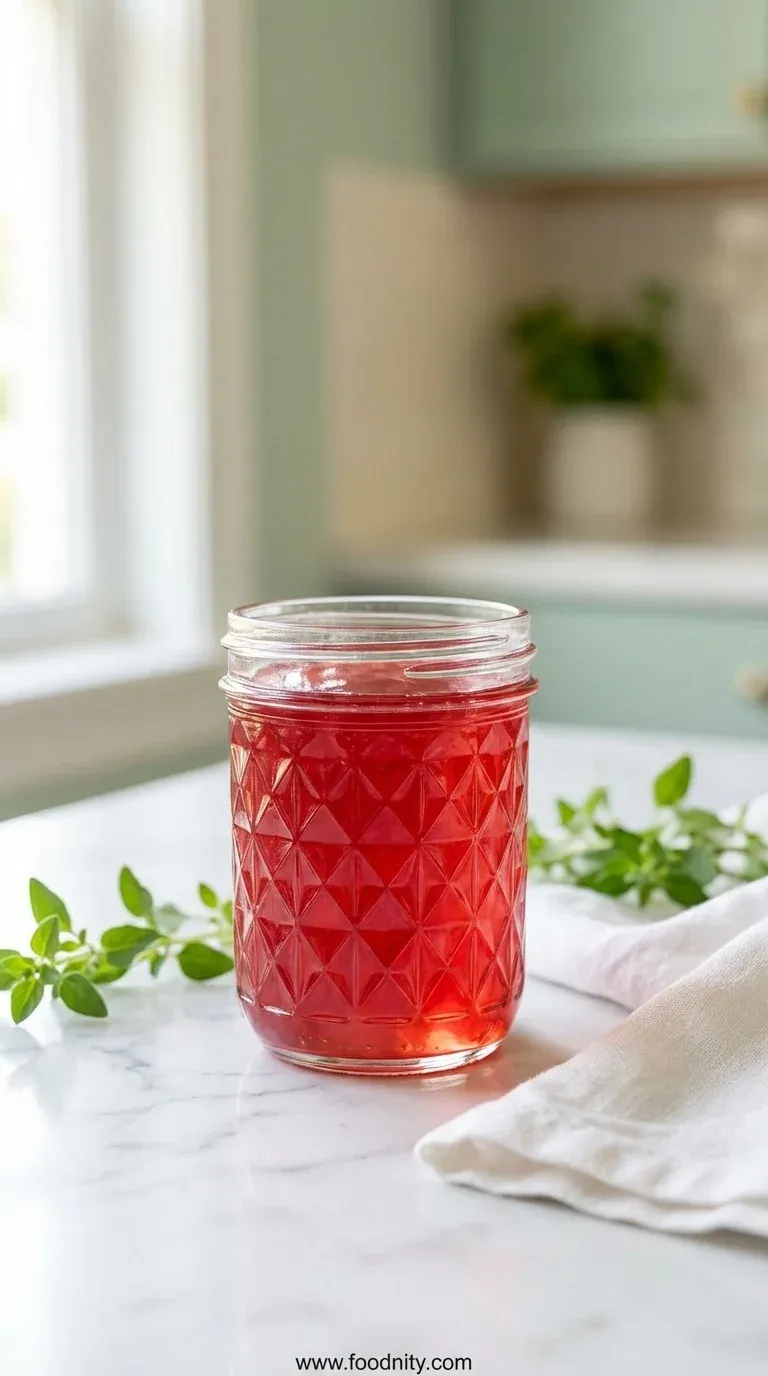
The jelly captures rhubarb’s natural tartness, balanced by sugar’s gentle sweetness, creating a glossy, spreadable preserve that glistens like sunrise on a countertop.
A fun fact or historical angle
In Victorian England, rhubarb jelly was a prized item for holiday gifting, often presented in decorative jars tied with ribbons.
Flavor or sensory focus
You’ll notice the bright tang on the palate, followed by a soft, melt‑in‑your‑mouth sweetness that leaves a lingering, slightly citrusy finish.
You Must Know
- Use fresh, firm stalks for the cleanest flavor
- Don’t over‑cook; a gentle simmer preserves color
- Add lemon at the end to brighten the taste
When you’re ready to serve, the jelly pairs beautifully with a slice of warm scone, a dollop of cream tart, or even a scoop of ice cream. The combination feels like a gentle hug from the garden, and it’s perfect for sharing with friends over afternoon tea.
The story behind it
Rhubarb has long been a staple of British spring preserves, prized for its vivid color and sharp acidity that balances sweet sugars. In the early 1900s, home cooks perfected the jelly technique, boiling down stalks to capture the essence of the season in a glass jar. This tradition traveled across the Atlantic, where American bakers added their own twists, turning the jelly into a versatile accompaniment for everything from scones to ice cream.
Why You'll Love It
- Vibrant color that brightens any table
- Simple pantry ingredients, no fancy equipment
- Perfect balance of sweet and tart
- Versatile: toast, desserts, or gifts
Tips for success
- Don’t rush the simmer; a gentle boil preserves the bright color.
- Stir frequently to avoid scorching on the bottom.
- Leave a small headspace in jars to allow for expansion.
Professional secrets
- Use filtered water to keep the flavor pure.
- Add lemon juice at the end to brighten the final taste.
- Test the set with a chilled plate for precision.
Common mistakes to avoid
- Boiling too vigorously, which can cause the jelly to become cloudy.
- Skipping the lemon juice, resulting in a flat flavor.
- Not sterilizing jars, leading to spoilage.
Substitutions
- Sugar: Honey or maple syrup. Honey adds floral notes; reduce by ¼ cup as it’s sweeter than sugar.
- Lemon juice: Apple cider vinegar. Provides similar acidity; use half the amount to avoid overpowering.
Variations
- Spicy Version: Add ¼ tsp of crushed red pepper flakes while simmering for a subtle heat that contrasts the tartness.
- Mediterranean Style: Stir in finely chopped fresh mint and a drizzle of honey after cooking for a sweet‑herbaceous twist.
Storage
Store sealed jars in a cool, dark pantry for up to 12 months. Once opened, keep refrigerated and consume within three weeks.
Make ahead
You can simmer the rhubarb and sugar up to 24 hours ahead; let it cool, then refrigerate the mixture before final jelling in jars.
Leftovers
Reheat gently in a saucepan with a splash of water, stirring until smooth, then use as a topping for pancakes or ice cream.
Serving ideas
- Spread on warm toast with butter for a comforting breakfast.
- Serve alongside a dollop of whipped cream and fresh berries.
- Pair with a slice of lemon pound cake for an afternoon treat.
- Garnish a cheese board with a small spoonful for a sweet contrast.
- Prep time
- 15 min
- Cook time
- 30 min
- Total time
- 45 min
- Difficulty
- Easy
- Cuisine
- American
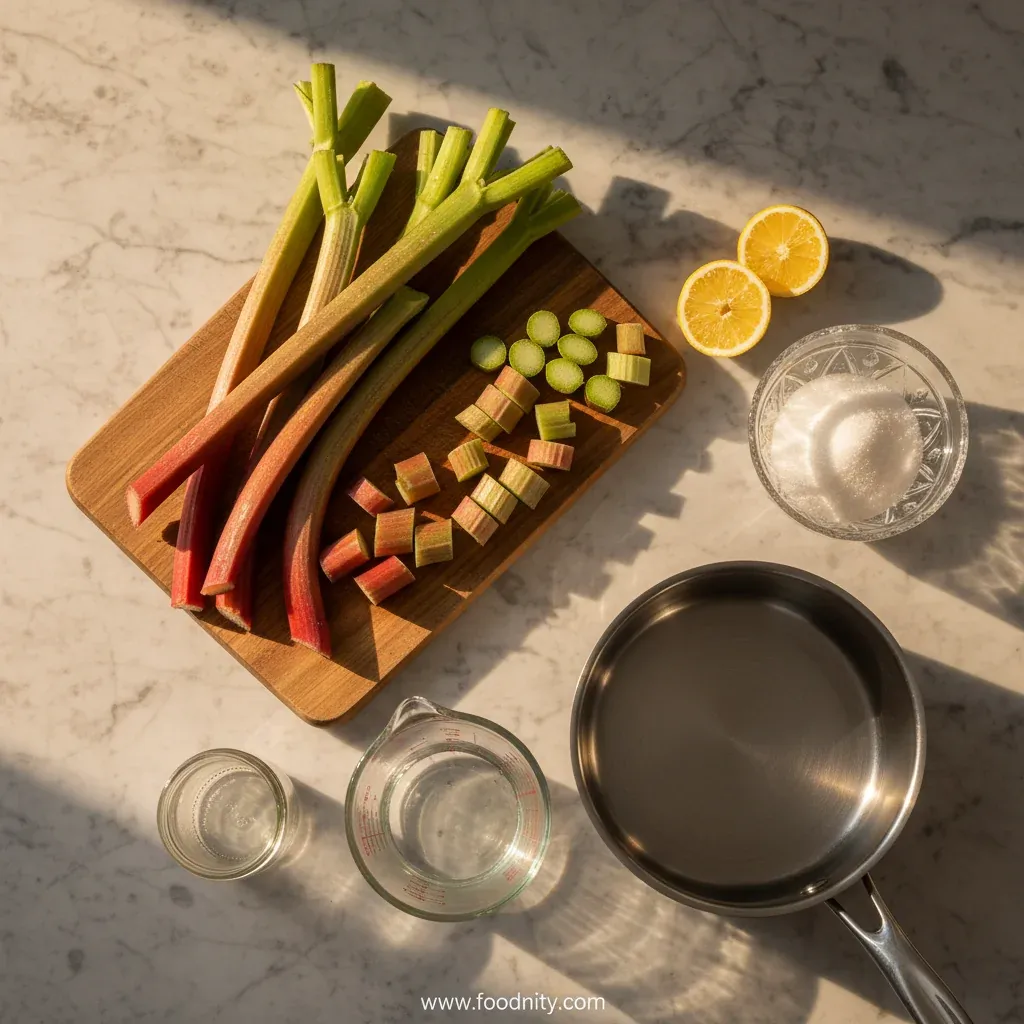
Ingredients
Main Ingredients
Optional Add‑ins
Instructions
- 1
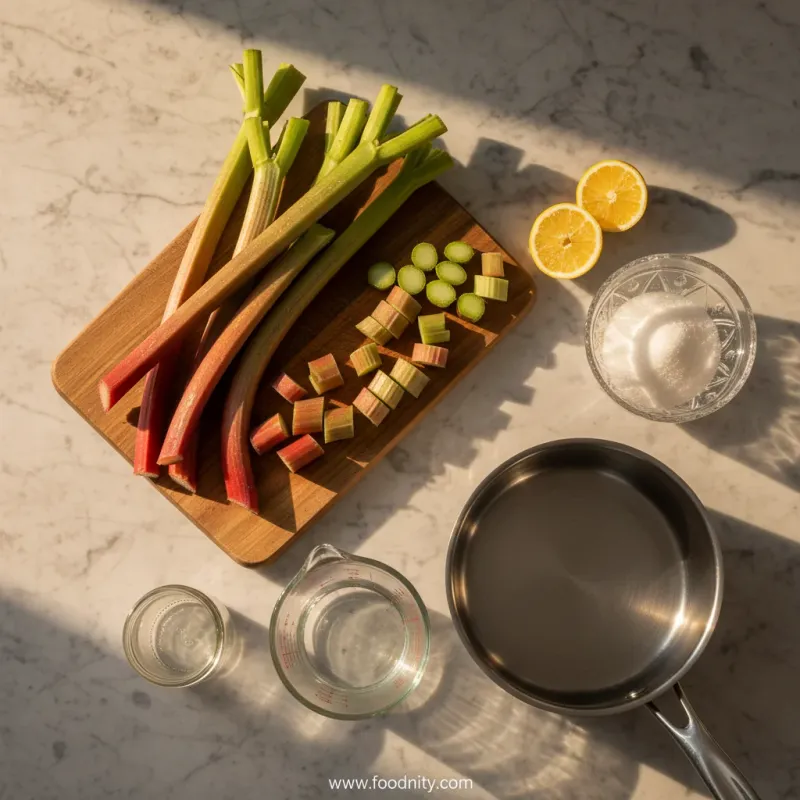
Place the rhubarb pieces in a large pot with the water; bring to a gentle boil, then lower the heat and simmer for about 10 minutes, stirring occasionally, until the rhubarb is soft and releases its juices.
- 2
Add the sugar and a pinch of salt, stirring until fully dissolved; continue to simmer, allowing the mixture to thicken, about 8‑10 minutes.
- 3
Stir in the lemon juice and, if using, the pectin; cook for another 2‑3 minutes, watching for the mixture to reach a gel point (you can test on a chilled plate).
- 4
Remove from heat, ladle the hot jelly into sterilized jars, leaving a ¼‑inch headspace; wipe rims, seal with lids, and invert the jars for 5 minutes to create a vacuum.
- 5
Allow the jars to cool completely on a kitchen towel; you’ll hear the soft “pop” of sealing. Store in a cool, dark pantry for up to a year.
Nutrition per serving
- 120 kcal
- Calories
- 1 g
- Protein
- 30 g
- Carbs
- 0 g
- Fat
Tips & notes
- If you prefer a sweeter jelly, add an extra ¼ cup of sugar; the flavor will remain balanced thanks to the lemon. - Pair this jelly with a slice of rhubarb sorbet for a layered dessert experience. - A small spoonful works beautifully as a topping for ginger custard tarts.
Frequently asked questions
Can I use frozen rhubarb?
Yes, thaw it completely and drain excess liquid before cooking; the texture will be slightly softer but the flavor remains bright.
Do I need commercial pectin?
Not required; the natural pectin in rhubarb and the sugar concentration usually set the jelly, though a teaspoon of added pectin guarantees a firmer set.
How long will the jelly keep?
Stored in a cool, dark pantry, unopened jars last up to a year. Once opened, refrigerate and use within 3 weeks.
Can I add spices?
A pinch of ginger or vanilla bean works well; add them with the lemon to infuse subtle warmth.
What’s the best way to test for set?
Place a small spoonful on a chilled plate; if it firms and wrinkles when pushed, it’s ready.
Is the jelly suitable for vegans?
Absolutely, as long as you use vegetarian pectin; none of the ingredients are animal‑derived.

Amelia Hart
Chef Amelia Hart is a dessert enthusiast who loves creating elegant cakes, cookies, and baked treats. Her baking style combines classic pastry techniques with creative flavor combinations. Amelia believes that desserts…