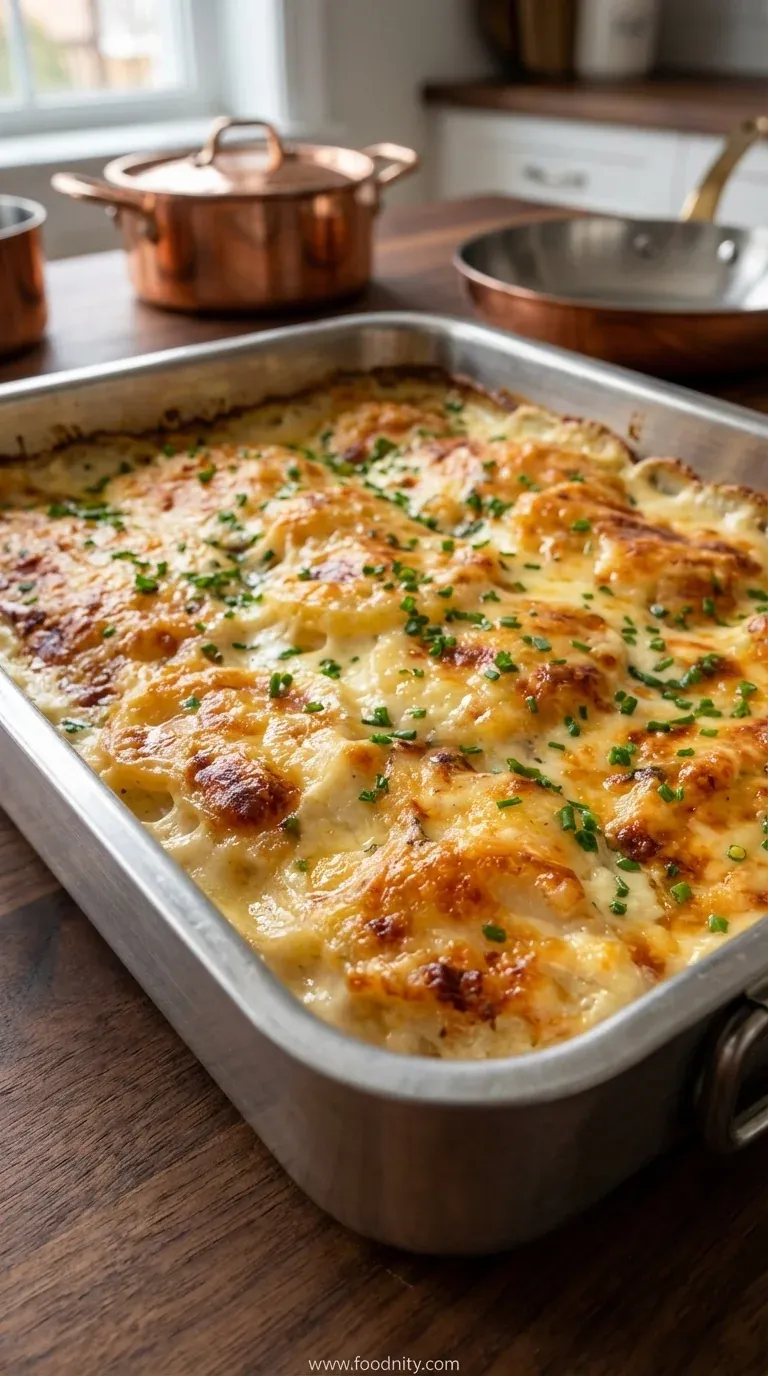
Honestly, when I first layered these potatoes, I could smell the garlic softening in the oven and it reminded me of evenings when the house smelled like home. I mean, it’s simple, yet the result is wow, so comforting. herbed potato salad often shares the same warm vibe.
The essence of the dish
It’s all about achieving that perfect contrast—soft, creamy potatoes beneath a buttery, caramelized crust that whispers of caramelized garlic.
A fun fact or historical angle
The word “gratin” comes from the French ‘gratter’ meaning to scrape, referring to the crunchy top that is scraped off and enjoyed first.
Flavor or sensory focus
Expect the aromatic warmth of roasted garlic, a mellow richness from the cream, and a subtle nutmeg undertone that lifts the whole bite.
You Must Know
- Do not over‑salt the cream; the cheese will add saltiness
- Layer tightly to prevent watery gaps
- Rest before cutting for clean slices
When you let the gratin sit for five minutes, the sauce thickens just enough to hold its shape. I’ve found that this pause turns a good side into a great one. It also lets the flavors marry, so each forkful tastes cohesive. So, be patient—good things come to those who wait.
And remember, the dish pairs beautifully with a simple green salad or a protein of your choice. For inspiration, you might enjoy beef bites alongside.
The story behind it
The gratin technique hails from France, where potatoes were first thinly sliced and baked under a golden crust. Over centuries, cooks across Europe adapted the method, adding local cheeses and aromatics. This humble dish became a staple at family tables, prized for its ability to turn modest ingredients into something elegant.
Why You'll Love It
- Easy to assemble with pantry staples
- Creamy interior meets a crisp top
- Warm garlic aroma fills the kitchen
- Perfect side for meat or vegetarian meals
Tips for success
- Pat the potatoes dry, excess moisture makes the gratin soggy.
- Season each layer lightly to build flavor.
- Allow the dish to rest so the sauce sets.
Professional secrets
- Use room‑temperature cream for even heat distribution.
- Finish under a broiler for an extra caramelized crust.
- Add a splash of white wine to the sauce for subtle acidity.
Common mistakes to avoid
- Overcrowding the pan with too many potato layers, leading to sogginess.
- Skipping the rest period, causing the sauce to run.
- Using high heat for the sauce, which can curdle the cream.
Substitutions
- Cheddar cheese: Sharp Gouda. Provides a buttery flavor with a slightly different melt.
- Heavy cream: Half‑and‑half. Reduces richness while keeping creaminess.
Variations
- Spicy Version: Add a pinch of cayenne and a dash of hot sauce to the cream mixture for a gentle kick.
- Mediterranean Style: Stir in crumbled feta, sliced olives, and sun‑dried tomatoes before baking.
Storage
Cool to room temperature, then refrigerate in an airtight container for up to 3 days. Reheat covered at 350°F until warmed through.
Make ahead
You can assemble the gratin, cover, and refrigerate up to 24 hours before baking; bake directly from the fridge, adding a few extra minutes.
Leftovers
Reheat gently in a covered dish at 350°F, adding a splash of milk to revive the sauce.
Serving ideas
- Serve alongside roasted chicken or grilled salmon.
- Pair with a simple arugula salad dressed with lemon.
- Garnish each portion with a curl of fresh thyme.
Allergy information
Contains dairy (milk, cream, cheese).
Roasted Garlic Potatoes Au Gratin
Crispy, creamy roasted garlic potatoes au gratin for a cozy dinner.
- Prep time
- 20 min
- Cook time
- 45 min
- Total time
- 1 h 5 min
- Difficulty
- Easy
- Cuisine
- American
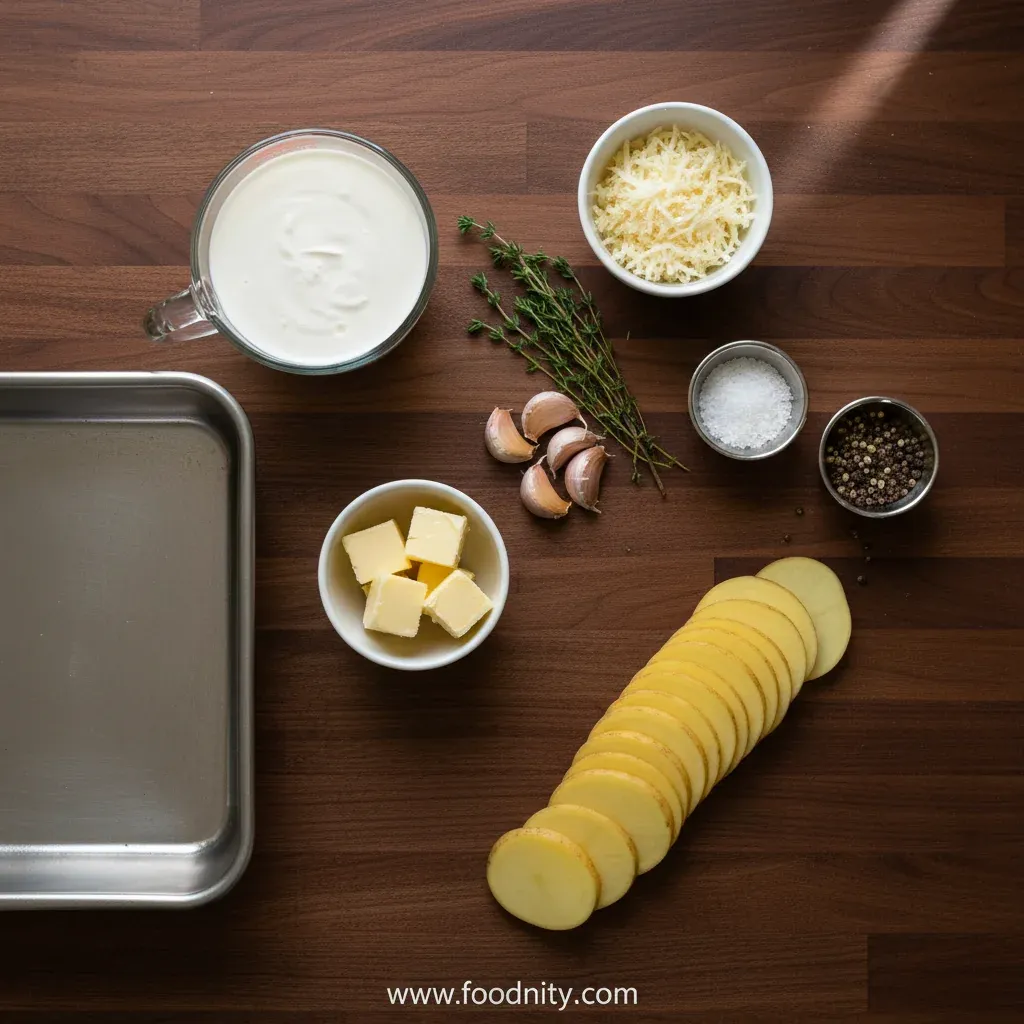
Ingredients
Main Ingredients
Optional Topping
Instructions
- 1
Preheat the oven to 375°F (190°C). Lightly grease a 9‑inch baking dish.
- 2
Toss the garlic cloves with olive oil, season with salt, and roast on a small tray for 12‑15 minutes until soft and golden.
- 3
While garlic roasts, combine cream, milk, lemon juice, nutmeg, and a pinch of salt in a saucepan; heat gently, stirring until just simmering.
- 4
Mash the roasted garlic into the hot cream mixture, then stir in half of the cheddar and Gruyère until melted.
- 5
Layer half of the sliced potatoes in the prepared dish, pour half of the sauce over them, then repeat with remaining potatoes and sauce.
- 6
Top with the remaining cheddar, Gruyère, and optional breadcrumb‑butter mixture for extra crunch.
- 7
Cover with foil and bake for 35 minutes; remove foil and bake an additional 10‑12 minutes until the top is bubbling and deep golden.
- 8
Let rest for 5 minutes before serving; garnish with fresh thyme if desired.
Nutrition per serving
- 420 kcal
- Calories
- 12 g
- Protein
- 35 g
- Carbs
- 25 g
- Fat
Tips & notes
- If the top browns too quickly, tent with foil. - Use a mandoline for uniformly thin slices. - For a dairy‑free version, substitute coconut cream and dairy‑free cheese.
Frequently asked questions
Can I use sweet potatoes?
Yes, but they will add a sweeter flavor and a slightly different texture; adjust seasoning accordingly.
How do I keep the potatoes from turning brown?
Soak the sliced potatoes in cold water for 10 minutes, then pat dry before layering.
Can I make this ahead of time?
Assemble the dish up to the baking step, cover, and refrigerate up to 24 hours. Bake directly from the fridge, adding a few extra minutes.
What cheese works best?
A blend of sharp cheddar and Gruyère gives both flavor and melt; feel free to substitute Monterey Jack for a milder profile.
Is this gluten‑free?
Yes, as long as you use a gluten‑free cheese and ensure your broth or stock is gluten‑free.
Can I add herbs?
Fresh thyme or rosemary sprinkled on top before baking adds a fragrant note without overwhelming the garlic.

Daniel Greenfield
Chef Daniel Greenfield focuses on nutritious meals made with fresh and wholesome ingredients. His recipes are designed for people who want to eat healthy without sacrificing flavor. Daniel specializes in balanced meals…