
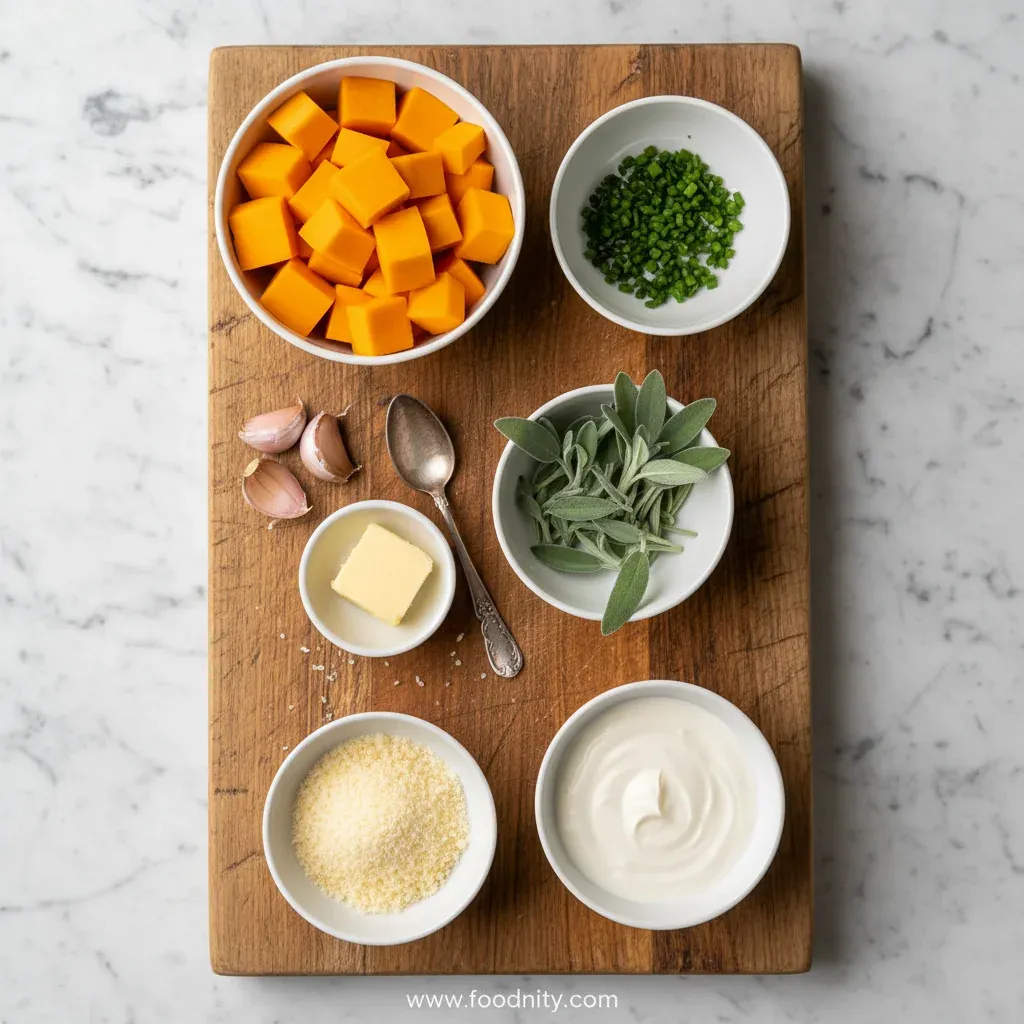
Honestly, when I first sliced the orange‑gold butternut squash, the kitchen filled with a gentle perfume of earth and sweet spice. I remember a quiet evening, the stove humming, and the soft rustle of sage leaves. Yeah, it's the kind of dish that lets you pause, breathe, and feel the warmth of a simple, well‑made meal. So, let’s start by gathering the roots of flavor, and then we’ll let them mingle in the oven’s gentle embrace.
The essence of the dish
The harmony of sweet squash, buttery cream, and earthy sage creates a side that feels both hearty and refined. Each bite offers a silky interior contrasted by a lightly crisp top.
A fun fact or historical angle
Gratin dishes were originally a way to stretch modest ingredients among Alpine families; the word "gratin" comes from the French "gratter," meaning to scrape the browned crust.
Flavor or sensory focus
You’ll notice the subtle piney notes of sage, the mellow creaminess that coats each slice, and the faint tang of lemon that lifts the richness.
You Must Know
- Sage loses potency if over‑cooked; add it early but don’t scorch.
- Thin slices ensure even cooking and a tender mouthfeel.
- Cheese choice influences both flavor and crust color.
Ugh, I once used too much cheese and the top became a blackened blanket—definitely not the look I was after. Balance is key. And remember, the dish shines alongside simple sides; it doesn’t need a flashy accompaniment. Look at the way a modest carrot side can complement this; try the maple Dijon carrots for a sweet‑savory pairing.
The story behind it
The gratin, a timeless French creation, originated in the Alpine regions where hearty ingredients were coaxed into comforting casseroles. Over centuries, cooks have layered thinly sliced vegetables with cream and cheese, creating a golden crust that sings of rustic kitchens. This Sage Butternut Squash Gratin carries that heritage into a modern, health‑focused plate, honoring the classic technique while inviting the bright notes of autumnal squash and fragrant sage.
Why You'll Love It
- Silky texture that melts in the mouth
- Earthy sage aroma that calms the senses
- Golden crust adds a gentle crunch
- Uses wholesome, seasonal ingredients
Tips for success
- Pat the squash slices dry to avoid a soggy gratin.
- Use fresh sage for the brightest flavor.
- Don’t over‑bake; the squash should stay tender, not mushy.
Professional secrets
- Warm the baking dish before adding squash; it prevents sudden temperature shock.
- Finish with a brief broil for that perfect caramelized crust.
- Add a splash of white wine to the sauce for subtle depth (optional).
Common mistakes to avoid
- Over‑crowding the baking dish, which leads to soggy squash.
- Adding too much cream, making the gratin runny.
- Skipping the rest period, causing the crust to fall.
Substitutions
- Gruyère cheese: Sharp cheddar or mozzarella. Flavor changes slightly; cheddar adds more sharpness.
- Heavy cream: Half-and-half or coconut cream. Coconut cream adds a subtle tropical note.
Variations
- Spicy Version: Add a pinch of cayenne and a drizzle of hot honey for a gentle kick.
- Mediterranean Style: Stir in crumbled feta, sliced olives, and sun‑dried tomatoes before baking.
Storage
Cool to room temperature, then store in an airtight container in the refrigerator for up to three days.
Make ahead
You can slice and season the squash up to 12 hours ahead; keep covered in the refrigerator and bake when ready.
Leftovers
Reheat in a skillet over low heat with a splash of milk, stirring gently to restore creaminess.
Serving ideas
- Serve over a bed of fluffy couscous.
- Pair with a drizzle of balsamic reduction.
- Garnish with extra sage leaves for visual appeal.
- Accompany with a light citrus‑infused water.
Allergy information
Contains dairy (cream, milk, cheese).
Sage Butternut Squash Gratin
Creamy sage‑infused butternut squash baked to golden perfection.
- Prep time
- 20 min
- Cook time
- 35 min
- Total time
- 55 min
- Difficulty
- Easy
- Cuisine
- American
Ingredients
Main Ingredients
For the Cream Sauce
Topping
Instructions
- 1
Preheat the oven to 375 °F (190 °C). Lightly butter a 9‑inch baking dish.
- 2
In a large bowl, toss the squash slices with olive oil, salt, pepper, and the chopped sage until evenly coated.
- 3
Arrange the squash in overlapping rows in the dish, about three layers deep.
- 4
In a saucepan, combine cream, milk, lemon juice, nutmeg, salt, and pepper; bring to a gentle simmer, then remove from heat.
- 5
Pour the warm sauce over the layered squash, ensuring it seeps through each slice.
- 6
Sprinkle grated Gruyère evenly; if using, toss breadcrumbs with melted butter and scatter on top.
- 7
Bake for 30‑35 minutes, until the cheese is bubbling and the top is golden brown. Let rest 5 minutes before serving.
Nutrition per serving
- 380 kcal
- Calories
- 10 g
- Protein
- 30 g
- Carbs
- 24 g
- Fat
Tips & notes
- If the top browns too quickly, cover loosely with foil. - For extra aroma, add a few whole sage leaves on top before baking. - A light drizzle of extra‑virgin olive oil before serving adds a silky finish.
Frequently asked questions
Can I make this ahead of time?
Yes, assemble the gratin and refrigerate up to 24 hours before baking; bring to room temperature before cooking.
What can I substitute for heavy cream?
A mix of whole milk and a spoonful of plain yogurt works well, keeping the richness while reducing fat.
Is this recipe gluten‑free?
Absolutely, as long as you omit breadcrumbs or use a gluten‑free alternative.
How long does it keep in the fridge?
Store leftovers in an airtight container for up to three days; reheat gently in the oven.
Can I add other vegetables?
Feel free to layer thinly sliced carrots or parsnips for added color and sweetness.
What herb pairs best with sage?
A hint of thyme or rosemary adds depth without overpowering the sage.

Daniel Greenfield
Chef Daniel Greenfield focuses on nutritious meals made with fresh and wholesome ingredients. His recipes are designed for people who want to eat healthy without sacrificing flavor. Daniel specializes in balanced meals…