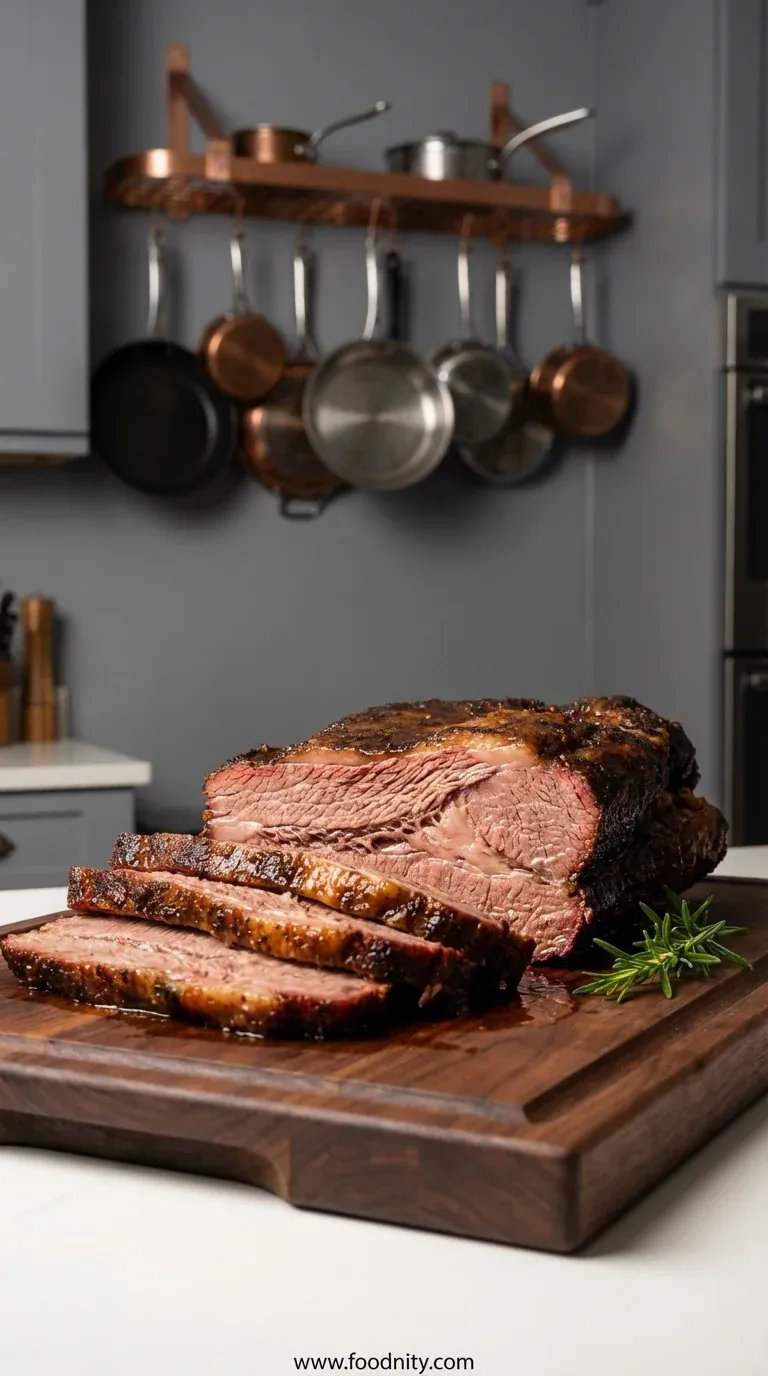
Honestly, there’s something magical about letting a big cut of beef rest in a low‑heat hug of flavors. I remember the first time I tried this recipe; the kitchen was warm, the scent of onions and bay leaves drifting, and my heart felt steady as I set the timer. So, let’s take it slow together.
The essence of the dish
A slow‑cooked brisket is all about patience; the low heat breaks down collagen, turning a tough cut into a melt‑in‑your‑mouth marvel, while the aromatics create a comforting perfume that fills the home.
A fun fact or historical angle
Back in the day, cowboys would hang brisket over an open fire for hours, a technique that inspired today’s low‑and‑slow methods.
Flavor or sensory focus
You’ll notice the first bite is a sweet‑savory kiss from the brown sugar glaze, followed by the deep, beefy richness that lingers on the palate.
You Must Know
- Never rush the sear; it locks in flavor
- Low heat is the secret to tenderness
- Slice against the grain for easy chewing
Honestly, if you skip the searing step, you lose that beautiful crust that adds a subtle caramel note. So, take a moment to brown each side—yeah, it does add a little extra work, but the payoff is worth it. In the end, the dish feels like a warm hug on a plate, perfect for sharing.
The story behind it
The art of slow‑cooking beef brisket dates back to early American pioneer kitchens, where tough cuts were transformed by gentle heat and simple ingredients. In the 19th century, families would tumble a whole brisket into a cauldron of broth, letting it simmer for hours until the meat surrendered its fibers. Today, the slow cooker brings that heritage into modern homes, preserving the deep, comforting flavors while freeing up our time. beef recipes continue this legacy by marrying tradition with convenience.
Why You'll Love It
- Hands‑off cooking, set it and forget it
- Deep, layered flavor without fancy techniques
- Perfectly tender meat that falls apart
- Minimal cleanup, more time at the table
Tips for success
- Don’t overcrowd the pan when searing; work in batches if needed.
- Let the meat rest before slicing; it keeps the juices inside.
- Taste the sauce before reducing; adjust salt or sweetness as desired.
Professional secrets
- Room‑temperature brisket sears evenly.
- Low heat breaks down collagen into gelatin for that melt‑in‑mouth feel.
- Deglazing captures caramelized bits that deepen flavor.
Common mistakes to avoid
- Skipping the sear, which loses flavor depth.
- Cooking on HIGH and ending up with tough meat.
- Over‑salting the broth; remember the meat adds its own salt.
Substitutions
- Beef broth: Chicken broth. Will be milder; you may want to add a bit more Worcestershire sauce.
- Brown sugar: Maple syrup. Use 2 tbsp; gives a subtle caramel note.
Variations
- Spicy Version: Add 1 tsp smoked chipotle powder and a splash of hot sauce to the broth for a gentle heat.
- Mediterranean Style: Stir in olives, sun‑dried tomatoes, and feta cheese during the last hour of cooking.
Storage
Store leftovers in an airtight container in the refrigerator for up to four days; reheat gently with a splash of broth.
Make ahead
Season and sear the brisket a day ahead; store in the refrigerator and add broth and aromatics before cooking the next morning.
Leftovers
Reheat gently in a skillet with a splash of broth; the meat stays moist and flavorful.
Serving ideas
- Place slices over creamy mashed potatoes.
- Serve alongside roasted root vegetables.
- Pair with a crisp green salad dressed lightly.
- Garnish with a drizzle of reduced sauce and fresh parsley.
Allergy information
Contains soy (Worcestershire sauce) and may contain traces of wheat.
Slow Cooked Beef Brisket Recipe
Tender, juicy brisket cooked low and slow with a rich, comforting flavor.
- Prep time
- 20 min
- Cook time
- 9 h
- Total time
- 9 h 20 min
- Difficulty
- Easy
- Cuisine
- American
Ingredients
Main Ingredients
Optional Garnish
Instructions
- 1
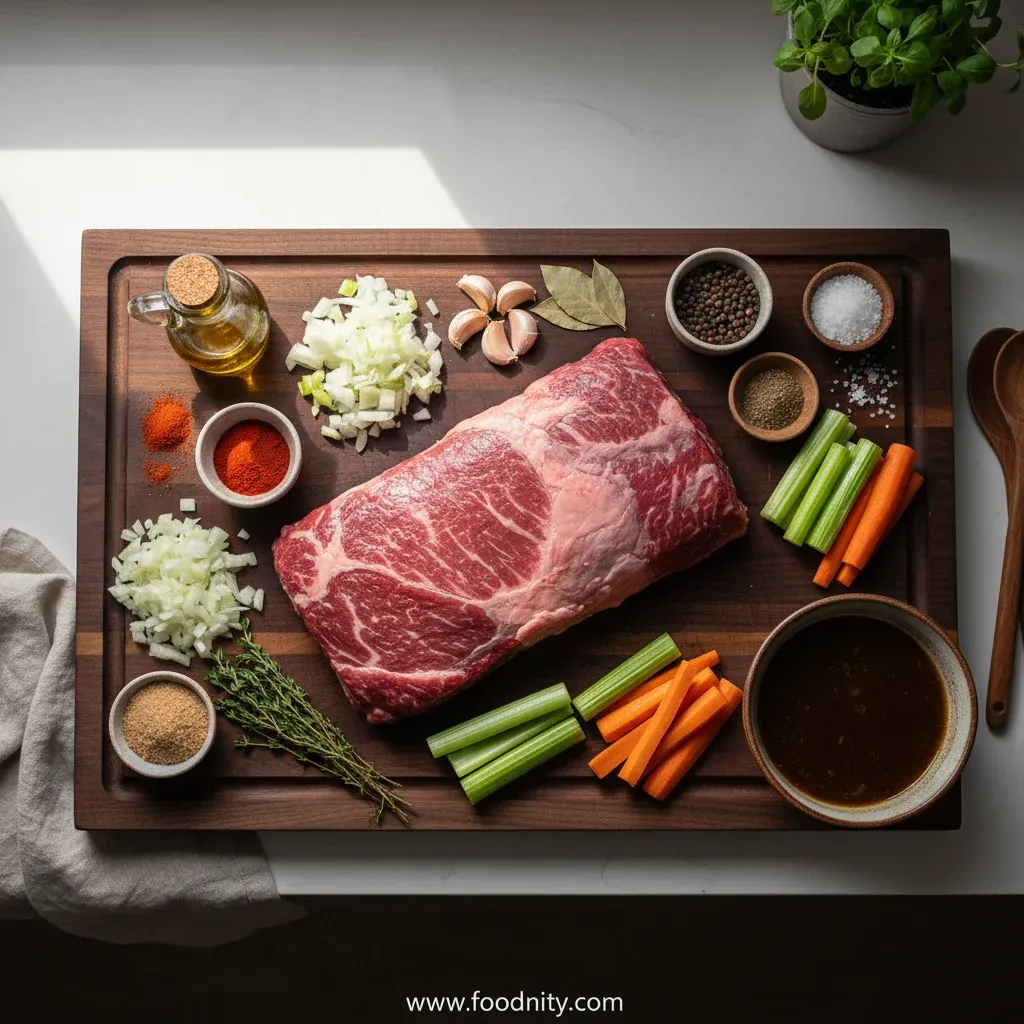
Pat the brisket dry, season both sides with salt, pepper, and smoked paprika; let it rest while you heat the olive oil in a large skillet.
- 2
Sear the brisket for 4‑5 minutes per side until a deep brown crust forms, then transfer it to the slow cooker.
- 3
In the same skillet, sauté sliced onion and minced garlic until softened, then deglaze with a splash of beef broth.
- 4
Combine the remaining broth, brown sugar, Worcestershire sauce, apple cider vinegar, thyme, and bay leaves; pour over the brisket.
- 5
Set the slow cooker to LOW and cook for 8‑10 hours until the meat is fork‑tender.
- 6
Remove the brisket, let it rest 15 minutes, then slice against the grain.
- 7
Meanwhile, skim the surface of the cooking liquid, then transfer to a saucepan and simmer until reduced to a glossy sauce.
- 8
Drizzle the reduced sauce over the sliced brisket, garnish with parsley and extra thyme, and serve.
Nutrition per serving
- 620 kcal
- Calories
- 45 g
- Protein
- 18 g
- Carbs
- 38 g
- Fat
Tips & notes
- If you prefer a sweeter glaze, add an extra tablespoon of brown sugar. - For a smoky twist, stir in a dash of liquid smoke before cooking. - The brisket can be cooked on HIGH for 5‑6 hours, but low is gentler on texture.
Frequently asked questions
Can I use a pressure cooker instead?
Yes, but you’ll lose some of the gentle flavor development that comes from the long slow cook.
What side dishes pair best?
Creamy mashed potatoes, roasted root vegetables, or a simple green salad complement the richness.
How long can leftovers be stored?
Refrigerate in an airtight container for up to 4 days; reheat gently with a splash of broth.
Do I need to trim the fat?
Trim excess exterior fat, but leave some for moisture and flavor during cooking.
Can I freeze the cooked brisket?
Absolutely—wrap tightly and freeze for up to 3 months; thaw before reheating.
Is this recipe gluten‑free?
Yes, as long as you choose a gluten‑free broth.

Rachel Morgan
Chef Rachel Morgan is known for her practical cooking style that helps busy families prepare delicious meals in a short time. Her recipes focus on simple ingredients, quick preparation, and minimal cleanup. Rachel…