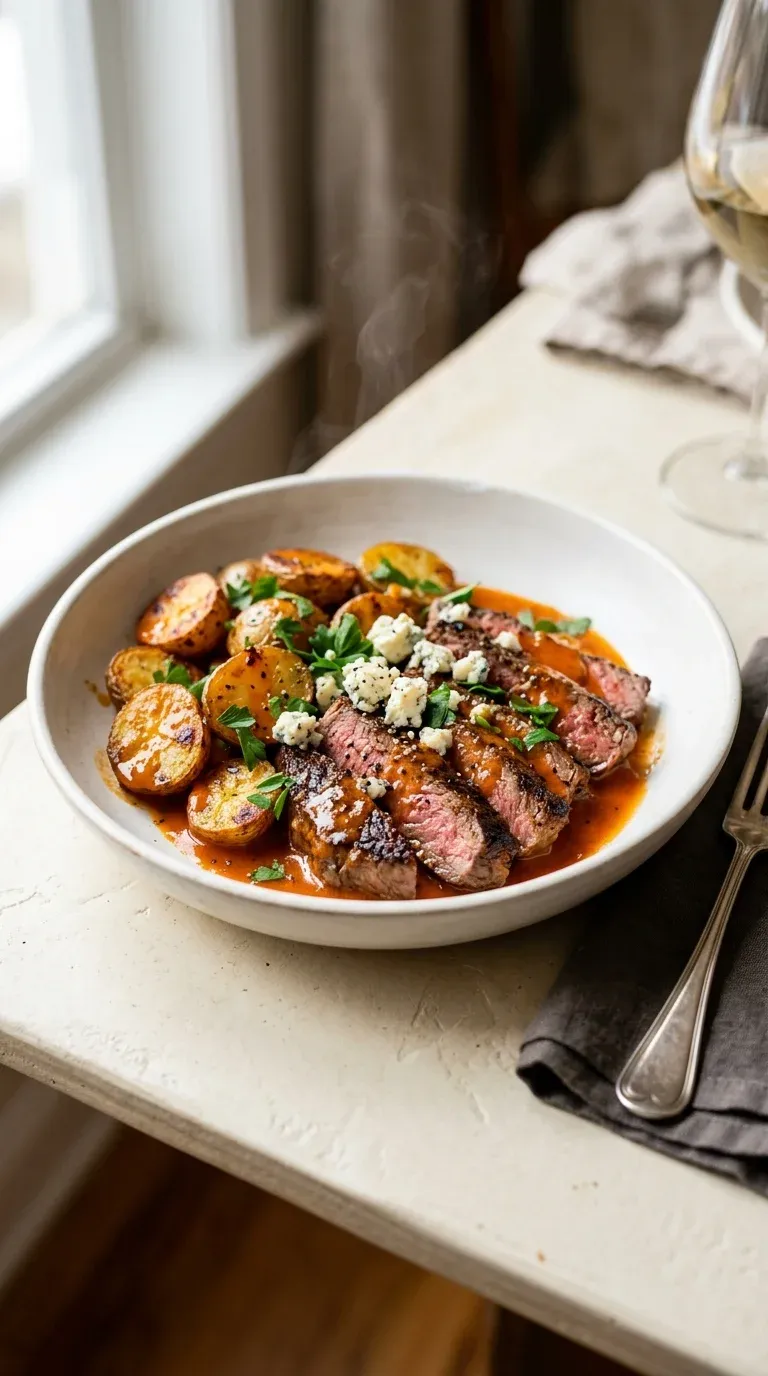
Well, look, there is something about the sound of a steak hitting a hot cast-iron skillet that just feels like home to me. I remember when I first started experimenting with these kinds of meals; I wanted something that felt substantial but had a little bit of a spark to it. So, I started playing with a steak and potatoes with buffalo sauce combination, and honestly, it just clicked.
There's a lovely rhythm to this one—the way the baby potatoes get all golden and crisp in the oven while the butter and Frank’s RedHot Buffalo Sauce melt together into something silky and bright. I mean, the scent of smoked paprika and garlic powder drifting through the house is just... wow. It makes everyone gravitate toward the kitchen before the meal is even plated.
Yeah, it's a simple dinner, but it's the kind of meal that slows you down. You get that rich, juicy bite of beef, the softness of the potato, and then that little zing of cayenne pepper. It's just a cozy, grounding way to end a long day, you know?
The story behind it
The combination of steak and potatoes with buffalo sauce is a modern evolution of the classic American steakhouse tradition. For decades, the pairing of beef and tubers has been the gold standard of comfort, representing stability and abundance in home cooking across the States.
Buffalo sauce itself traces its roots back to Anchor Bar in Buffalo, New York, in 1964, where it was originally designed to elevate fried chicken wings. Over time, the signature blend of vinegar-based cayenne pepper sauce and melted butter migrated from appetizers to main courses, offering a sharp, acidic contrast to the heavy fats found in premium beef cuts.
Integrating this fiery profile into a traditional roast creates a balance of flavors that appeals to the contemporary palate. The addition of a touch of honey mellows the heat, creating a glaze that clings to the seared meat and roasted vegetables, bridging the gap between a rustic family meal and a gourmet gastropub experience.
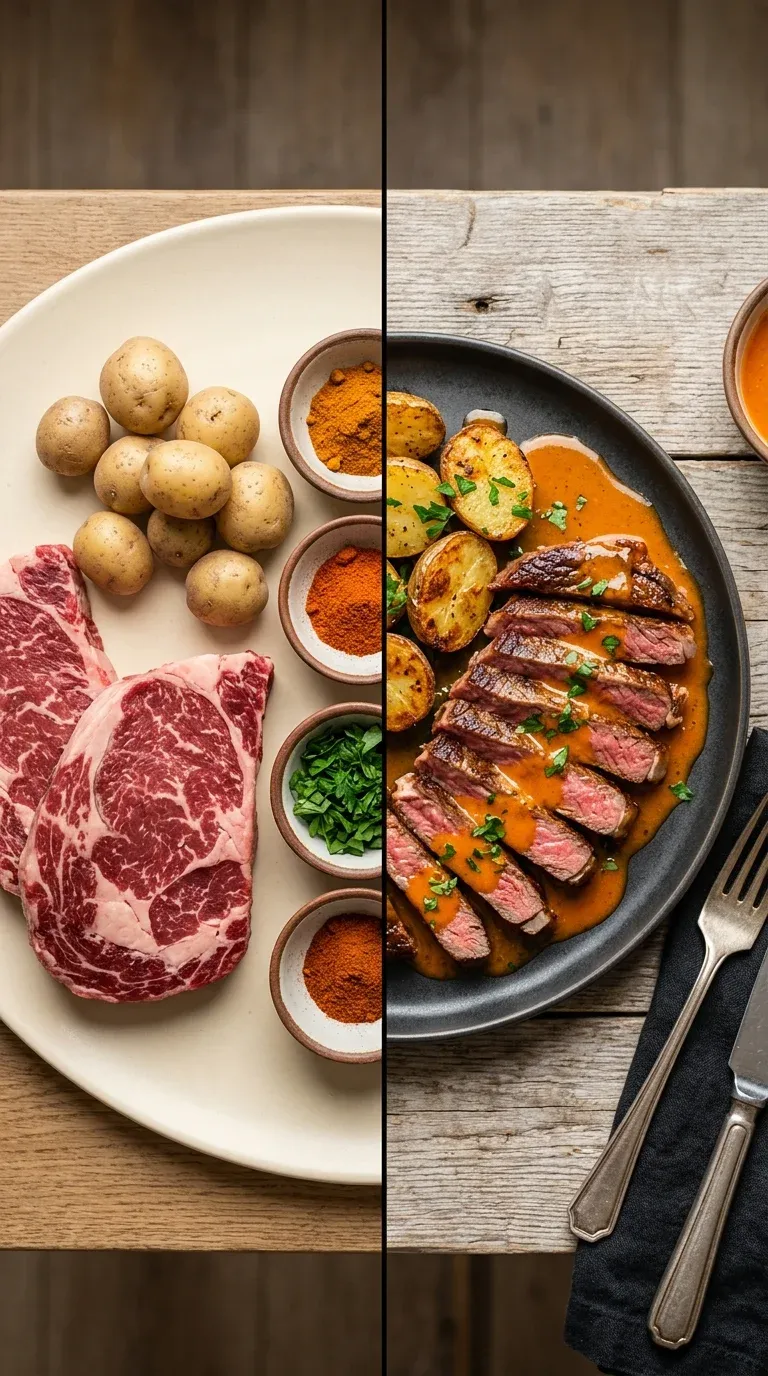
Why You'll Love It
- Honestly, there is something so comforting about the way 4 (1‑inch thick) strip or ribeye steaks sear up in a hot pan, filling the kitchen with that rich, homey aroma.
- Well, it is the contrast that gets me—those golden, roasted baby potatoes meeting a zesty, buttery sauce that just feels like a hug on a plate.
- I mean, it is just so simple to pull together, so you can actually spend time with your family instead of being stuck at the stove all night.
- Wow, the way the honey and smoked paprika mellow out the heat makes this feel a bit more special than your average weeknight dinner, yeah?
Tips for success
- The Sear, Use a cast-iron skillet and let it get smoking hot before the steak hits the pan for the crispiest crust.
- The Rest, Always let your steak rest after searing so you don't lose the juices.
- The Heat Level, If the sauce is too spicy, whisk in a bit of sour cream or Greek yogurt at the end.
Professional secrets
- Patting the meat and potatoes dry is the secret to getting a golden-brown finish rather than steaming them.
- Tenting with foil preserves heat while allowing the muscle fibers to relax and reabsorb juices.
- Warming the buffalo butter sauce on low heat emulsifies the butter for a professional, silky texture.
Common mistakes to avoid
- Adding steaks to a cold pan, which results in grey meat instead of a brown crust.
- Skipping the steak rest, causing all the juices to run out on the board.
- Overcrowding the baking sheet, which prevents the potatoes from getting crispy.
Substitutions
- Ribeye/Strip Steak: Sirloin steak. A leaner option, though you may want to reduce cook time slightly.
- Unsalted Butter: Ghee. Works well for a slightly nuttier flavor.
- Baby Potatoes: Yukon Gold potatoes. Just dice them into 1-inch cubes.
Variations
- Buffalo Chicken & Sweet Potato Skillet: A lighter, colorful take where you swap the steak for 4 boneless chicken breasts and use diced sweet potatoes instead of baby potatoes.
- Vegetable-Packed Buffalo Bowl: A plant-based version using firm tofu slices and roasting the potatoes alongside bell pepper, onion, and zucchini, all tossed in that same delicious buffalo sauce.
Storage
Refrigerate leftovers promptly; do not leave them at room temperature for more than 2 hours.
Make ahead
You can prep the potatoes and season the steaks a few hours ahead, but the searing and sauce whisking should be done just before serving for the best quality.
Leftovers
Store in an airtight container in the fridge. To reheat, use a skillet over medium heat to keep the steak from overcooking and the potatoes from getting mushy.
Serving ideas
- Pair with steamed broccoli for a healthy balance
- Serve alongside a crisp green salad
- Lay the mixture over creamy polenta
- Offer extra buffalo sauce in a ramekin for dipping
Allergy information
Contains dairy (butter, blue cheese).
Steak and Potatoes with Buffalo Sauce
A bold twist on a classic dinner. Hearty beef and roasted potatoes meet a fiery, buttery glaze. Perfect for those who crave a little heat with their comfort food.
- Prep time
- 15 min
- Cook time
- 25 min
- Total time
- 40 min
- Difficulty
- Easy
- Cuisine
- American
Ingredients
Main Ingredients
Buffalo Sauce
Garnish and Serving
Instructions
- 1
First things first, let’s get the oven warming up to 425°F (220°C). Now, give those baby potatoes a good wash and pat them dry—it really helps them crisp up. If any of them look a bit too big (over an inch), just slice them in half so they cook evenly.
- 2
In a large bowl, toss your potatoes with 1 tablespoon of olive oil, 1 teaspoon garlic powder, 1 teaspoon salt, and ½ teaspoon black pepper. Spread them out in an even layer on a baking sheet. Roast them for 20 minutes, and honestly, don’t forget to turn them halfway through so they get golden and tender all over.
- 3
While the potatoes are doing their thing in the oven, pat your steaks dry with some paper towels. Season both sides generously with salt and pepper. I like to let them rest on a plate for about 5 minutes; it just helps them reach room temperature so they sear better.
- 4
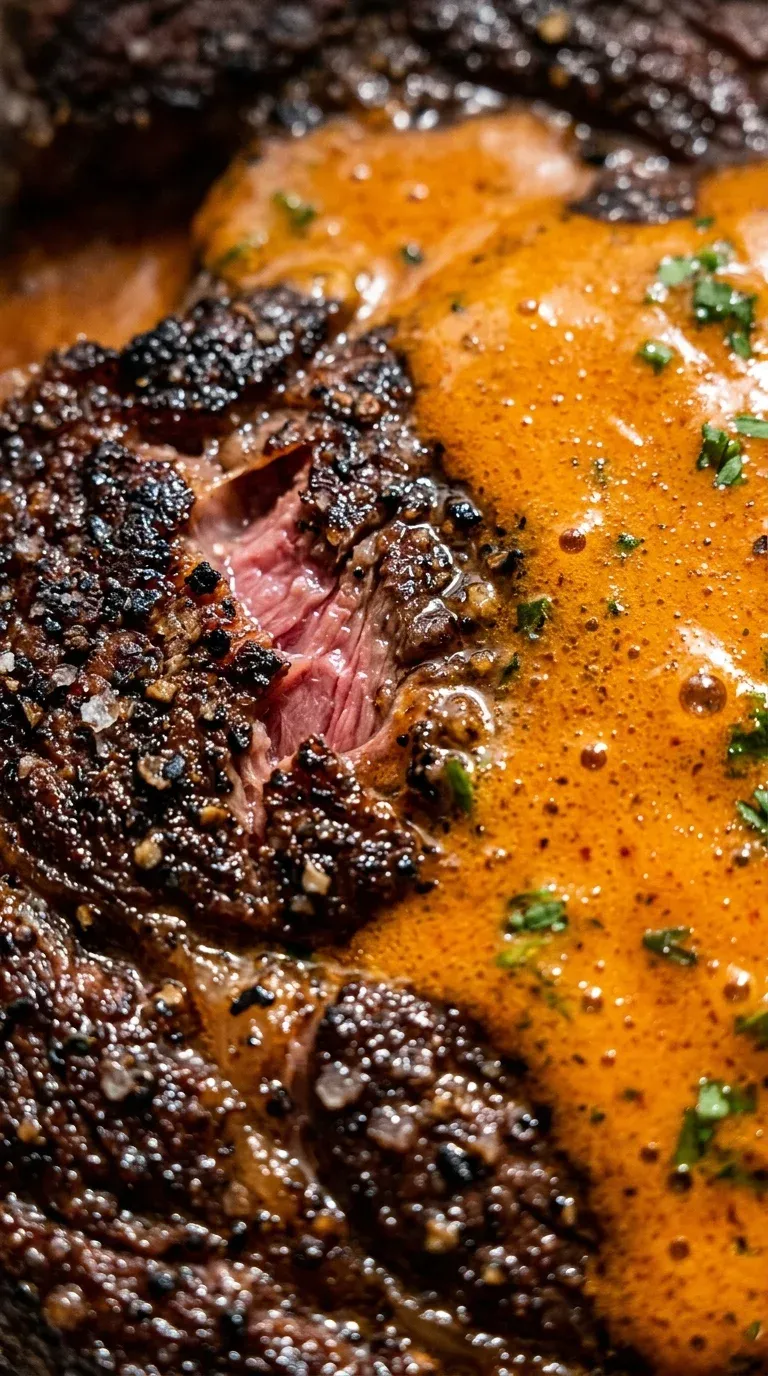
Heat up your cast-iron skillet over high heat and add the remaining 1 tablespoon of olive oil. Once that oil starts to shimmer, go ahead and add the steaks. Sear each side for about 3–4 minutes. You’re looking for a beautiful crust and an internal temperature of 130–135°F for medium-rare.
- 5
Move the steaks over to a cutting board and tent them loosely with foil. Let them rest for 5 minutes. I know it’s tempting to dive in, but this keeps all those precious juices right where they belong—inside the meat.
- 6
Now for the good part. In a small saucepan over low heat, whisk together the butter, buffalo sauce, honey, smoked paprika, and cayenne. Warm it for 2–3 minutes, stirring constantly, until it’s silky, aromatic, and just looks right.
- 7
Carefully slice your rested steaks into thin strips. You can put them right back into the skillet or a large bowl—whatever feels easier for you.
- 8
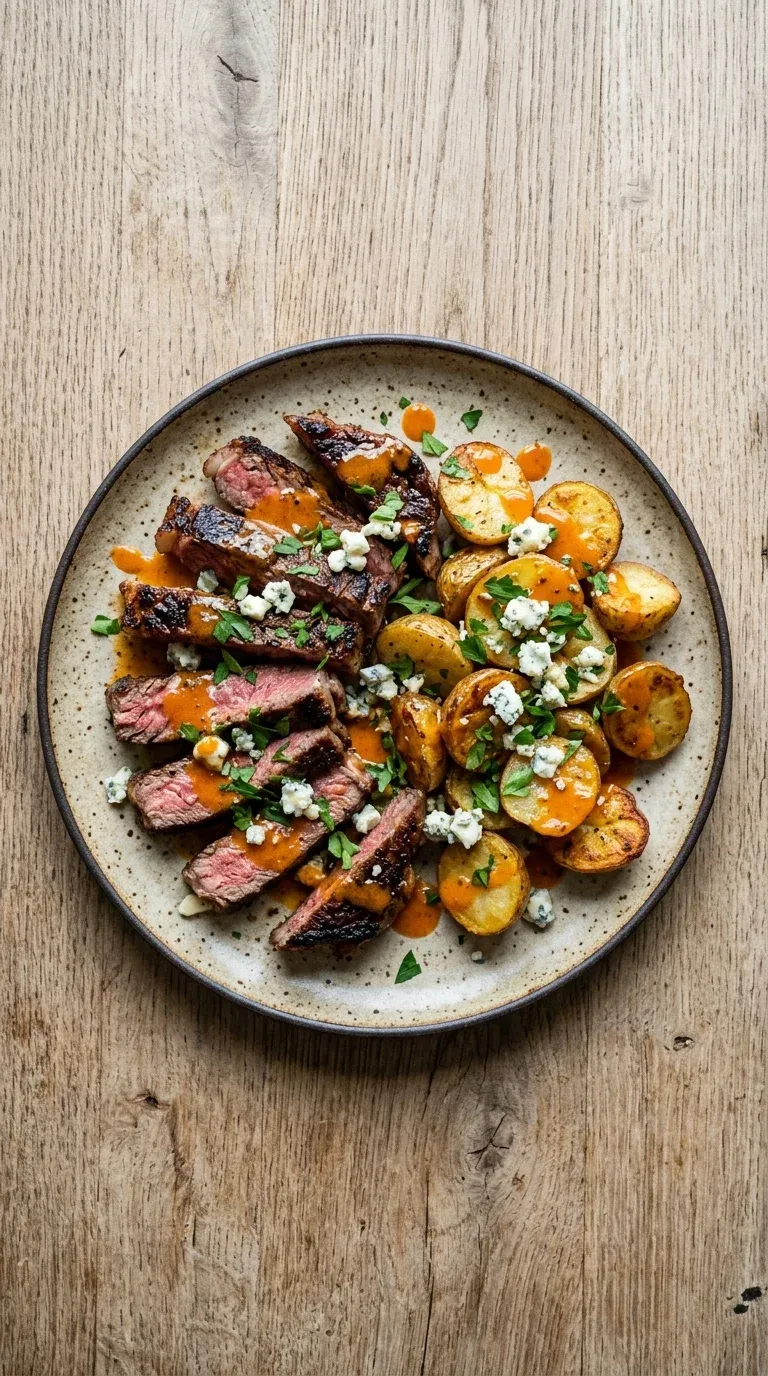
Add those lovely roasted potatoes in with the steak strips. Drizzle that warm buffalo sauce over everything and toss gently. Just make sure every single piece is well coated in that sauce.
- 9
Transfer everything to a serving platter. Sprinkle on the chopped parsley, and if you’re feeling fancy, scatter some blue-cheese crumbles or add a dollop of ranch dressing on top.
- 10
Serve it up immediately while it’s still hot. I usually put a little extra buffalo sauce on the side for those guests who like a bit more of a kick.
Nutrition per serving
- 680 kcal
- Calories
- 42 g
- Protein
- 24 g
- Carbs
- 48 g
- Fat
Tips & notes
- Resting the steak is non-negotiable if you want it juicy. - Cast-iron is best for that deep, brown crust we all love. - Honey adds a subtle balance to the heat of the buffalo sauce.
Frequently asked questions
What if I don't have a cast-iron skillet?
No worries at all! Any heavy-bottomed frying pan will do, just keep a close eye on the heat so the oil doesn't smoke too much.
Can I make the buffalo sauce ahead of time?
You certainly can, though I find it's best when warmed up right before tossing. Just gently reheat it on the stove until it's silky again.
How do I know when the steak is medium-rare?
A meat thermometer is your best friend here; look for an internal temperature of about 130–135°F.

Rachel Morgan
Chef Rachel Morgan is known for her practical cooking style that helps busy families prepare delicious meals in a short time. Her recipes focus on simple ingredients, quick preparation, and minimal cleanup. Rachel…