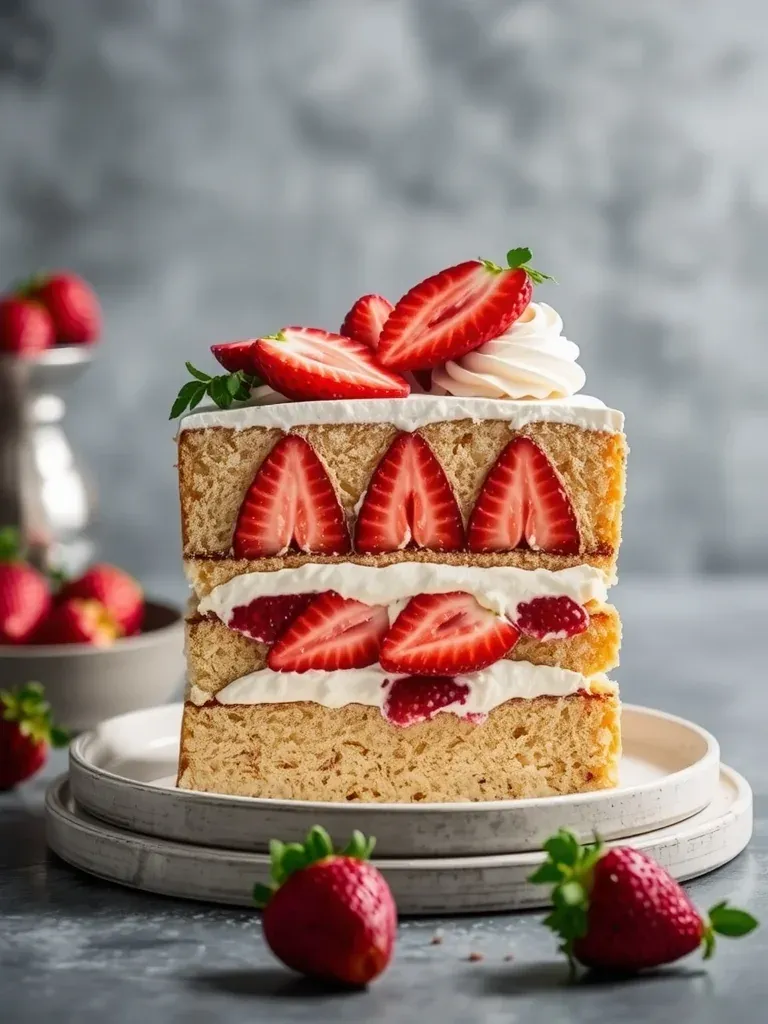
When the garden is ripe with strawberries, I love to turn that blush into a cake that feels soft as clouds and sweet as a whispered memory.
The essence of the dish
A whisper of vanilla, a burst of fresh strawberry, and a cloud‑like sponge that together create a dessert that feels both delicate and celebratory.
A fun fact or historical angle
The first recorded sponge cake was made in the 1700s, using beaten eggs as the sole leavening agent—much like the airy base we use today.
Flavor or sensory focus
First, the scent of sweet strawberries fills the kitchen; then the bite offers a soft, moist crumb followed by cool, velvety cream and a juicy burst of fruit.
You Must Know
- Do not open the oven door too early
- Sift flour twice for extra lightness
- Use a gentle hand when folding the batter
Following these quiet guidelines ensures the sponge stays lofty and the strawberry flavor remains bright. When the cake finally sits on the table, the aroma alone can transport you back to a sun‑lit garden, and the taste will confirm why this recipe has become a beloved staple for many gatherings.
The story behind it
Strawberries have long been a symbol of love and luxury, first cultivated in ancient Rome where they were prized for their fragrance. The modern sponge cake, originating in England during the Victorian era, introduced a light dough that relied on beaten eggs rather than butter for lift. Combining these two traditions creates a dessert that bridges centuries, offering both elegance and comfort without pretension.
Why You'll Love It
- Incredibly light texture that bounces back with each forkful
- Fresh strawberry flavor that feels natural and bright
- Simple ingredients you likely already have at home
- Beautiful presentation that makes any table feel special
Tips for success
- Do not over‑mix after adding flour – it keeps the sponge airy.
- Cool the layers completely before frosting to prevent melting.
- Use room‑temperature butter for a smooth batter.
Professional secrets
- Room temperature eggs trap air better, creating lift.
- Sifting flour twice eliminates lumps and ensures lightness.
- A brief rest after baking lets the crumb set, making slicing easier.
Common mistakes to avoid
- Over‑mixing the batter, which creates a dense crumb.
- Opening the oven door too early, causing the sponge to collapse.
- Not cooling the layers fully before frosting, leading to soggy texture.
Substitutions
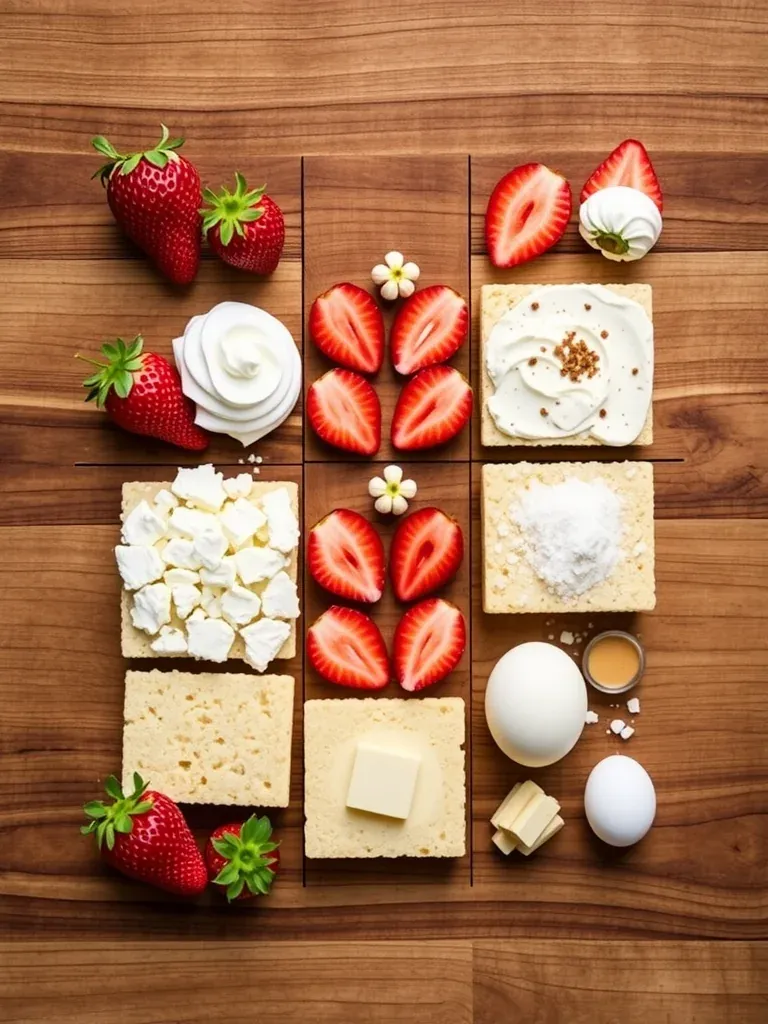
- Heavy whipping cream: Coconut whipped cream. Provides a dairy‑free alternative; keep it chilled for firmness.
- Cake flour: All‑purpose flour with extra cornstarch. Mix 1 cup all‑purpose flour with 2 tbsp cornstarch for similar texture.
Variations
- Spicy Version: Add a pinch of ground cardamom to the sponge batter for a warm undertone.
- Mediterranean Style: Fold in chopped pistachios and a drizzle of honey after frosting for a nutty contrast.
Storage
Store in an airtight container in the refrigerator for up to three days; bring to room temperature before serving.
Make ahead
You can bake the sponge layers up to two days ahead and store them wrapped in plastic; whip the cream fresh before assembly.
Leftovers
Reheat gently in a microwave for 10 seconds per slice, or enjoy cold with a dollop of fresh cream.
Serving ideas
- Serve each slice with a drizzle of extra strawberry puree.
- Pair with a scoop of vanilla ice cream for extra richness.
- Garnish the plate with a few mint leaves for a pop of color.
Allergy information
Contains dairy, eggs, and gluten.
Strawberry and Cream Sponge Cake Recipe
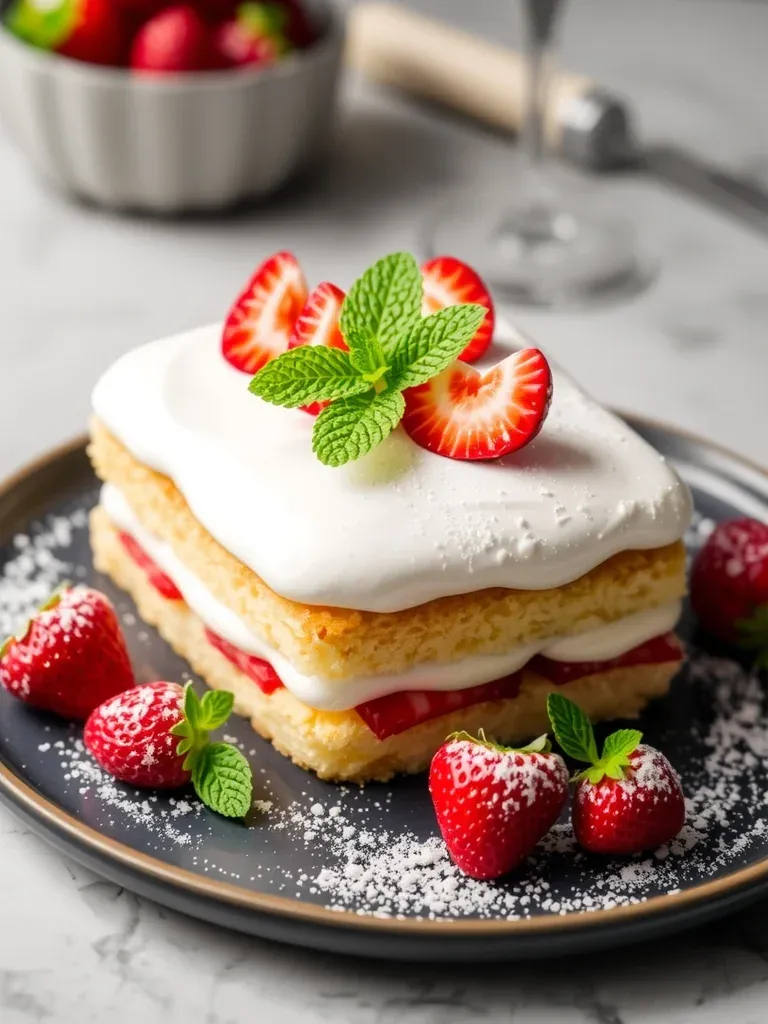
Fluffy strawberry sponge layered with vanilla cream, finished with fresh berries and a whisper of sugar.
- Prep time
- 20 min
- Cook time
- 25 min
- Total time
- 45 min
- Difficulty
- Easy
- Cuisine
- American
Ingredients
Sponge
Strawberry Cream
Assembly
Instructions
- 1
Preheat the oven to 350°F (175°C). Line two 8‑inch round cake pans with parchment and lightly butter the sides.
- 2
In a large bowl, whisk the eggs and sugar together until the mixture becomes pale and triples in volume, about 5 minutes.
- 3
Gently fold in the melted butter, strawberry puree, vanilla, and lemon zest, being careful not to deflate the batter.
- 4
Sift the cake flour over the mixture and fold just until incorporated; the batter should be silky and slightly runny.
- 5
Divide the batter evenly between the prepared pans and bake for 18‑20 minutes, or until a toothpick comes out clean. The tops should be golden and spring back when touched.
- 6
Allow the cakes to cool in the pans for 10 minutes, then transfer to a wire rack to cool completely.
- 7
While the cakes cool, whip the heavy cream with powdered sugar and vanilla until soft peaks form; fold in a couple of tablespoons of strawberry puree for a pink hue.
- 8
Place one cake layer on a serving plate, spread a generous layer of strawberry cream, then sprinkle sliced strawberries. Top with the second layer and repeat, finishing with a smooth blanket of cream on the top and sides.
- 9
Garnish with whole strawberries, dust lightly with powdered sugar, and let the cake sit for 15 minutes before serving.
Nutrition per serving
- 310 kcal
- Calories
- 5 g
- Protein
- 32 g
- Carbs
- 14 g
- Fat
Tips & notes
- For extra shine, brush the top with a thin strawberry syrup. - If you prefer a firmer crumb, bake the layers a minute longer, but watch closely. - A dollop of whipped cream can be added just before serving for an extra lift.
Frequently asked questions
Can I use frozen strawberries?
Yes, thaw them fully, pat dry, and blend into the batter; the texture will stay lovely.
How do I keep the cake moist?
Wrap the cooled layers in a damp tea towel before frosting, or brush with a light strawberry syrup.
Can I make this cake gluten‑free?
Swap cake flour for a gluten‑free blend and add a teaspoon of xanthan gum for structure.
What is the best way to store leftovers?
Refrigerate in an airtight container for up to three days; bring to room temperature before serving.
Can I add other fruit layers?
Raspberry or blueberry work well; just adjust the amount of sugar in the fruit puree.
Is it possible to make this cake vegan?
Replace butter with coconut oil, use aquafaba instead of eggs, and choose a plant‑based cream.

Amelia Hart
Chef Amelia Hart is a dessert enthusiast who loves creating elegant cakes, cookies, and baked treats. Her baking style combines classic pastry techniques with creative flavor combinations. Amelia believes that desserts…