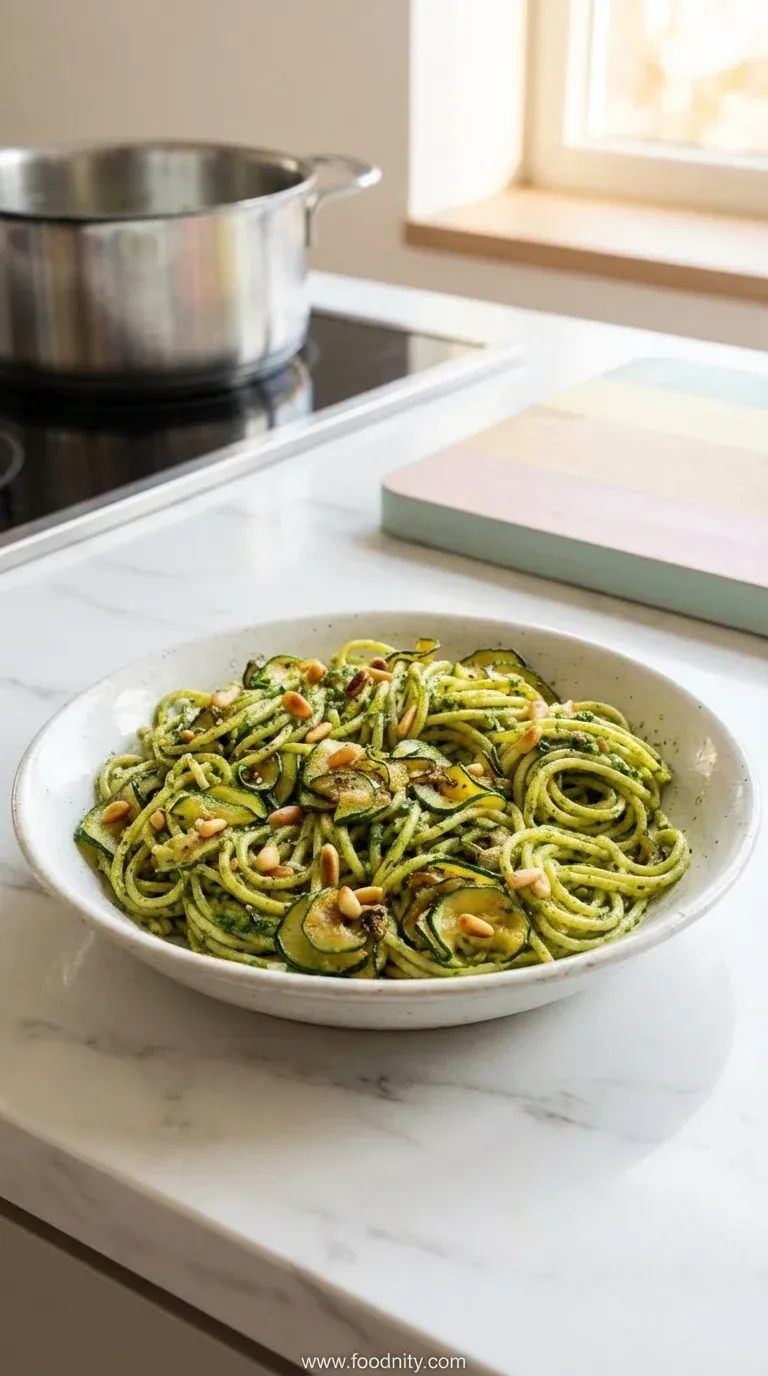
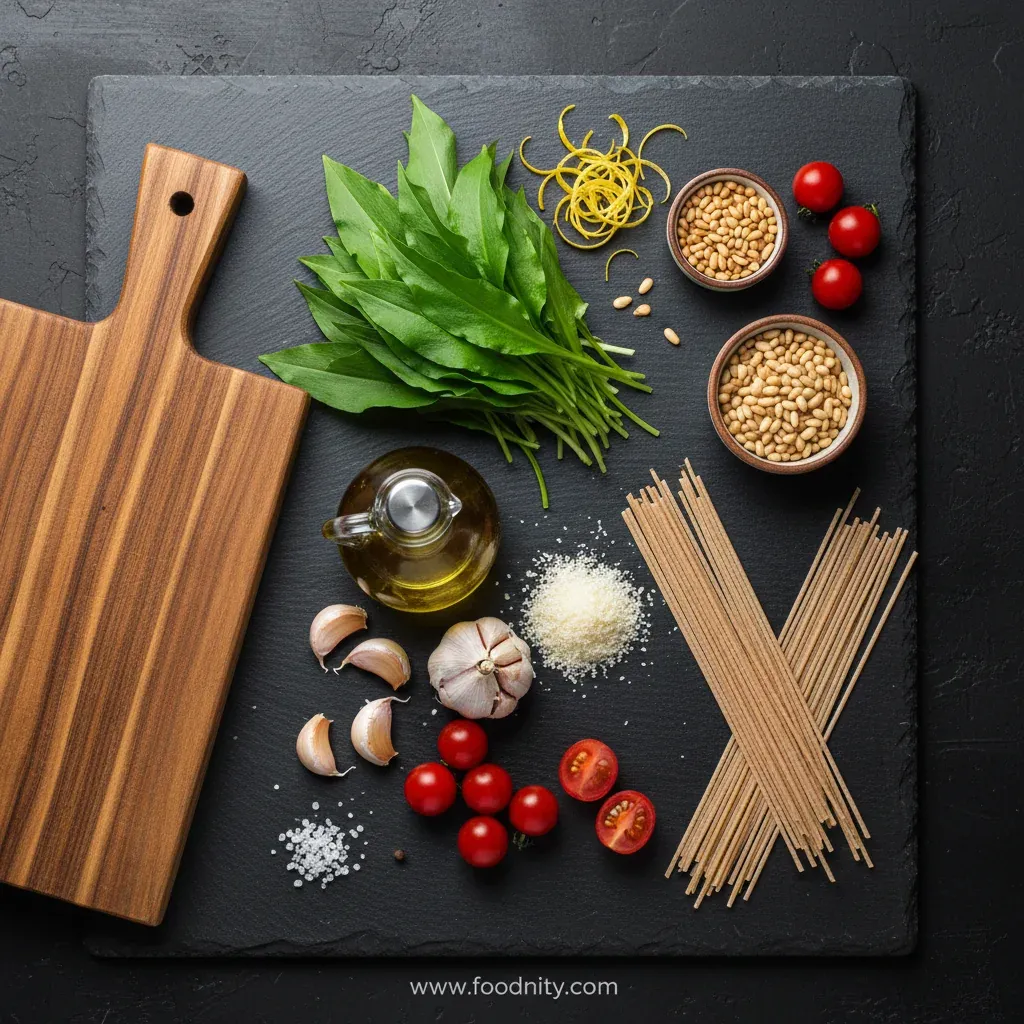
Honestly, when I first smelled wild garlic in my garden, I knew I had to capture that wild, bright scent in a simple pasta. So, I whisked together nuts, olive oil, and that green perfume, creating a pesto that feels like a spring breeze. Yeah, it’s that comforting.
The essence of the dish
It’s the bright, grassy notes of wild garlic paired with creamy cashew base that make each bite feel fresh and comforting at once.
A fun fact or historical angle
Wild garlic was once called “the people’s garlic” because it grew abundantly in communal forest areas, making it a staple for humble meals.
Flavor or sensory focus
First you’ll notice the herbaceous perfume, then the buttery mouthfeel, and finally a gentle citrus snap that lifts the whole dish.
You Must Know
- Use fresh wild garlic for maximum aroma
- Don’t over‑process the pesto; keep a tiny texture
- Adjust seasoning after mixing with pasta
I love watching the pesto coat each noodle, the glimmer of olive oil catching the light. It feels like a simple celebration of spring in a bowl. So, take your time, breathe in that green scent, and enjoy the process. It’s as much about the making as the eating.
The story behind it
Wild garlic, also known as ramsons, has been foraged across European woodlands for centuries, prized for its garlicky aroma that awakens the palate. Its use in rustic dishes dates back to medieval monastic kitchens where herbs were the heart of meals. This recipe honors that tradition while keeping it completely vegan.
Why You'll Love It
- Fresh wild garlic gives an unforgettable aroma
- Completely vegan and dairy‑free
- Quick to make on a weekday night
- Uses pantry staples you probably already have
Tips for success
- Reserve pasta water, it helps emulsify the sauce.
- Blend cashews while still slightly warm for a smoother texture.
- Taste the pesto before adding salt; wild garlic can be peppery.
Professional secrets
- Room‑temperature ingredients ensure even blending.
- Add oil slowly to control sauce consistency.
- Finish with a dash of lemon juice to lift flavors.
Common mistakes to avoid
- Over‑processing pesto, losing texture.
- Adding too much water, making sauce watery.
- Using old wild garlic that has lost its fresh bite.
Substitutions
- Cashews: Almonds or sunflower seeds. Adjust soaking time if using almonds.
- Nutritional Yeast: Vegan Parmesan. Provides similar cheesy notes.
Variations
- Spicy Version: Add a pinch of red pepper flakes to the pesto for gentle heat.
- Mediterranean Style: Stir in chopped sun‑dried tomatoes, olives, and a sprinkle of vegan feta.
Storage
Store pesto in an airtight container in the fridge for up to 5 days; keep pasta separate to avoid sogginess.
Make ahead
You can blend the pesto up to 24 hours ahead and store in the fridge; bring to room temperature before tossing with pasta.
Leftovers
Reheat gently in a skillet with a splash of water, stirring until sauce loosens.
Serving ideas
- Serve directly from the pot with a ladle for a rustic feel.
- Pair with a side of roasted cherry tomatoes.
- Top with extra lemon zest for a fragrant finish.
- Garnish with toasted pine nuts for texture.
Allergy information
Contains nuts (cashews).
- Prep time
- 15 min
- Cook time
- 15 min
- Total time
- 30 min
- Difficulty
- Easy
- Cuisine
- Italian
Ingredients
Pesto
Pasta
Instructions
- 1
Bring a large pot of salted water to a boil, add the pasta, and cook until al dente, about 9‑11 minutes.
- 2
While the pasta cooks, drain the soaked cashews and combine them in a food processor with wild garlic, nutritional yeast, lemon juice, garlic clove, olive oil, salt, and pepper. Blend until smooth, adding a splash of water if needed.
- 3
Reserve 1/2 cup of pasta cooking water, then drain the pasta.
- 4
Return the pasta to the pot, stir in the pesto, and add reserved water a little at a time until the sauce coats the noodles beautifully.
- 5
Drizzle with a touch more olive oil, sprinkle pine nuts and lemon zest if using, and serve warm.
Nutrition per serving
- 420 kcal
- Calories
- 14 g
- Protein
- 56 g
- Carbs
- 18 g
- Fat
Tips & notes
- For extra brightness, add a pinch of lemon zest just before serving. - If the pesto is too thick, thin with a little more pasta water. - Toast pine nuts in a dry skillet for added crunch.
Frequently asked questions
Can I use spinach instead of wild garlic?
Yes, spinach works, but you’ll lose the distinct garlicky kick that wild garlic gives.
Is this pesto freezer‑friendly?
It can be frozen for up to a month; thaw in the fridge and stir before using.
What pasta shape works best?
Long ribbons like linguine or fettuccine cling to the sauce nicely.
Can I add protein?
Sure, grilled tofu or tempeh cubes add heartiness without altering flavor.
How do I make it nut‑free?
Replace cashews with sunflower seeds or silken tofu for a smooth texture.
What if I can’t find wild garlic?
Use a mix of chives and minced garlic; it mimics the flavor fairly well.

Lucas Bennett
Chef Lucas Bennett specializes in rich and hearty beef dishes inspired by traditional steakhouse cooking. He is passionate about slow-cooked stews, juicy steaks, and bold flavors that highlight the natural taste of…