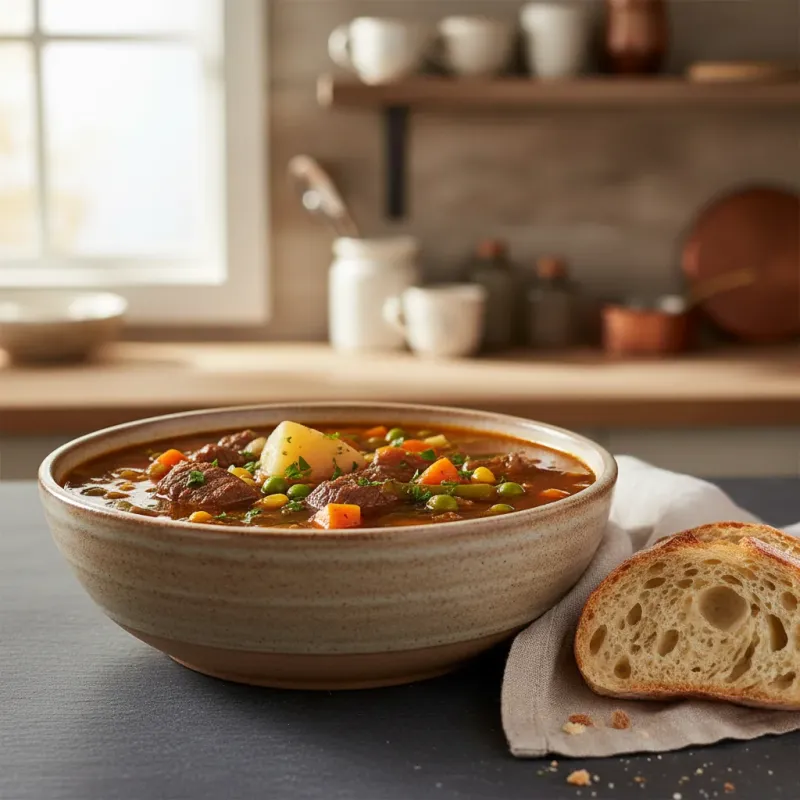
Well, there is something about a pot of vegetable beef soup simmering on the stove that just makes a house feel like a home. Honestly, whenever the air gets a bit too chilly, I find myself craving that specific scent—the earthy smell of carrots and the richness of seared beef. It is not fancy, and it doesn't need to be. It is just steady, honest food that fills you up and makes you feel looked after. I've made this for years, and every time, it feels like a quiet hug in a bowl.
The essence of the dish
What makes this vegetable beef soup special is the balance of textures. You have the softness of the carrots, the heartiness of the beef, and a broth that feels velvety without needing any cream. It's a rustic, honest meal.
A fun fact or historical angle
Many traditional beef stews were cooked in a single pot over a hearth for hours. This 'low and slow' approach was a necessity before modern stoves, and it's why we still love that slow-cooked flavor today.
Flavor or sensory focus
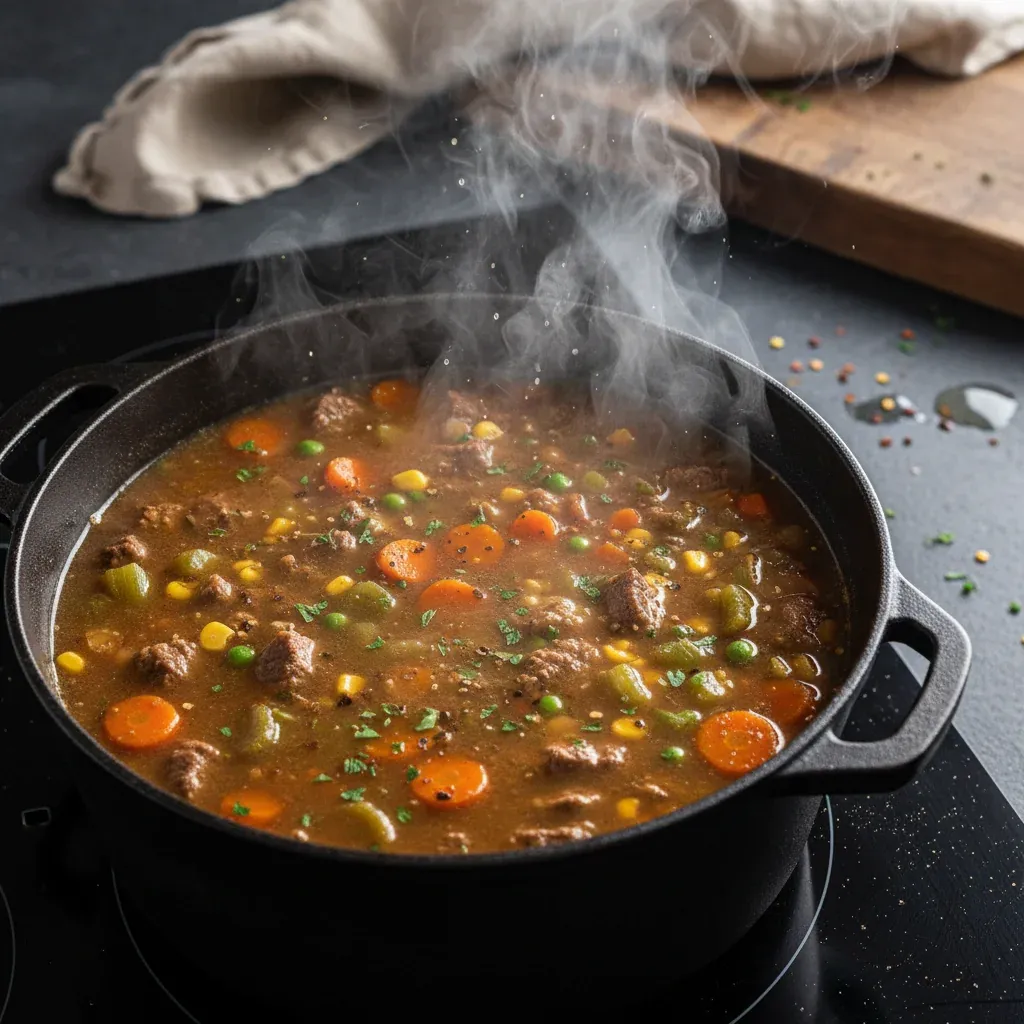
The first thing you'll notice is the deep, savory aroma of caramelized beef and thyme. Then comes the warmth—a slow, radiating heat that settles in your chest and makes the outside world feel very far away.
You Must Know
- Don't skip the searing step; it's where the flavor lives
- Use a cut of beef with some fat; lean meat will get dry
- Adjust the liquid; add more broth if you prefer a thinner soup
So, yeah, it's a simple process, but those little details are what turn a basic meal into a memory. I remember when I first started cooking, I used to just throw everything in at once. Oops, it tasted fine, but it lacked that depth. Once I started searing the meat, everything changed.
It's a lesson in slowing down. In a world where everything is fast, a soup that takes a couple of hours to simmer is a way of reclaiming your time and taking care of the people you love.
The story behind it
Beef and vegetable soups have long been a cornerstone of home cooking across Europe and North America, evolving from simple peasant stews into cherished family staples. Historically, these dishes were designed to utilize every available scrap of root vegetable and tougher cuts of meat, which required long, slow simmering to become tender. This method of cooking, known as braising, transforms collagen-rich beef into succulent morsels while the vegetables release their natural sugars into the broth, creating a naturally thick and nourishing liquid that has sustained families through countless winter seasons.
Why You'll Love It
- The beef becomes incredibly tender, almost melting in your mouth
- It's a complete meal in one pot, making cleanup a breeze
- The flavors deepen and get better if you eat it the next day
- It uses simple, wholesome ingredients you likely already have
Tips for success
- Brown the meat in batches; if you put it all in at once, it will steam instead of sear.
- Keep the heat low; a hard boil will make the beef tough and stringy.
- Use fresh carrots and celery for the best, brightest flavor profiles.
Professional secrets
- Deglaze the pan thoroughly; those caramelized bits on the bottom are pure umami.
- Add a pinch of sugar if the tomato paste makes the broth too acidic.
- Let the meat rest in the broth for 10 minutes after turning off the heat to reabsorb juices.
Common mistakes to avoid
- Boiling the soup too hard, which makes the beef rubbery.
- Adding frozen peas too early, which makes them mushy and grey.
- Skipping the searing phase, resulting in a bland, grey-colored broth.
Substitutions
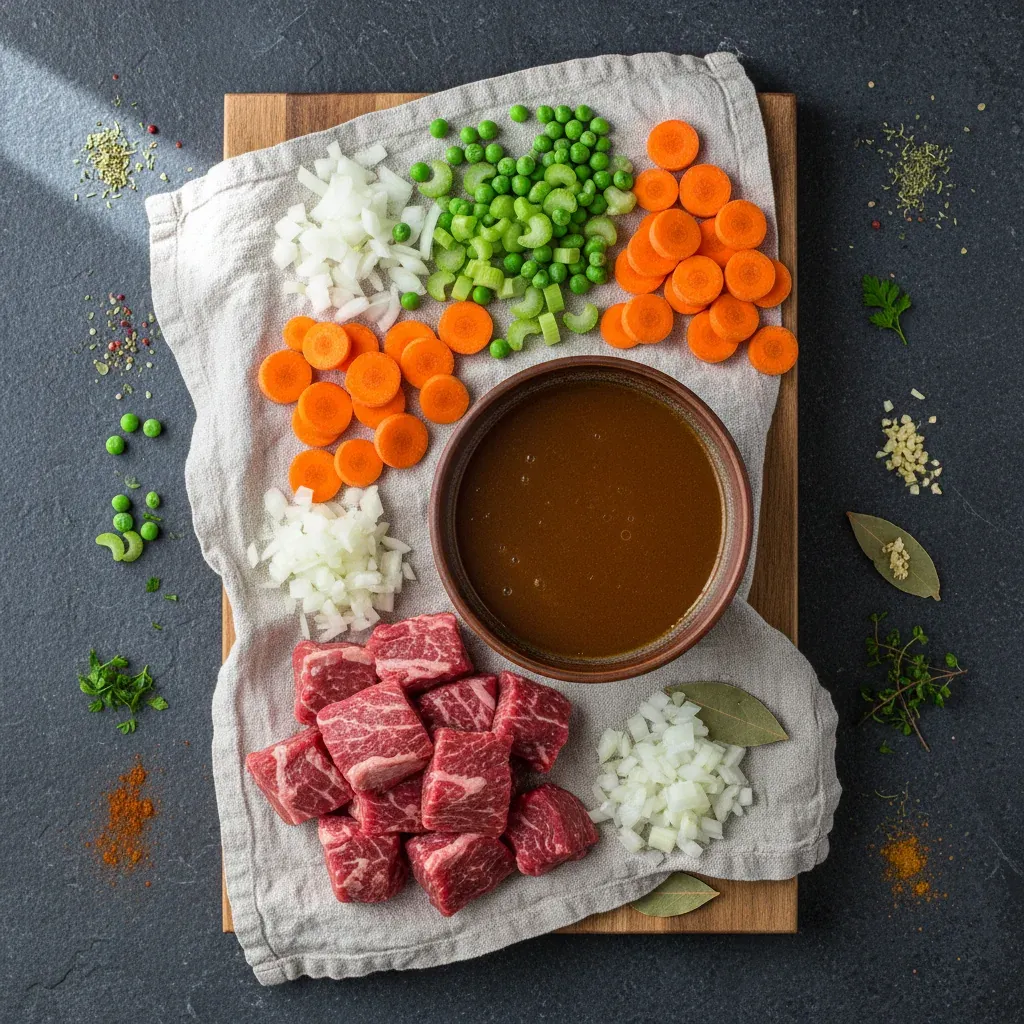
- Beef Chuck: Beef Stew Meat. Ensure it is not 'lean' stew meat or it may stay tough.
- Beef Broth: Water + Beef Base. Works well, just be careful with the salt content.
Variations
- Hearty Grain Version: Add 1/2 cup of pearl barley at the same time as the potatoes for a thicker, chewier soup.
- Garden Style: Add diced zucchini or parsnips for a more complex vegetable profile.
Storage
Store in an airtight container in the refrigerator for up to 4 days. Reheat gently on the stovetop.
Make ahead
This soup is actually better the next day. You can make it entirely, cool it, and store it. Just add the fresh parsley when reheating.
Leftovers
Reheat slowly on the stovetop. If the soup has thickened too much, add a splash of water or broth to loosen it up.
Serving ideas
- Bowl with a sprig of fresh parsley on top
- Accompanied by a side of roasted carrots
- Served with a wedge of sharp cheddar cheese
- Paired with a warm piece of honey corn bread
Allergy information
This recipe is naturally gluten-free and dairy-free. Check your beef broth label for hidden additives.
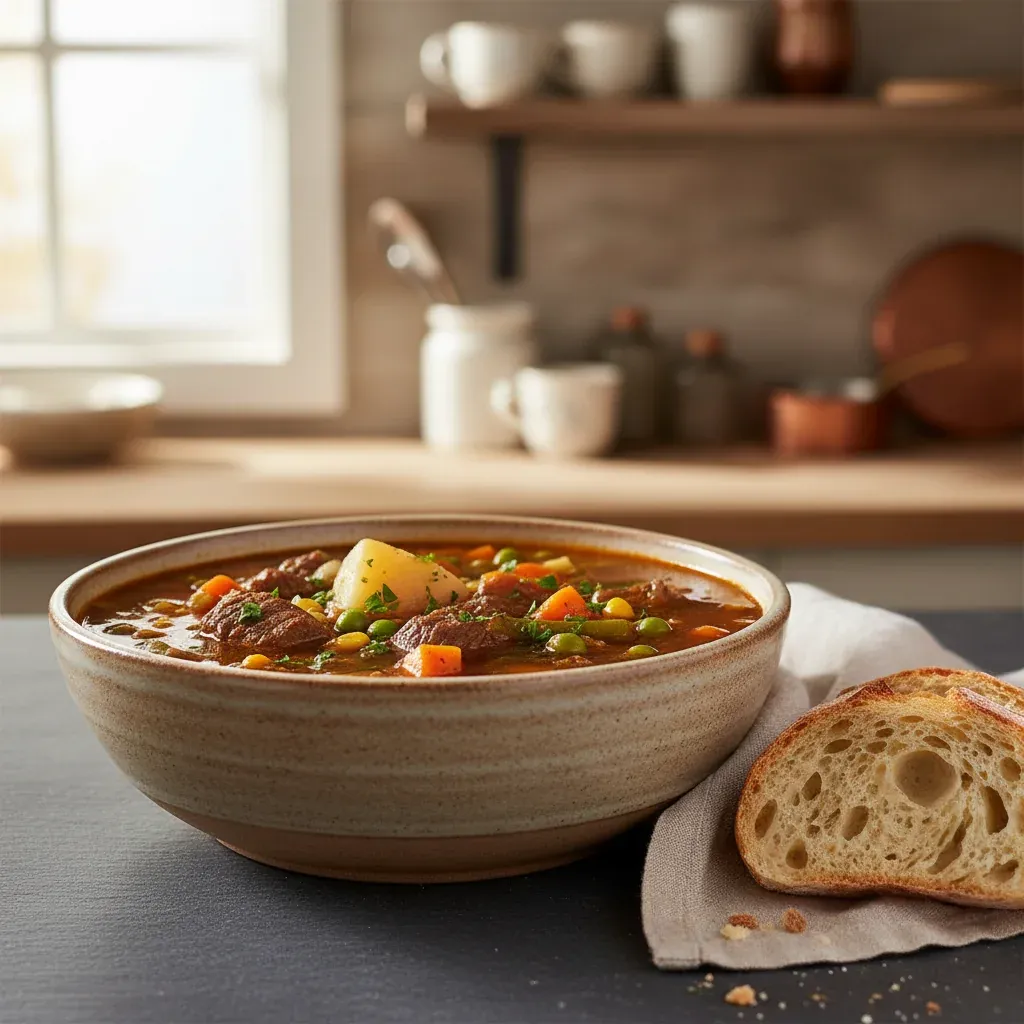
Vegetable Beef Soup Recipe for Cozy Winter Meals
Hearty beef and mixed vegetables in a rich, savory broth, perfect for cold evenings.
- Prep time
- 20 min
- Cook time
- 2 h
- Total time
- 2 h 20 min
- Difficulty
- Easy
- Cuisine
- American
Ingredients
The Base
The Vegetables
The Liquid and Seasoning
Instructions
- 1
Pat the beef dry with paper towels and season generously with salt and pepper. Heat oil in a large pot over medium-high heat. Brown the beef in batches, making sure not to crowd the pan, until each piece has a deep brown crust. Remove beef and set aside.
- 2
In the same pot, add the onion and celery. Sauté for about 5 minutes until softened. Stir in the minced garlic and tomato paste, cooking for another 2 minutes until the paste darkens slightly and smells fragrant.
- 3
Pour in the beef broth, scraping the bottom of the pot with a wooden spoon to release all those brown bits—that's where the flavor is! Stir in the thyme, bay leaves, and return the browned beef to the pot.
- 4
Bring the soup to a boil, then immediately lower the heat to a very gentle simmer. Cover and cook for about 1 hour.
- 5
Stir in the carrots and potatoes. Cover again and simmer for another 45-60 minutes, or until the beef and vegetables are perfectly tender.
- 6
Stir in the frozen peas and cook for just 2-3 minutes. Remove the bay leaves, stir in the fresh parsley, and adjust salt and pepper to your liking.
Nutrition per serving
- 410 kcal
- Calories
- 38 g
- Protein
- 22 g
- Carbs
- 18 g
- Fat
Tips & notes
- For an even deeper flavor, you can use a mix of beef broth and a bit of water to keep the salt from becoming too concentrated. - If you prefer a thicker soup, mash a few of the cooked potato cubes against the side of the pot and stir them back in. - Always store the soup in the fridge for 24 hours if you have the time; the flavor truly evolves overnight.
Frequently asked questions
Can I use a slow cooker for this?
Absolutely. I often suggest a slow cooker approach. Just sear the beef first in a pan, then throw everything in and cook on low for 7-8 hours.
What's the best beef cut to use?
Beef chuck is the gold standard here. It has the perfect amount of connective tissue that breaks down into gelatin, thickening the soup and keeping the meat tender.
Can I freeze this soup?
Yes, you can. However, I'd suggest adding the potatoes separately after reheating, as they can sometimes get a bit grainy in the freezer.
How do I stop the soup from being too salty?
If it's too salty, you can add a peeled, halved potato to the pot for 20 minutes; it absorbs some of the salt. Or, just stir in a bit more water or unsalted broth.
Can I add barley or noodles?
Yes! If you like a thicker texture, you could try beef and noodles style by adding them in the last 20 minutes of cooking.
My beef is still tough, what happened?
It likely wasn't simmered long enough. Tough beef is usually just undercooked beef. Give it another 30-60 minutes on low heat.

Rachel Morgan
Chef Rachel Morgan is known for her practical cooking style that helps busy families prepare delicious meals in a short time. Her recipes focus on simple ingredients, quick preparation, and minimal cleanup. Rachel…