Why You'll Love It
- - The beef becomes incredibly tender, almost falling apart with a fork
- - A deep, complex flavor profile that develops over hours of slow braising
- - It fills the entire kitchen with a savory, grounding aroma
- - Perfect for making in large batches to enjoy as cozy dinners throughout the week
_"This is the most comforting meal I've ever made. The beef is incredibly tender, and the sauce has a depth that feels professional."_
Essential Ingredient Guide
- Chuck Roast: Choose a well-marbled piece of beef. The fat and connective tissue are what make the sauce thick and the meat tender.
- Beef Stock: Use a high-quality, low-sodium stock to ensure the flavor is deep without becoming overly salty as it reduces.
- Pearl Onions: These add a delicate sweetness and a classic look; peel them carefully, perhaps blanching them first to make it easier.
- Fresh Thyme and Bay Leaves: Fresh herbs provide a woody, earthy undertone that balances the richness of the beef.
- Tomato Paste: A small amount adds a subtle acidity and a beautiful deep mahogany color to the finished sauce.
- Flour: Used for dredging the beef to create a light crust and naturally thicken the braising liquid.
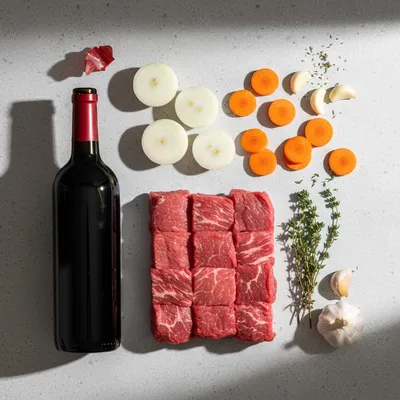
Complete Cooking Process
-
Ingredient Readiness:
The beef should be patted completely dry before dredging in flour. If the meat is damp, it won't brown properly, and you'll end up steaming the meat rather than searing it. Vegetables should be cut into uniform chunks so they cook evenly.
-
Flavor Development:
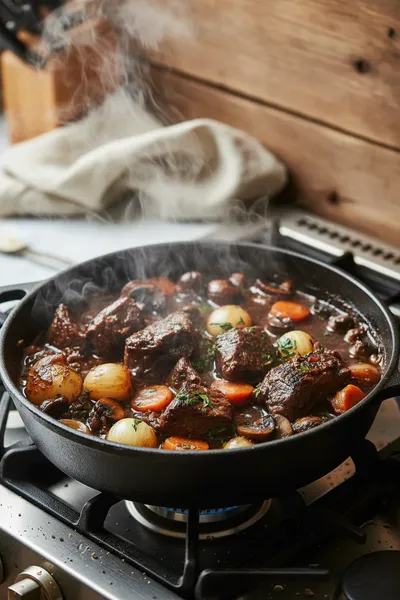
The magic happens during the searing process. Browning the beef in batches creates a caramelized crust (the Maillard reaction) that forms the flavor base of the entire stew. Sautéing the carrots and onions in the leftover beef fat further deepens the taste.
-
Texture Control:
The slow transition from stovetop to oven allows the beef to tighten and then relax, eventually becoming tender. Keeping the pot covered is crucial to prevent the liquid from evaporating too quickly, which keeps the meat moist.
-
Finishing Touches:
Once the beef is tender, the sauce is tasted and adjusted. If it's too thin, a few minutes of simmering without a lid can reduce the liquid into a glossy, thick glaze that coats the meat perfectly.
-
Serving Timing:
This dish is best served immediately after the final reduction, but it tastes even better the next day after the flavors have had time to settle and meld in the refrigerator.
- Don't rush the browning; let the meat sear undisturbed for a few minutes to get a dark crust.
- Use a heavy-bottomed Dutch oven to ensure even heat distribution and prevent scorching.
- Strain out the woody stems of the thyme before serving for a smoother texture.
- If the sauce feels too heavy, a tiny splash of apple cider vinegar can brighten it up.
Pro Tips
I've found that the secret to a truly great stew is not adding everything at once. Well, I mean, it's tempting to just throw it all in, but taking those extra ten minutes to brown the beef in small batches makes a world of difference in the final color. So, yeah, don't be afraid to take your time. There's something so meditative about the process—the sizzling of the meat, the scent of the herbs hitting the hot oil. It's a slow dance in the kitchen, and the result is always worth the wait.
The essence of the dish:
A fun fact or historical angle:
Flavor or sensory focus:
You Must Know
- Always use a cut like chuck or shoulder for the best results.
- Avoid boiling the meat; a gentle simmer or low oven heat is key.
- Fresh carrots add a brightness that canned versions simply cannot mimic.
Frequently Asked Questions
→ Can I make this in a slow cooker?
Yes, you can. After searing the meat and sautéing the vegetables on the stove, transfer everything to your slow cooker and cook on low for 8 hours. It's similar to making a crockpot beef pot roast.
→ What is the best beef to use?
Beef chuck roast is the gold standard here because of its fat content and connective tissue, which break down into a rich sauce.
→ How do I thicken the sauce if it's too thin?
You can either let it simmer uncovered for longer or whisk in a small cornstarch slurry (cornstarch mixed with water) at the very end.
→ Can I add potatoes to the stew?
Absolutely. Adding potatoes makes it more like a easy homemade beef stew, making it a more complete one-pot meal.
→ How do I store leftovers?
Store in an airtight container in the fridge for up to 4 days. The flavor actually improves the next day.
→ What can I serve this with?
Mashed potatoes, buttered noodles, or a crusty piece of French bread are all wonderful choices to soak up that beautiful gravy.
Chef's Tips
If you don't have pearl onions, sliced shallots or regular diced onions work just fine.,For a deeper color, ensure the beef is seared until it's truly brown, not just grey.,If you are using a slow cooker, the searing step is still essential for the flavor.
Nutrition Facts
per serving
420
Calories
38g
Protein
18g
Carbs
22g
Fat
Taste Profile
Deeply savory, earthy, and rich with a hint of sweetness from the carrots.
Ingredient Substitutions
Don't have an ingredient? Try these alternatives
Chuck is preferred for tenderness, but other cuts work if cooked even longer.
You lose the aesthetic of the pearl onions, but the flavor remains similar.
Recipe Variations
Try these delicious twists on the original
Mushroom Addition
Sauté sliced cremini mushrooms in butter and add them to the stew in the last 30 minutes of cooking.
Heartier Stew
Add diced parsnips or celery for extra vegetable depth, making it more like vegetable beef soup.
Common Mistakes to Avoid
Learn from others' mistakes for perfect results
- Crowding the pan when browning the meat, which leads to grey, steamed beef instead of brown, seared beef.
- Using a high oven temperature, which can toughen the meat instead of breaking it down.
- Forgetting to remove the bay leaves and thyme stems before serving.
Meal Prep & Storage
Make Ahead Tips
This dish is a dream for make-ahead meals. It can be fully cooked and chilled, then reheated on the stove. In fact, the flavors often deepen and improve after a night in the fridge.
Leftover Ideas
Reheat gently in a pot over medium-low heat, adding a splash of water or extra stock if the sauce has thickened too much during cooling.
Perfect Pairings
Serve this with...
Cooking Timeline
Prep beef and flour them in a bowl.
Brown beef in batches in the Dutch oven.
Sauté carrots, onions, and garlic.
Deglaze with stock and add herbs.
Braise in the oven until tender.
Final sauce reduction and butter addition.
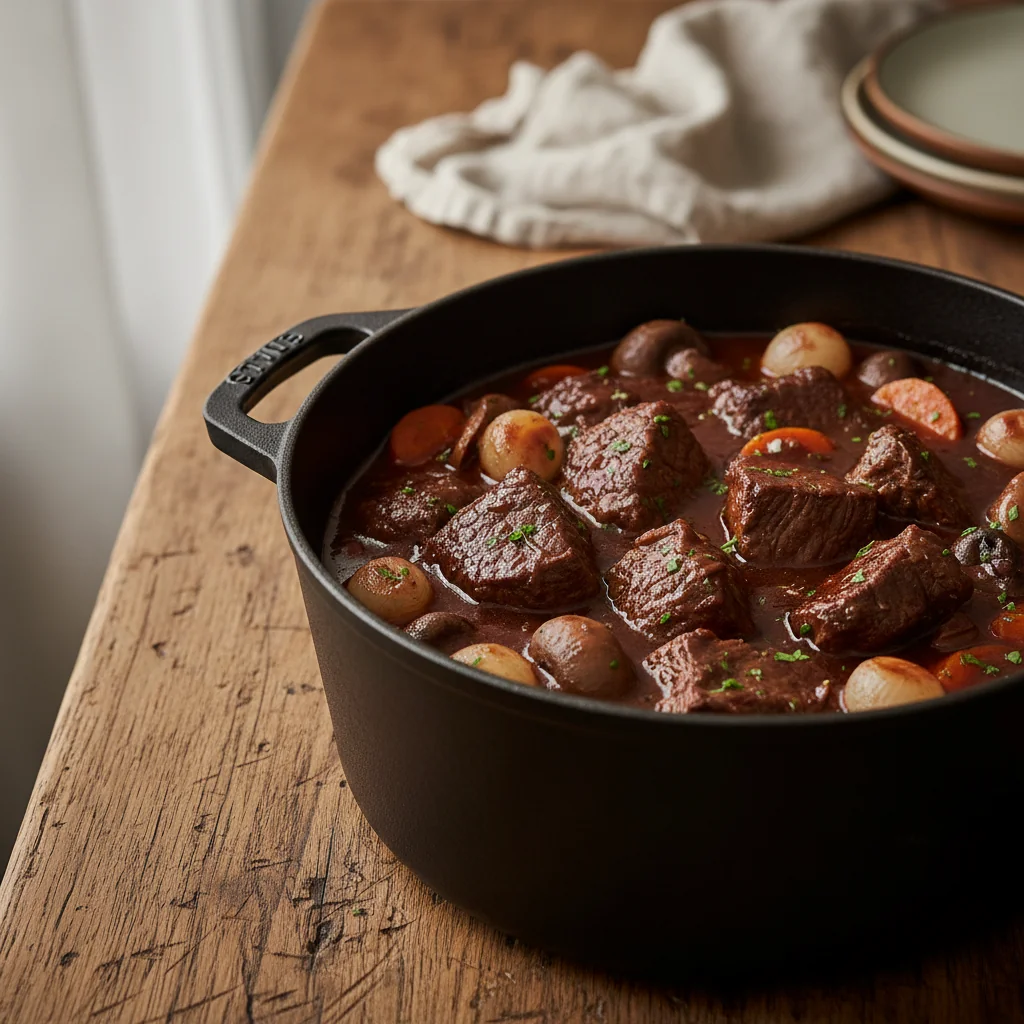
French Beef Bourguignon Recipe for a Cozy Dinner
A timeless, slow-cooked French beef bourguignon featuring tender chunks of beef simmered in a rich, velvety stock with carrots and pearl onions.
Timing
Prep Time
30 Minutes
Cook Time
3 Hours
Total Time
3 Hours 30 Minutes
Recipe Details
Ingredients
Main Ingredients
- 01 3 lbs beef chuck, cut into 2-inch cubes
- 02 1/4 cup all-purpose flour
- 03 1 tsp salt
- 04 1/2 tsp black pepper
- 05 3 tbsp vegetable oil
- 06 1 lb carrots, peeled and cut into chunks
- 07 10-12 pearl onions, peeled
- 08 4 cloves garlic, minced
Braising Liquid & Herbs
- 01 4 cups high-quality beef stock
- 02 2 tbsp tomato paste
- 03 3 sprigs fresh thyme
- 04 2 bay leaves
- 05 1 tbsp Worcestershire sauce
- 06 1 tbsp butter
Instructions
Pat the beef cubes dry with paper towels. In a bowl, mix flour, salt, and pepper. Toss the beef in the flour mixture until evenly coated. This ensures the sauce thickens naturally later.
Heat oil in a large Dutch oven over medium-high heat. Brown the beef in batches, making sure not to crowd the pan. Cook until each piece has a deep brown crust, then remove and set aside on a plate.
In the same pot, add the carrots and pearl onions. Sauté for about 5-7 minutes until the onions are slightly golden. Stir in the minced garlic and tomato paste, cooking for just another minute until fragrant.
Slowly pour in the beef stock and Worcestershire sauce, scraping the bottom of the pot with a wooden spoon to release all those brown bits—that's where the flavor lives.
Return the browned beef and any juices back into the pot. Tuck in the thyme sprigs and bay leaves. Bring the liquid to a gentle simmer.
Cover the pot with a tight lid and place it in a preheated oven at 325°F (160°C). Let it braise undisturbed for about 2.5 to 3 hours, or until the beef is fork-tender.
Remove the pot from the oven. Take out the bay leaves and thyme stems. If the sauce needs thickening, simmer on the stove for a few minutes. Stir in a knob of butter at the end for a glossy finish.
Notes & Tips
- 1 If you don't have pearl onions, sliced shallots or regular diced onions work just fine.
- 2 For a deeper color, ensure the beef is seared until it's truly brown, not just grey.
- 3 If you are using a slow cooker, the searing step is still essential for the flavor.
Tools You'll Need
-
Heavy-bottomed Dutch oven
-
Tongs
-
Wooden spoon
-
Measuring cups and spoons
-
Chef's knife
-
Cutting board
Must-Know Tips
- Dry the meat thoroughly to avoid steaming the beef instead of searing it.
- Don't stir the meat too often while browning; let it sit to develop a crust.
- Check the tenderness with a fork; if it doesn't slide in easily, give it another 30 minutes.
- Use a tight-fitting lid to keep the moisture inside the pot.
Professional Secrets
- Deglazing the pan thoroughly captures the 'fond' which provides a professional-level depth of flavor.
- Adding cold butter at the very end (monter au beurre) creates a rich, velvety emulsion in the sauce.
- Using a small amount of tomato paste adds an umami boost and a rich color without tasting like tomato soup.
Recipe by
Rachel MorganChef Rachel Morgan is known for her practical cooking style that helps busy families prepare delicious meals in a short time. Her recipes focus on sim ...
Get Delicious Recipes Weekly
Join 25,000+ home cooks getting our best recipes straight to their inbox.
Free forever • No spam • Unsubscribe anytime