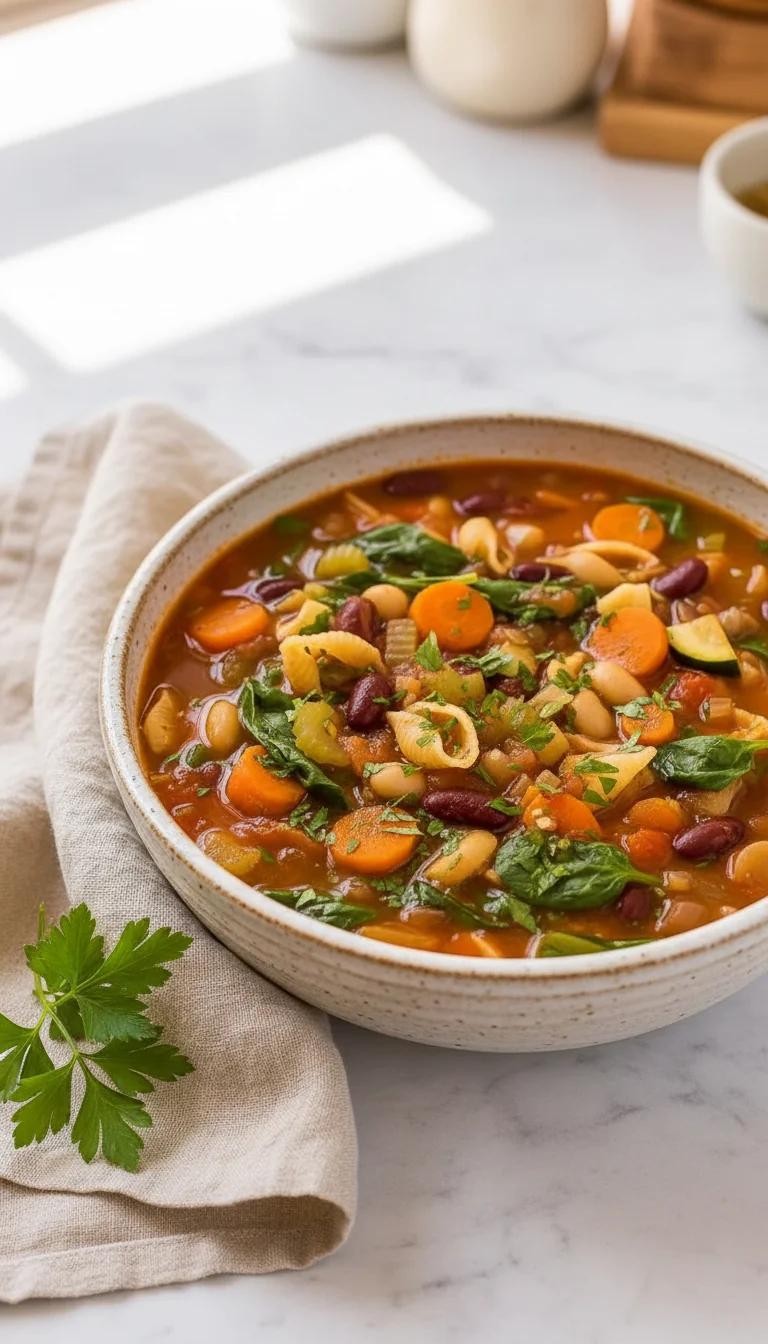
Minestrone originates from the rural regions of Italy, where it was traditionally a 'cucina povera' or peasant dish. The word 'minestrone' literally means 'big soup,' reflecting its nature as a hearty stew made from whatever was available in the garden. Historically, it served as a vital source of nutrition during the winter months, utilizing dried beans and preserved vegetables to sustain families. Each region of Italy has its own variation, with some adding pasta or rice to create a more substantial meal, ensuring that nothing from the harvest went to waste.
Why You'll Love It
-
- It uses simple, garden-fresh vegetables that provide a wealth of nutrients
-
- Naturally dairy-free and vegetarian, making it inclusive for everyone
-
- A wonderful way to use up leftover vegetables in your refrigerator
-
- The combination of beans and pasta makes it a complete, satisfying meal
This soup is like a hug in a bowl. It's so filling and tastes like it's been simmering for days!
Essential Ingredient Guide
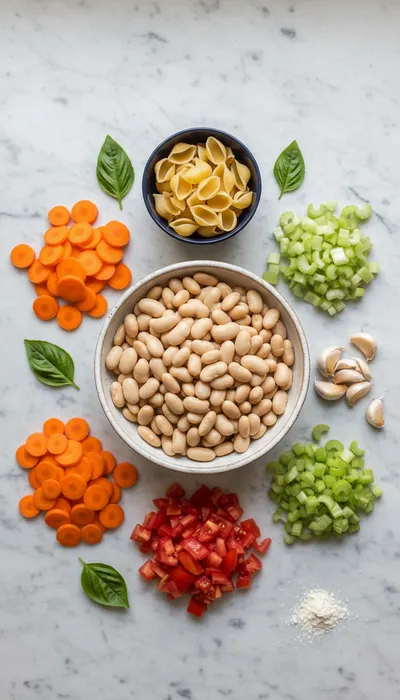
- Cannellini Beans: These provide a creamy texture and a mild flavor. Rinse them well to remove the metallic taste from the can.
- Fresh Carrots and Celery: The aromatic base of the soup. Dice them evenly so they soften at the same rate.
- Diced Tomatoes: Use fire-roasted tomatoes if you can; they add a subtle smokiness that deepens the broth.
- Dried Oregano and Basil: These herbs provide that classic Italian profile. Bloom them in the oil for a minute before adding liquid.
- Lemon Juice: A tiny splash at the end wakes up all the heavy earthy flavors of the beans and cabbage.
- Maple Syrup or Sugar: Just a pinch to balance the acidity of the tomatoes; it's a quiet secret for a smoother taste.
 Desserts & Baking
Blueberry Crumble Bars – Easy Homemade Dessert
Buttery blueberry crumble bars that are easy to bake and delightful to share.
Complete Cooking Process
-
Ingredient Readiness:
Everything should be chopped and ready before the flame hits the pan. I find it's much calmer to have my carrots, celery, and onions in little bowls. It prevents that frantic rushing when the garlic starts to brown.
-
Flavor Development:
The magic happens during the sauté. Letting the vegetables soften slowly in olive oil allows their natural sugars to release. When the herbs hit the warm oil, the scent fills the room, and that's when I know it's going to be a good batch.
-
Texture Control:
Timing the pasta is the trickiest part. If you cook the pasta in the soup, it absorbs the broth and can get mushy. I usually prefer to cook it separately or add it in the last ten minutes to keep a bit of a bite.
-
Finishing Touches:
A stir of fresh parsley and a squeeze of lemon right before serving. It's like adding a little bit of sunlight to the bowl, brightening the colors and the taste.
-
Serving Timing:
This soup is actually better the next day. The flavors have time to settle and get to know each other. If serving immediately, let it sit for five minutes off the heat.
-
Sauté the vegetables until the onions are translucent, not brown
-
Use a low-sodium broth so you can control the salt yourself
-
Add a parmesan rind to the pot while simmering for an umami boost
-
Don't overcook the zucchini; add it toward the end
Pro Tips
Well, I've learned over the years that patience is the main ingredient here. If you rush the vegetables, they just boil instead of developing that rich, sweet base. Just take your time and let the pot do the work.
Also, if you find the soup is too thick after sitting in the fridge, just splash in a bit of water or broth when reheating. It happens to the best of us, and it's a very easy fix.

The essence of the dish:
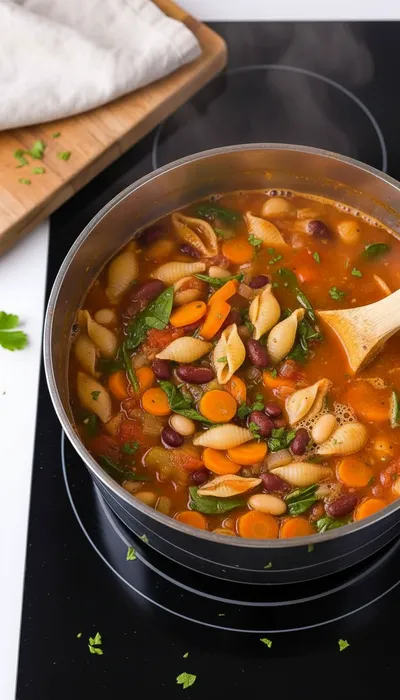
What makes this minestrone soup so special is its versatility. It isn't a rigid recipe; it's more of a guideline. The beauty lies in the harmony of textures—the softness of the beans, the slight chew of the pasta, and the tender-crisp vegetables.
A fun fact or historical angle:
In many Italian households, the recipe for minestrone was passed down through generations, often without being written. It was a living recipe that changed based on the season and the region.
Flavor or sensory focus:
When you first taste it, you'll notice the brightness of the tomatoes, followed by the earthy, comforting warmth of the beans and a lingering hint of garlic and herbs.
You Must Know
-
Store pasta separately if you plan on having leftovers
-
Fresh herbs are better, but dried work perfectly well for this
-
The soup will thicken as it cools due to the starch in the beans
Frequently Asked Questions
→ Can I make this soup without pasta?
Absolutely. You can omit the pasta entirely for a lower-carb version, or replace it with extra beans or diced potatoes for a different kind of heartiness.
→ What is the best kind of pasta to use?
Small shapes like ditalini, macaroni, or broken spaghetti work best. You want something that fits on a spoon.
→ Can I freeze minestrone soup?
Yes, but I strongly suggest freezing it without the pasta. Pasta tends to get very mushy when thawed and reheated. Add fresh pasta when you warm the soup up.
→ How do I make it creamier without dairy?
You can take a cup of the cooked beans and blend them with a bit of broth, then stir that puree back into the pot.
→ What other vegetables can I add?
Spinach, kale, zucchini, or even diced turnips work wonderfully. Just add the leafy greens at the very end.
→ Can I use a slow cooker for this?
Yes, but sauté the onions and garlic first for better flavor. Set it on low for 6-8 hours, adding the pasta in the last 30 minutes.
Nutrition Facts
per serving
280
Calories
14g
Protein
38g
Carbs
7g
Fat
Taste Profile
A balanced, earthy, and savory profile with a bright citrus finish.
Ingredient Substitutions
Don't have an ingredient? Try these alternatives
Kidney beans will change the color of the broth to a darker red.
Broth provides more depth, but water works in a pinch.
Recipe Variations
Try these delicious twists on the original
Green Version
Replace diced tomatoes with extra spinach and kale for a greener, earthier soup.
Hearty Beef Version
Brown some beef chunks at the start if you prefer a vegetable beef soup style.
Common Mistakes to Avoid
Learn from others' mistakes for perfect results
- Adding the pasta too early, resulting in a thick porridge-like consistency
- Using too much salt before tasting the broth
- Overcooking the frozen peas
Meal Prep & Storage
Make Ahead Tips
You can chop all the vegetables a day in advance. If making the soup ahead, leave out the pasta and add it only when reheating.
Leftover Ideas
Reheat gently on the stovetop. If using a microwave, add a tablespoon of water to loosen the broth.
Perfect Pairings
Serve this with...
Cooking Timeline
Sauté onion, carrots, and celery
Add garlic and herbs
Simmer broth and tomatoes
Add beans and zucchini
Cook pasta and peas
Final seasoning and garnish
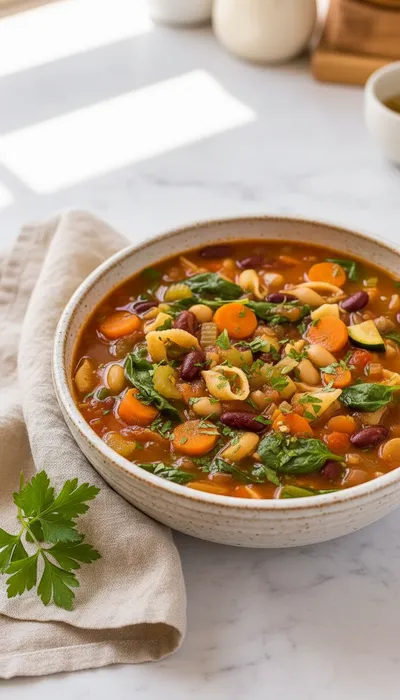
Healthy Minestrone Soup Recipe
A comforting, vegetable-packed minestrone soup that brings the warmth of an Italian kitchen to your table. Hearty, healthy, and naturally dairy-free.
Timing
Prep Time
20 Minutes
Cook Time
35 Minutes
Total Time
55 Minutes
Recipe Details
Ingredients
The Base
-
01
2 tbsp olive oil
-
02
1 medium onion, diced
-
03
2 carrots, sliced into rounds
-
04
2 celery stalks, diced
-
05
3 cloves garlic, minced
-
06
1 tsp dried oregano
The Body
-
01
1 can (14.5 oz) diced tomatoes
-
02
6 cups vegetable broth
-
03
1 can (15 oz) cannellini beans, drained
-
04
1 cup frozen peas
-
05
1 small zucchini, diced
-
06
1/2 cup small pasta (ditalini or macaroni)
Seasoning & Finish
-
01
1 tsp salt (or to taste)
-
02
1/2 tsp black pepper
-
03
1 tbsp lemon juice
-
04
1/4 cup fresh parsley, chopped
Instructions
Heat the olive oil in a large pot over medium heat. Add the onion, carrots, and celery. Sauté them slowly for about 7-8 minutes until the onions are soft and translucent.
Stir in the minced garlic and dried oregano. Let them cook for just about a minute—just until the smell fills the kitchen, but be careful not to let the garlic brown too much.
Pour in the diced tomatoes with their juices and the vegetable broth. Bring the mixture to a gentle boil, then turn the heat down to low and let it simmer for 15 minutes.
Add the cannellini beans and zucchini. Let the soup simmer for another 5-7 minutes so the zucchini is tender but not falling apart.
Stir in the pasta and frozen peas. Cook for about 8-10 minutes, or until the pasta is al dente.
Remove from heat. Stir in the lemon juice, salt, pepper, and fresh parsley. Give it a taste and add a pinch more salt if it needs it.
Notes & Tips
-
1
For a deeper flavor, try using a lentil vegetable soup base for extra protein.
-
2
If the soup becomes too thick after reheating, simply add a splash of water or broth.
-
3
To keep the vegetables vibrant, don't overcook the peas and zucchini.
Tools You'll Need
-
Large stockpot or Dutch oven
-
Chef's knife
-
Cutting board
-
Wooden spoon
-
Measuring cups and spoons
-
Ladle
Must-Know Tips
-
Don't overcook the pasta, as it will continue to soften in the hot broth
-
Use a wide pot to allow vegetables to sauté evenly
-
Always rinse canned beans to reduce sodium and improve flavor
Professional Secrets
-
Sautéing the aromatics slowly creates a deeper flavor foundation
-
Adding an acid like lemon juice at the end balances the earthy beans
-
Simmering on low prevents the vegetables from breaking down into mush

Recipe by
Lucas BennettChef Lucas Bennett specializes in rich and hearty beef dishes inspired by traditional steakhouse cooking. He is passionate about slow-cooked stews, ju ...
Get Delicious Recipes Weekly
Join 25,000+ home cooks getting our best recipes straight to their inbox.
Free forever • No spam • Unsubscribe anytime